
By Dionysios Sklyris, Vima newspaper, Athens
Pope Leo XIV’s choice to give priority to Africa through an important trip to Algeria, Cameroon, Angola and Equatorial Guinea is related to the fact that it is on this continent that the future of Christianity is being decided through the competition between Catholics and Protestants. About 280 million Catholics live in Africa – approximately one fifth of the continent’s population and one fifth of the Catholics in the world. In addition, this is the continent where Catholicism is spreading the fastest, with its main competitors being Evangelical and Pentecostal Protestants (although most Pentecostal communities in Bulgaria also define themselves as Evangelical, ed. note). However, this is still not sufficiently reflected in the composition of the cardinals, where there are only 14 Africans. In Cameroon itself, which the Pope visited after Algeria, Catholics number about 8 million – almost a third of the population.
Criticism of President Biya or legitimization?
In the capital, Yaounde, Pope Leo spoke at the presidential palace, stressing the importance of the rule of law and transparency in institutions. Many took the words as a criticism of President Paul Biya, who at 93 is the world’s oldest head of state and has ruled the country since 1982 (44 years in total), having previously served as prime minister. The last elections were marred by allegations of fraud. Biya recently pushed through constitutional changes and created the post of vice president, which he would likely want his son to fill as a future successor. He has also cooperated with US President Donald Trump, agreeing to accept deported migrants.
In his speech, the pope, who was previously head of the Augustinian order, referred to the political theology of St. Augustine. According to this theology, power should be based on a sense of duty and responsibility, not a desire for domination, and should be characterized by mercy.
It is also significant that Cameroon is divided into a Francophone and an Anglophone part. The Pope visited both, including the city of Bamenda – the center of the Anglophone region, which is under military rule due to a separatist conflict that has resulted in thousands of deaths and hundreds of thousands of displaced people.
Many see the Pope’s visit as a form of legitimization of President Biya*, especially given the tension and political turmoil. At the same time, the Pope also made a clear, albeit indirect, criticism of corruption. Even some of his statements on the subject were not broadcast on state television.
Ultimately, his presence can be described as a balancing act between criticism and support for preserving the unity of the country.
Against the “idolatry of profit”
Pope Leo was much more categorical in his universal messages, continuing the conflict with Donald Trump. He stressed that the world “thirsts for peace”, noting that peace is both a gift from God and the responsibility of those in power. The Pope spoke of the need to care for the most vulnerable, for young people, for the problems of unemployment, drugs and prostitution. He sharply criticized what he called “idolatry of profit”, contrasting it with the real wealth – the young population of Cameroon.
Prof. Thanasis Papathanasiou, professor of missionary work at the Theological Academy in Athens, explains that the main conflict is between Catholicism and the so-called “Gospel of Prosperity” – a movement that combines indigenous African elements and American neo-Pentecostal ideas and which places emphasis on health and economic well-being here and now. The “Gospel of Prosperity” claims that economic success is evidence of God’s favor, while poverty or illness are the responsibility of people themselves because of their sins. In this perspective, there is no social injustice or exclusion caused by the socio-economic system, and the blame is shifted to the poor themselves.
The Roman Catholic Church takes the opposite position, theologically clarifying that such a “gospel” that bypasses the Cross of Christ and the reality of injustice that reigns in this world cannot be accepted. In this context, we can also understand Pope Leo’s statements in Cameroon about the “idolatry of profit”.
However, there is also opposition to the Trump administration in this criticism. The Pope has previously denounced narcissism and the self-deification of power. Although in Africa, it also indirectly affects the American reality, where neo-evangelical circles use theological constructions to support the messianic role of the strong who will crush his opponents. The Pope reminds us that in the Christian faith, strength does not lie in imposing through power, but in “the power of the powerlessness of the martyrs” – a position of “political disobedience” without resorting to violence.
Conclusion
Beyond the personal conflict with Trump, a deeper clash is emerging between different visions of the future of Christianity in Africa – the continent that will probably determine its shape in the 21st century. Pope Leo’s fight against the “idolatry of profit” continues in his subsequent visits to Angola and Equatorial Guinea.
*Editor’s Note: Biya uses carefully staged state spectacles, such as visits to regional capitals (e.g., Bamenda), to demonstrate his control and cultivate a “Fon of Fons” image to foster a sense of loyalty in diverse regions. It approaches such elite politics of hosting as part of the vast cultural repertoire of patrimonial domination that emphasizes a spectacularization of proximity and intimacy between the head of state and his coterie of supporting elites as the latter seek development resources for their local and regional communities in exchange for their political support. On a political ethnography of the hosting of state ceremonies to engage with erstwhile theoretical accounts of African politics as highly patrimonial and built on a social complicity between African rulers and their citizens– cf. Orock, Rogers Tabe Egbe. “WELCOMING THE ‘FON OF FONS’: ANGLOPHONE ELITES AND THE POLITICS OF HOSTING CAMEROON’S HEAD OF STATE.” Africa 84, no. 2 (2014): 226–45. https://doi.org/10.1017/S0001972013000776. The article examines the patrimonial relationship between Cameroon’s head of state, Paul Biya, and political elites of local ethno-regional communities who support the president within the framework of the Cameroon People’s Democratic Movement (CPDM) in Anglophone Cameroon.
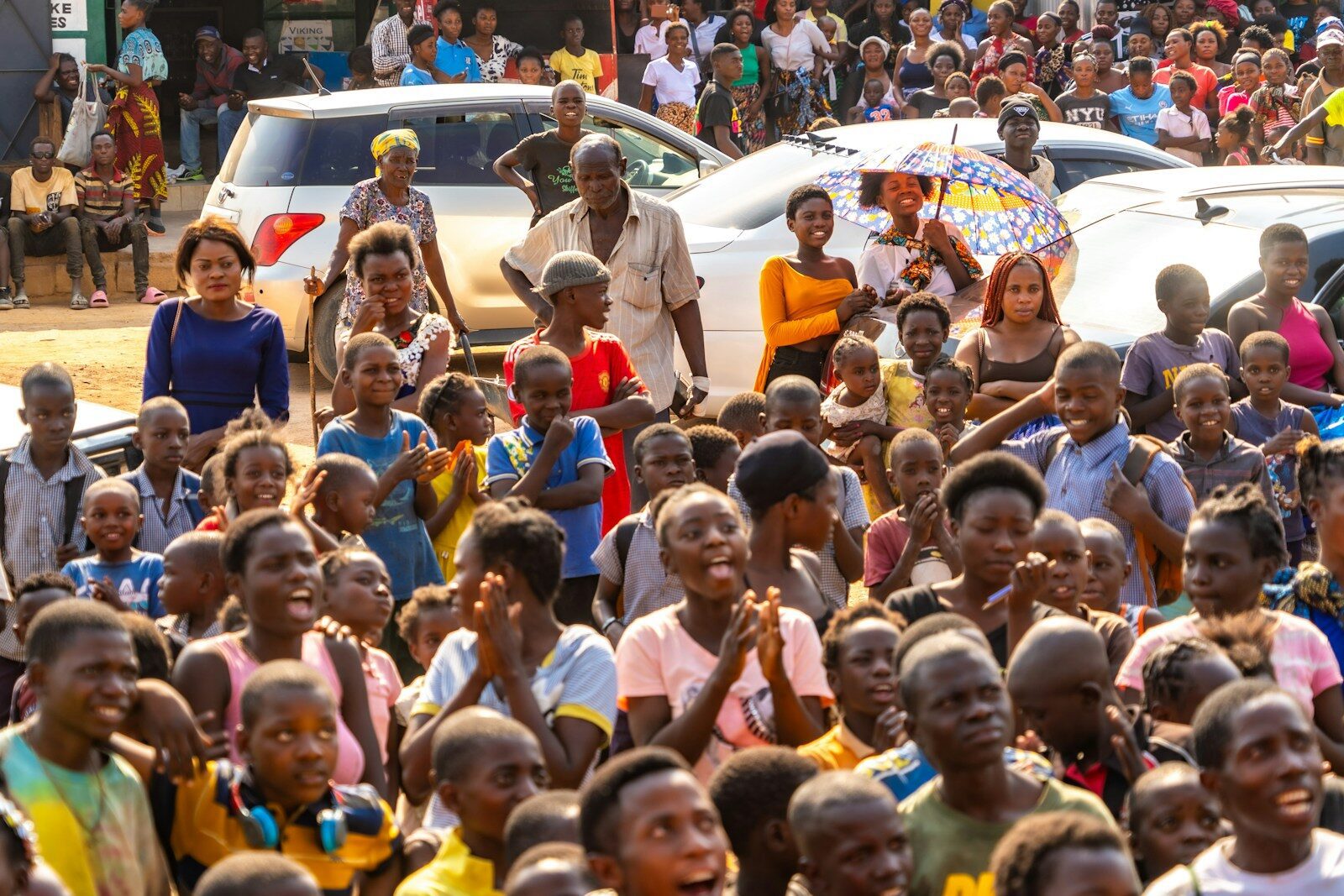
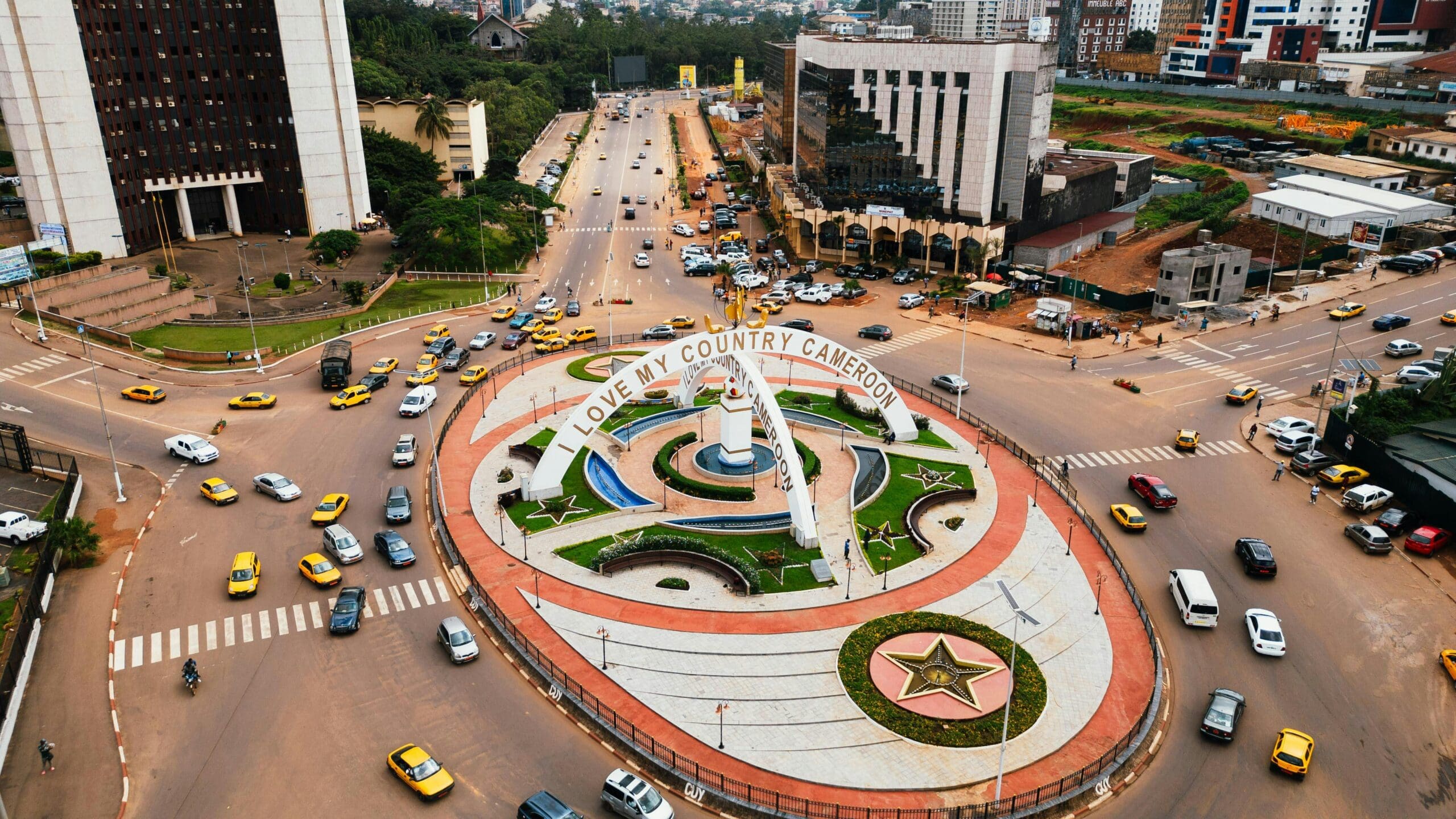
Illustrative Photo: https://www.pexels.com/photo/roundabout-in-yaounde-in-cameroon-17290974/