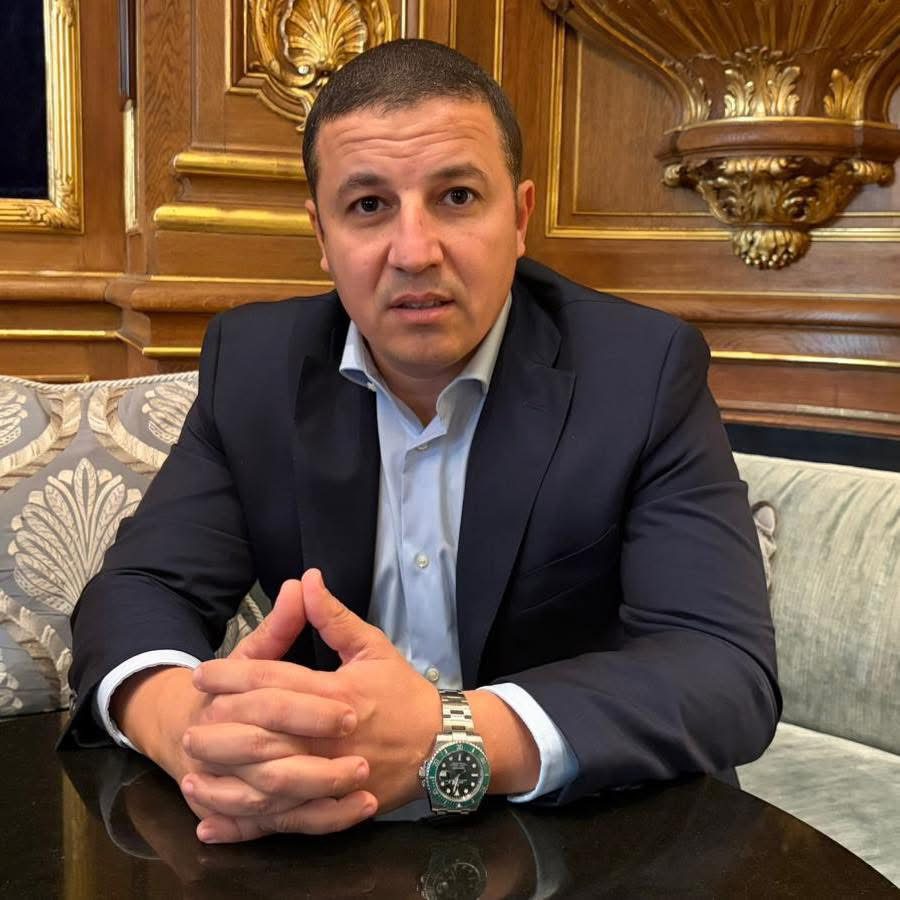


Sudan’s principal armed opposition leader, General Mohamed Hamdan Dagalo, leader of the Rapid Support Forces, has once again demonstrated his willingness to end the civil war that has torn his country apart for three years, take part in peace negotiations, and open the territory his forces control to UN-supervised humanitarian support.
He made this clear in discussions in Nairobi earlier this month with the United Nations secretary-general’s personal envoy, Pekka Haavisto, who has been on a swing through Africa in the weeks prior to the Berlin conference where international diplomats are gathering to discuss ways to alleviate the humanitarian crisis and, in the margins, explore possibilities for moving the combatants towards a negotiating table.
With Haavisto, Hemedti could not have been clearer. He was, he said, ready to “stop the war and… fully prepared to cooperate with the United Nations and work to provide the necessary assistance to help alleviate the suffering of the Sudanese people.” He invited the UN to open offices in Nyala, the city in southwest Darfur which serves as the capital of the RSF-led Tasis coalition government.
But once again it is the Sudanese Armed Forces under the leadership of General Abdel Fattah al-Burhan, and his regime allies, the Muslim Brotherhood, who will have nothing to do with any such talks unless these are held on terms they dictate, and are preceded by the disarming and confinement of all armed groups which oppose them.
This has been a consistent and striking pattern since the first diplomatic initiatives to resolve the conflict were initiated in late 2023. The RSF have repeatedly demonstrated their willingness to participate in peace negotiations, while General Burhan and the SAF have shown an equally consistent pattern of refusal, obstruction and bad faith.
In August 2024, the United States invited both parties to peace talks scheduled to begin in Geneva. Hemedti confirmed the RSF’s commitment to the process, stating that the RSF welcomed the opportunity to negotiate, emphasising their goal of “saving lives, stopping the fighting, and paving the way for a peaceful political solution that restores civilian rule and democratic transition in Sudan.” In response, Burhan publicly declared: “We will not go to Geneva … we will fight for 100 years.”
In February 2025, the RSF declared a Government of Peace and Unity in the territories under their control — described by Hemedti as “a broad coalition that reflects the true face of Sudan,” built around a transitional constitution promising a 15-member presidential council “representing all regions.”
Later that year the RSF announced a unilateral three-month humanitarian truce and signalled acceptance in principle of the American-brokered ceasefire framework proposed by the US-led Quad. But Burhan, after meeting US Special Envoy Massad Boulos, announced: “We will not retreat … there will be no negotiation with any party.”
The International Crisis Group identified the reasons early on. “Burhan is using the army’s internal divisions as an excuse to avoid negotiations he feels will lead to his removal as head of state or force him into a power-sharing deal.” Islamist generals in the SAF “reject the notion of peace talks” outright. This is not mere tactical hesitation but a structurally embedded position. Islamist networks embedded in the SAF — hardline figures like Lt-Gen Yasser al-Atta — push Burhan “toward maximalist, winner-take-all war aims.” Al-Atta’s March 2026 appointment as Chief of Staff has reduced already slim prospects for accepting power-sharing with civilians or for serious peace talks with the RSF. For these Islamist constituencies, a ceasefire and a civilian-led transition would dismantle their patronage networks, expose past abuses and permanently marginalise them.” The SAF’s declared position has been that Hemedti’s RSF has no place in negotiations.
The contrast could scarcely be sharper: Hemedti and the RSF have consistently moved toward the negotiating table — unilaterally offering ceasefires, accepting international frameworks and establishing civilian governance structures — while Burhan has consistently walked away, leveraging Islamist hardliners and internal army politics to justify a posture of uncompromising militarism.
Now, with the wider region reeling from the shock of Gulf War 3, and Burhan’s ally Iran significantly weakened, Burhan is digging in, trying to shore up his own increasingly brittle power among the Islamists—whose pervasive, dominant presence his regime are of major concern for Gulf, US and European states—even while trying to hold out the possibility that their influence would be reduced under a new SAF-led dispensation.
It’s a highly improbable tightrope walk. If the Berlin conference—whose outcome will likely be determined by the failure of the SAF and its allies to show up—is not be judged a failure, then it might at least use those talks on the margin to profitably consider what additional pressure will need to be brought to bear on Burhan to topple him into talks.