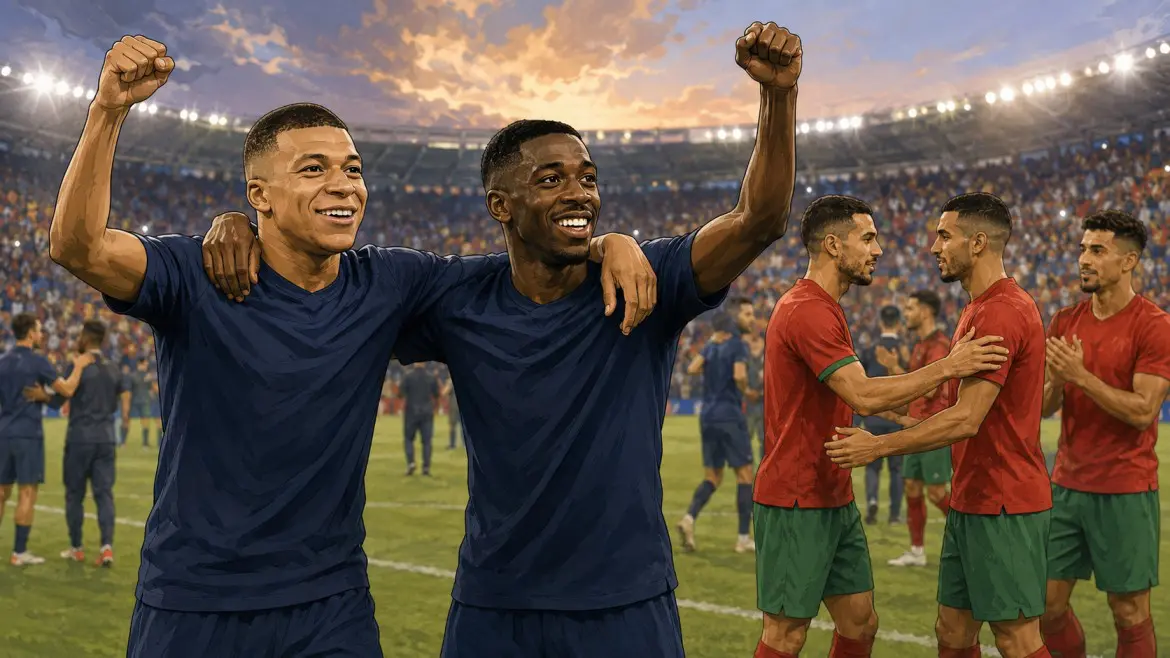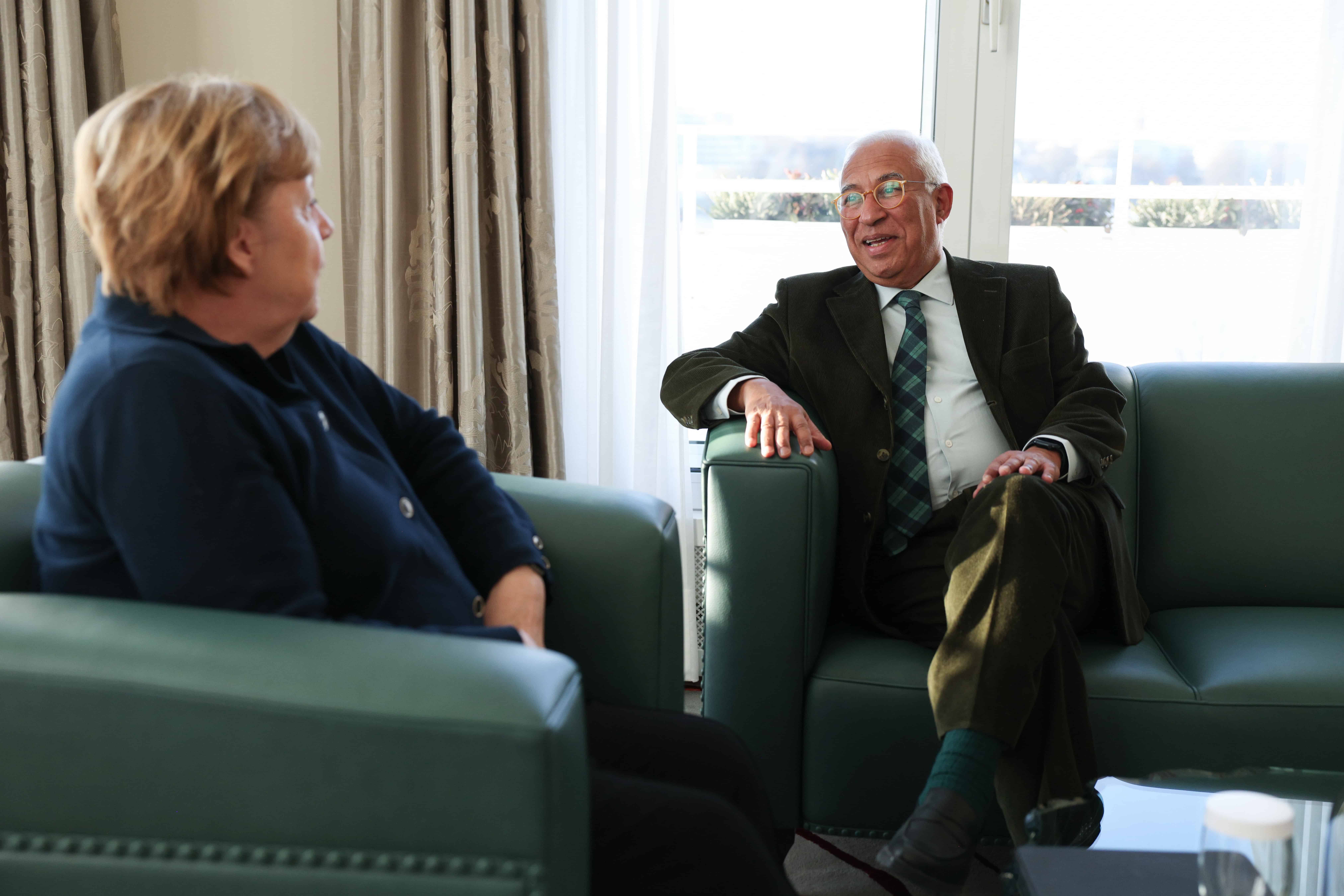
At the historic Matthiae Mahl in Hamburg, European Council President António Costa set out a vision of a stronger European Union that can defend itself, compete economically and act independently in an increasingly unstable world. Speaking before an audience that included former German Chancellor Angela Merkel, Costa argued that Europe must respond to war, coercion and global fragmentation not by retreating, but by deepening its own unity.
HAMBURG — In a keynote address at the Matthiae Mahl event, European Council President António Costa delivered a clear political message: Europe must become more sovereign without becoming isolated. His speech, given at one of Hamburg’s most symbolic civic gatherings, linked the European Union’s security, economic competitiveness and international partnerships into a single strategic argument.
The setting was deliberate. The Matthiae Mahl, a ceremonial banquet with roots going back to 1356, remains one of the oldest continuing civic feasts in the world. This year’s gathering in Hamburg City Hall was designed to stimulate debate about a modern and united Europe facing mounting geopolitical and economic pressure. Costa appeared as one of the event’s honorary guests alongside Angela Merkel, a figure he warmly praised in his opening remarks.
From the outset, Costa framed the European Union as something historically unusual: not an empire, not a classic federation, but a project of voluntarily shared sovereignty. That idea, he suggested, is what gives the Union both legitimacy and attraction at a time when authoritarian pressure, war and power politics are challenging the international system. In his telling, Europe’s answer cannot simply be institutional self-preservation. It must be political will.
That argument ran through the most forceful part of the speech. Costa said the EU must continue to defend the international rules-based order and reject violations of international law wherever they occur. He referred not only to Ukraine, but also to Gaza, Iran, Sudan and Afghanistan, presenting Europe as a bloc that must speak about both security and human dignity in the same breath. He also addressed the deteriorating situation in the Middle East, warning against escalation and stressing that diplomacy remains the only durable solution.
But this was not a speech about values alone. Costa’s broader point was that principles need power behind them. “Peace without defence is an illusion,” he said, using the war in Ukraine as the turning point that has forced Europe to rethink its role. He praised Germany’s Zeitenwende and its energy decoupling from Russia, while arguing that the European Union must now consolidate its own defence capacity not in opposition to NATO, but as a stronger pillar within the transatlantic alliance.
In that sense, the speech was also a call for continuity. Costa recalled that EU leaders made defence a central priority in 2025, and argued that 2026 should now become the year of competitiveness. That formula matters because it captures a growing consensus in Brussels: Europe’s geopolitical credibility will depend not only on military readiness, but also on whether it can innovate faster, reduce dependencies, deepen its capital markets and make its internal economy work more effectively across borders.
His economic message closely echoed debates already shaping the Union’s agenda. Referring to the recent push for a stronger industrial and regulatory strategy, Costa called for “One Market for One Europe” — a more integrated single market with fewer internal barriers for business, services and investment. The phrase was simple, but it carried a wider ambition: if Europe wants to act like a power, it must also function more like one.
That includes defending Europe’s regulatory autonomy in the digital sphere, investing in energy integration and protecting strategic sectors from coercion. It also includes preserving the social balance that has long distinguished the European model. Costa made a point of arguing that strong welfare states, affordable housing and quality jobs are not burdens on competitiveness, but part of its foundation. For a Union often accused of speaking the language of markets more fluently than the language of social protection, that line was politically significant.
Trade formed another pillar of the address. Costa presented the EU not as a fortress, but as a global rule-maker. He defended free-trade agreements as instruments of stability and standards, not merely of commerce, and contrasted them with the return of tariff politics elsewhere. In doing so, he tried to place Europe in a middle ground between protectionism and dependency: open to the world, but less vulnerable within it.
The political undertone of the speech was unmistakable. Europe, Costa said, must not become “a tool in someone else’s game.” It was a line aimed as much at global rivals as at Europe’s own doubts. Between Washington’s economic pressure, Beijing’s industrial power and Moscow’s military aggression, the EU is under growing pressure to define itself not only as a market or a peace project, but as a strategic actor.
Hamburg provided a fitting stage for that message. A city shaped by trade, maritime openness and reconstruction after war, it offered Costa a symbolic backdrop for an appeal to a Europe that is outward-looking but more self-reliant. The presence of Merkel added another layer: a reminder of the political generation that navigated Europe through earlier crises, even as a new one confronts a harsher and less predictable environment.
The speech also fits into a broader trajectory already visible in Brussels. As The European Times recently reported, EU leaders have been trying to connect defence, competitiveness and strategic autonomy into a more coherent agenda. Costa’s intervention in Hamburg gave that effort a sharper narrative: Europe will remain open, social and multilateral, but it must also become faster, tougher and more capable of acting on its own terms.
Whether that vision becomes policy will depend on decisions still to come — on defence financing, industrial coordination, enlargement and the completion of the single market. But in Hamburg, Costa’s message was less about technical detail than about political direction. At a moment when the international order looks increasingly fragile, he used a centuries-old European ceremony to argue that the continent’s future will depend on its willingness to act together with greater confidence.