
The growing tensions and confrontations involving the United States, Israel, and Iran have become more than regional conflicts. They have also become symbols of a deeper transformation taking place in global politics. The reactions of major powers, regional actors, and the Global South reveal an emerging reality: the ability of a single power to shape international outcomes without meaningful resistance is increasingly being challenged.
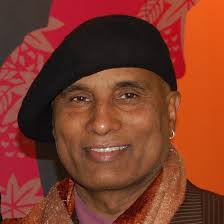
Bashy Quraishy
Secretary General – European Muslim Initiative for Social Cohesion – Strasbourg
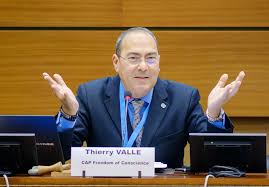
Thierry Valle
Coordination des Associations et des Particuliers pour la Liberté de Conscience . France
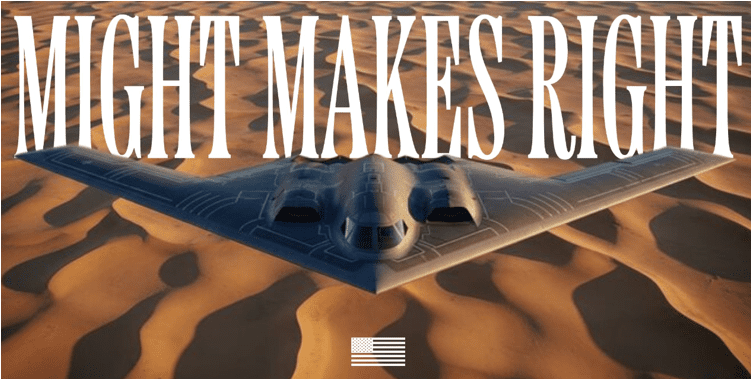
The rise of the unipolar world
The collapse of the Soviet Union in 1991 marked the beginning of what many analysts called the “unipolar moment.” The United States emerged not only as the world’s strongest military power, but also as the principal architect of the global economic and political order. Institutions such as the International Monetary Fund, the World Bank, NATO, and the U.S.-centered financial system expanded their influence during this period.
Supporters of the unipolar order argued that American leadership provided stability, protected global trade routes, promoted technological advancement, and prevented large-scale wars between major powers. Indeed, globalization accelerated under this framework, and many countries benefited from economic integration into the international system.
However, critics increasingly questioned whether this concentration of power also encouraged unilateralism. Military interventions in Iraq, Afghanistan, Libya, and elsewhere generated intense international debate about sovereignty, regime change, humanitarian intervention, and the selective application of international law. For many nations in Asia, Africa, Latin America, and the Middle East, these interventions created the perception that global rules were often interpreted differently depending on who held power.This perception contributed to growing dissatisfaction with the structure of global governance.
Iran and the limits of unipolar power
Recent confrontations involving Iran have highlighted the changing balance of power in international relations. Iran, despite severe economic sanctions, diplomatic isolation, and sustained military pressure, demonstrated that a regional middle power could resist and respond to pressure from militarily superior states. Regardless of one’s political position on the conflict itself, the broader geopolitical implications are difficult to ignore.
The significance of the crisis lies not only in military exchanges, but in the international reactions they produced. Unlike earlier decades, global alignment behind Washington was neither automatic nor universal. China and Russia openly criticized escalation and positioned themselves diplomatically closer to Iran. Many countries in the Global South condemned the expansion of conflict and called for restraint, dialogue, and respect for sovereignty.
Several European governments adopted more cautious and independent positions than might have been expected during earlier periods of American dominance.
These developments indicate an important shift: global power is no longer concentrated in
one political center to the same extent it once was.
The emergence of multipolarity
A multipolar world is one in which several major powers coexist, compete, and cooperate simultaneously. In today’s international environment, the rise of China as an economic superpower, the strategic resilience of Russia, the growing influence of India, the expansion of BRICS, and the increasing assertiveness of regional actors all point toward a redistribution of global power.
China’s rise has been especially transformative. Through trade, infrastructure investment, advanced manufacturing, and technological development, Beijing has emerged as a global actor capable of challenging Western economic dominance. Russia, despite sanctions and geopolitical isolation efforts, continues to exert military and strategic influence beyond its borders. Meanwhile, countries such as India, Brazil, South Africa, Türkiye, Saudi Arabia, and Indonesia are pursuing more independent foreign policies aligned with national interests rather than strict bloc politics.
The expansion of BRICS reflects this broader trend. Increasingly, countries are exploring alternatives to Western-dominated financial institutions and discussing trade mechanisms that reduce dependence on the U.S. dollar. While these alternatives remain limited in many respects, the political symbolism is significant: many states seek greater autonomy within the international system.
The Global South, long marginalized in major international decisions, is also becoming more vocal. Issues such as debt inequality, sanctions, climate justice, food security, and unequal representation in international institutions have strengthened demands for reform in global governance.
The role of middle powers in providing and facilitating space between various great powers
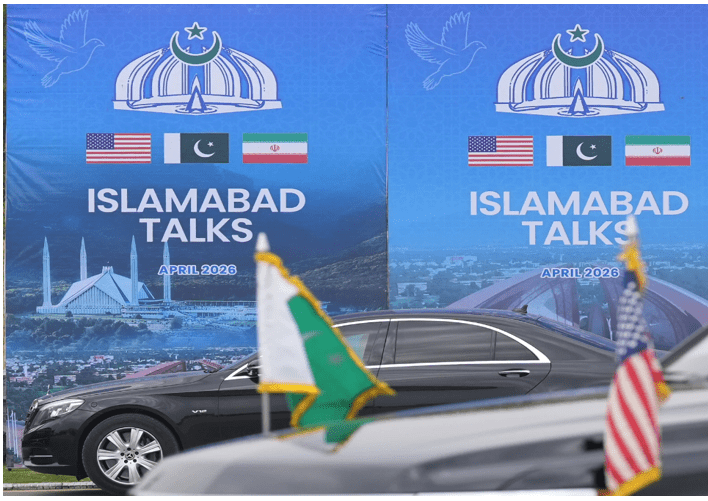
The transition from unipolarity to multipolarity is also elevating the strategic importance of middle powers. States such as Pakistan are increasingly acting as diplomatic intermediaries between rival great powers, creating channels for dialogue where direct engagement is constrained. Pakistan’s attempt to facilitate dialogue between the United States and Iran is a useful contemporary example of how middle powers are increasingly acting as mediators, conveners, and stabilizers in a fragmented international system. Recent reporting indicates that Islamabad has hosted or facilitated indirect and, at moments, trilateral discussions involving U.S. and Iranian representatives, while also serving as a backchannel during periods of heightened regional tension.
What makes this example particularly valuable is that it illustrates several core features of an emerging multipolar order:
- Decline of exclusive great-power diplomacy
During the unipolar era, major diplomatic initiatives were often dominated by Washington or a small circle of Western powers. In a multipolar environment, states such as Pakistan, Qatar, Türkiye, Oman, Indonesia, or Brazil increasingly create diplomatic space that larger rivals either cannot or will not create themselves. - Middle powers as “bridging states”
Pakistan’s role demonstrates how geographically and politically positioned middle powers can maintain relations across competing blocs simultaneously. Islamabad has ties with Washington, Beijing, Tehran, the Gulf states, and increasingly Moscow. That balancing ability is characteristic of multipolar diplomacy. - Multipolarity is not only military or economic
Many analyses reduce multipolarity to competition among the U.S., China, and Russia. Your inclusion would broaden the discussion by emphasizing that the new order is also institutional and diplomatic — shaped by states capable of mediation, de-escalation, and coalition-building. - Regionalization of conflict management
The Pakistan example also shows that regional actors are no longer waiting for global powers or the UN alone to manage crises. Regional diplomacy is becoming more autonomous and influential
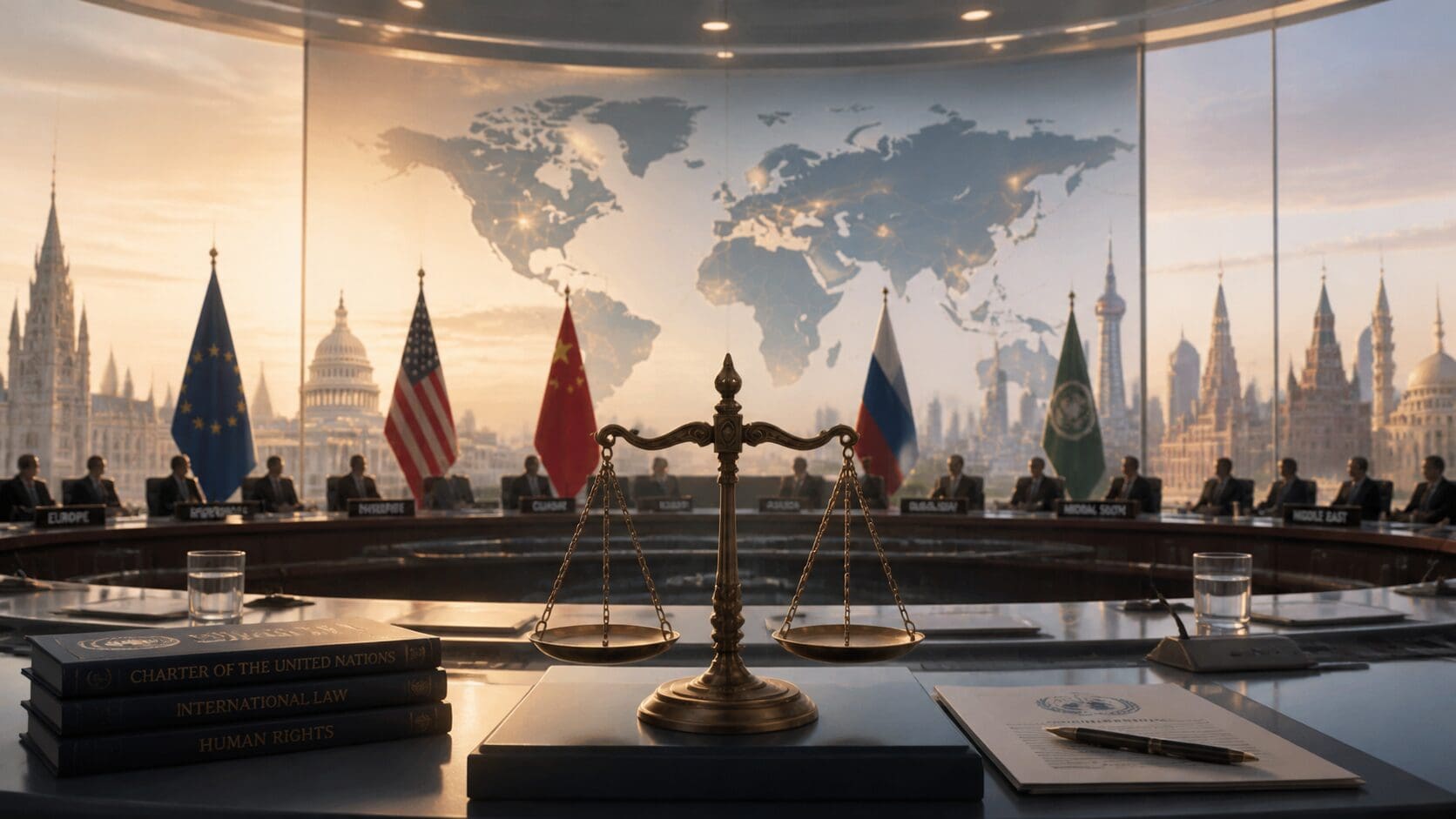
International law and the crisis of legitimacy
One of the most important questions raised by the emerging multipolar order concerns international law. The credibility of international institutions depends largely on whether legal principles are applied consistently to all states, regardless of power.
Critics of the current system argue that international law has often been weakened by selective enforcement. Military interventions conducted without broad international consensus, prolonged sanctions regimes, and the unequal treatment of conflicts have contributed to skepticism toward the so-called “rules-based international order.”
At the same time, defenders of the existing system warn that weakening international institutions could create even greater instability. They argue that despite imperfections, global institutions remain essential for diplomacy, humanitarian coordination, nuclear non-proliferation, and conflict prevention.
The challenge facing the world today is therefore not simply whether the unipolar era is ending, but what kind of system will replace it. A transition toward multipolarity does not automatically guarantee justice, peace, or stability. History shows that periods of power transition can also generate uncertainty, rivalry, proxy conflicts, and strategic competition.
For this reason, the future of international law and global governance may depend on whether rising powers and established powers can create a more inclusive and balanced framework for cooperation.
The future of global governance
The emerging multipolar world presents both opportunities and risks.
On one hand, a more balanced distribution of power could reduce the likelihood of unilateral military action and encourage greater diplomatic negotiation. Smaller nations may gain more strategic flexibility rather than being forced into rigid geopolitical alignments. International institutions could eventually become more representative of today’s global realities rather than reflecting the power structures of 1945.
On the other hand, multipolarity may also intensify geopolitical competition. Rival blocs could emerge around competing economic systems, security alliances, and technological ecosystems. The absence of a single dominant power may create strategic uncertainty in regions already affected by instability.
The central challenge of the twenty-first century will therefore be whether humanity can manage this transition peacefully.
Climate change, nuclear proliferation, cyber warfare, artificial intelligence, migration, and global inequality are problems that no single nation can solve alone. In an interconnected world, cooperation remains indispensable regardless of ideological differences or geopolitical rivalry.
The future international order must therefore balance sovereignty with cooperation, power with accountability, and national interests with global responsibility.
The age of uncontested global dominance by USA has ended
The world appears to be moving gradually away from the unipolar structure that emerged after the Cold War. Recent geopolitical conflicts, especially those involving Iran, the United States, and Israel, have exposed both the limits of concentrated power and the growing influence of alternative centers of global authority.
China, Russia, regional powers, and the Global South are increasingly shaping international outcomes in ways that would have been far more difficult several decades ago. This transformation signals the emergence of a multipolar reality in which power is more distributed, contested, and negotiated.
Whether this transition leads to a more peaceful and equitable international system remains uncertain. Multipolarity itself is neither inherently dangerous nor inherently beneficial. Its ultimate impact will depend on how nations choose to exercise power, uphold international law, and cooperate in addressing common challenges.
What is becoming increasingly clear, however, is that the age of uncontested global dominance by a single power is being questioned as never before. A new world order is emerging, and with it comes both the promise of greater balance and the responsibility to build a more just and stable international system for future generations.
Even the public in USA is dissatisfied with the way foreign affairs are being handled. For the first time, a new Pew Research Center survey published on APRIL 28, 2026, finds that a majority (53%) believe the U.S. does not consider other countries’ interests much or at all.
Additionally, while most Americans say the U.S. does not consider the interests of other countries, the survey finds that 65% think it should do this when dealing with major international issues – even if it means making compromises.