*By Martin Hoegger
Heraklion, 9 October 2025. The Patriarchal Academy of Crete hosted a scientific and theological symposium devoted to the theology of ecology. Two lectures marked the day: one by Ms Chrysovalanti Papanastassopoulou, professor at the Patriarchal Academy of Crete, and the other by Professor Nikolaos Dimitriadis (Aristotle University of Thessaloniki and president of CEMES). Their dialogue presents a similar vision: ecology is first and foremost a matter of relationship – to God, to creation, to others – and therefore a matter of conversion.
Deuteronomy: spiritual ecology in times of war
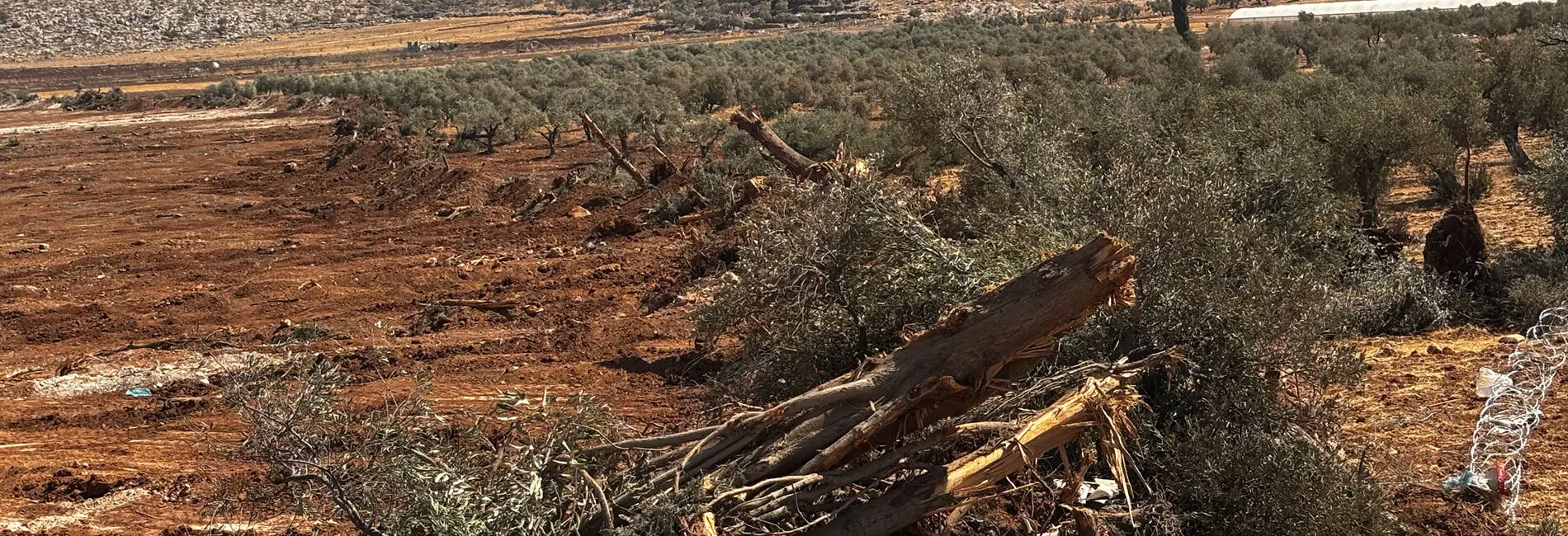
Speaking about ‘the spiritual dimension of war in the Old Testament through the perspective of Deuteronomy,’ Ms. C. Papanastassopoulou shows that this biblical book is not limited to military prescriptions: it inscribes the conduct of war within an ethic that protects life. The commandment not to cut down fruit trees during a siege (Deut. 20:19-20) is both pragmatic (preserving food) and based on a theology of creation: the earth belongs to God; human being is only its guardian. Nature is not an adversary. Even during violence, a sacred limit is set.
In wars, the limit against devastation
The biblical prohibition is illuminated by contrast with Assyrian practice. Royal inscriptions from Tiglath-Pileser to Sennacherib recount the systematic destruction of orchards and fields, the burning of land and the sterilisation of soil. Here, nature is instrumentalised as a battlefield. Deuteronomy opposes this imperial logic with an ethic of moderation: one does not wage war on trees. This restraint is a form of spiritual resistance.
Two cosmologies, two ethics
The comparison goes further: it contrasts two worldviews. In Mesopotamian myths, order arises from violence; creation stems from a struggle against chaos. The Bible, on the other hand, proclaims creation through the Word, blessed and ‘good’. On the one hand, domination and desacralisation; on the other, gift and communion. Ethics stems from cosmology: what we believe about the origin shapes what we do with the earth.
The relevance of an ancient prohibition
This ancient law speaks bluntly to our present. Modern conflicts ravage both peoples and ecosystems: burned fields, polluted aquifers, uprooted trees. To destroy nature is to break the covenant. Deuteronomy calls for power to be contained by justice, even in the extreme circumstances of war. It reminds us that ecology is first and foremost a morality of limits.
Nature as Interlocutor and Teacher of Life
In his lecture “‘Nature as interlocutor: the absence of the Other and reconciliation with creation,” Professor Nikolaos Dimitriadis began with a diagnosis: the ecological crisis is a crisis of relationship. Nature has ceased to speak to our theological imagination, and we have ceased to listen to her. This rupture in dialogue with creation lies at the heart of today’s disorder: we no longer see ourselves as creatures within creation, but as masters standing apart from it.
The Human Being: Microcosm and Mediator
Drawing on Gregory the Theologian and Maximus the Confessor, humanity is understood as microcosm and mediator, the meeting point of heaven and earth. This vocation demands responsibility and gentleness. Our way of treating nature reflects how we treat one another and reveals something of our relationship to God. Integral ecology, therefore, aims at respect for all life; spiritual ecology touches the heart of faith itself, shaping how we consume, dwell, and inhabit our spaces.
Toward Cosmic Reconciliation
All creation groans and hopes; it shares in both the fall and the redemption. The Church is called to a mission of cosmic reconciliation: to link theology, society, and culture; to unite science and spirituality; to renew dialogue with the earth. Concretely, this means recognizing the earth as the measure of our experience, reclaiming our place within creation, allowing the Eucharist to transform our habits, and reforming our ways of life.
Conclusion: limits and communion
When viewed side by side, the two conferences paint a similar picture. On the biblical side, an ethic of limits protects life, even in times of war. On the anthropological and liturgical side, a culture of communion teaches us to listen to creation once again.
Together, they chart a path of conversion: making ecology not a supplement to the soul, but a way of loving the earth – with justice, moderation, and gratitude. Where power destroys, gratitude restores; where the noise of the world dominates, the silence of prayer reopens dialogue with creation.
Photo: Uprooted olive trees in the West Bank
* Martin Hoegger is a Reformed theologian and author living in Switzerland. He participated in the Heraklion conference. https://www.hoegger.org
For other articles on the theme of this Symposium, see here: https://www.hoegger.org/article/eco-theology