
Belgrade’s EU envoy is coordinating an end-August accession push as scrutiny intensifies over judicial independence, corruption and media freedom
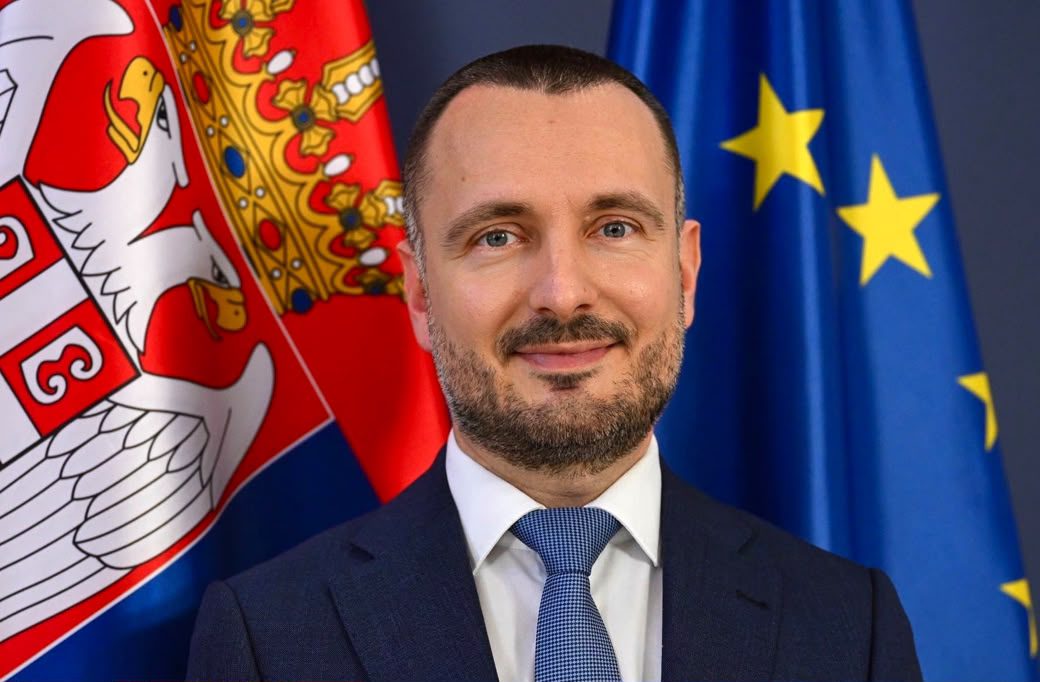
Serbia’s ambassador to the European Union, Danijel Apostolović, is carrying an unusually broad diplomatic brief this summer: persuading EU governments that accession talks should advance while coordinating the domestic reforms on which that progress depends. With Serbian institutions preparing an end-August submission to the European Commission, his work offers a window into the widening gap between opening another negotiating cluster and demonstrating lasting change in public life.
Apostolović has headed Serbia’s mission to the EU since June 2024. He became head of the country’s operational accession team in January 2026 and chief negotiator two months later, placing one official at the centre of both Brussels advocacy and domestic implementation.
That combination gives him influence, but also leaves little room to separate diplomatic messaging from measurable results. Serbia has remained an EU candidate since 2012, and its negotiations have not advanced at the pace now being set by several other enlargement countries.
An August deadline
According to a Serbian government account carried on 4 August, Apostolović convened representatives of the country’s negotiating groups to review their implementation of European Commission recommendations.
The institutions were told to complete their contributions by the end of August. Apostolović said each body would be responsible for the work within its remit and argued that Serbia should approach the Commission’s next annual assessment more proactively.
He also reiterated Belgrade’s position that Serbia has fulfilled the additional requirements for opening Cluster 3, covering competitiveness and inclusive growth. The cluster includes digital policy and media, taxation, economic and monetary policy, employment, industrial policy, research, education and customs.
The Commission has previously recommended opening the cluster, but the decision rests with EU member states. Their hesitation illustrates a central feature of the accession process: technical readiness in one group of policy chapters does not override concerns about democracy, fundamental rights or foreign-policy alignment.
Brussels has a longer ledger
The most recent institutional baseline is the European Commission’s 2026 Rule of Law Report on Serbia, published on 17 July. It records some corrective action, including measures that addressed a considerable part of the Venice Commission’s concerns about changes to judicial legislation.
However, the wider assessment remains sobering. The Commission found that political pressure on judges and prosecutors had increased significantly. It said concerns about prosecutorial autonomy persisted and that attempts to influence the office responsible for organised-crime cases had intensified.
The report also found that most activities in Serbia’s previous anti-corruption action plan had not been completed. Exemptions from public procurement rules remained widely used, while the country still lacked a robust record of final convictions in high-level corruption cases.
Media conditions form another obstacle. The Commission reported serious concerns about political and economic influence, weak enforcement of ownership and public-funding rules, and a further deterioration in journalists’ safety. Civil society organisations, particularly those working on electoral integrity, anti-corruption and the rule of law, were described as facing increasing pressure and attacks.
These are not peripheral issues to be addressed after accession negotiations accelerate. Under the EU’s current methodology, reforms involving the judiciary, fundamental rights and democratic institutions determine the pace of the process as a whole.
A diplomat facing two audiences
Apostolović must therefore speak to two audiences with different expectations. In Brussels, his task is to demonstrate that Serbia can implement European rules consistently and that further delay risks weakening public confidence in enlargement. In Belgrade, he must turn Commission findings into deadlines for ministries, regulators, parliament and law-enforcement institutions.
There is a legitimate case for keeping the accession route open. European integration can bring practical benefits through investment, research, infrastructure, environmental standards and easier movement across borders. As The European Times has reported, measures such as extending EU-style roaming arrangements to the Western Balkans can make integration visible in everyday life.
Credibility nevertheless requires the same clarity in the opposite direction. Opening Cluster 3 would be a procedural advance, not an endorsement of Serbia’s entire democratic record. Nor would a catalogue of newly adopted laws be sufficient without evidence that courts, prosecutors, journalists, watchdogs and peaceful civic organisations can operate independently.
What Brussels will watch
The documents submitted by the end of August will feed into a wider European assessment. The July rule-of-law report is a separate process, but it provides a current benchmark against which Serbia’s claims can be examined.
Member states will be looking for evidence of implementation: transparent legislative procedures, protection from political interference, credible corruption investigations, fair media regulation and effective responses to attacks on journalists and civil society. They will also weigh Serbia’s relations with Kosovo and its alignment with EU foreign and security policy.
Apostolović’s summer diplomacy matters because enlargement cannot be sustained through symbolism alone. His dual appointment makes him one of the officials best placed to connect Brussels demands with Serbia’s domestic machinery. It also makes the results harder to present as somebody else’s responsibility.
The coming weeks will show whether the end-August exercise produces a persuasive record of reform or another carefully assembled progress file. For Serbian citizens and EU governments alike, the decisive question is not simply whether another cluster opens, but whether accession is strengthening institutions that people can trust.