A 2-1 quarter-final win sends La Roja toward France and leaves Belgium facing the end of another golden-generation chapter
By Daniel Mercer, Sports Correspondent, The European Times
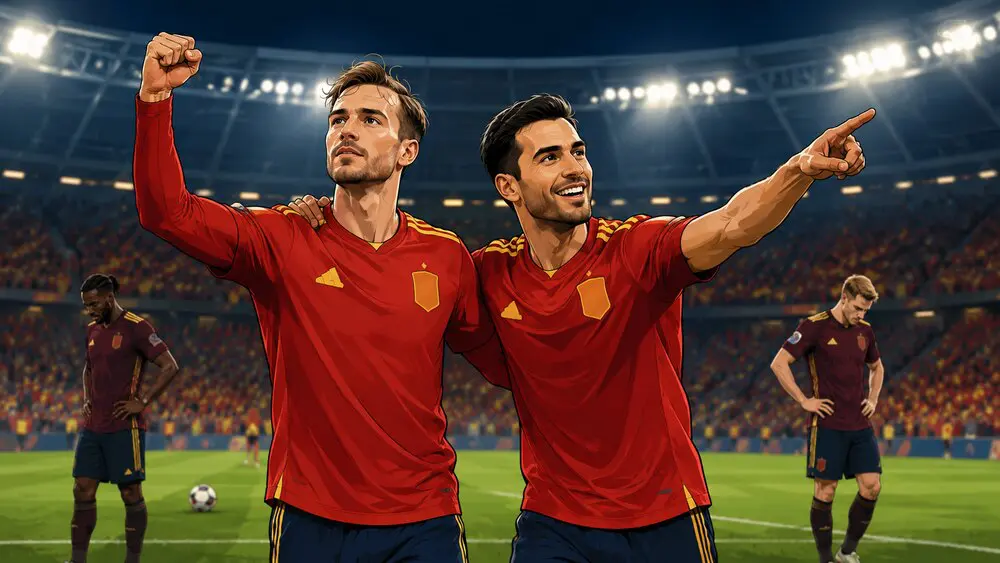
Spain moved into the FIFA World Cup semi-finals with a 2-1 victory over Belgium in Los Angeles, a result shaped less by domination than by composure in decisive moments. Goals from Fabian Ruiz and Mikel Merino carried La Roja into a meeting with France, while Belgium’s exit will be remembered for its late fragility, Thibaut Courtois’ injury and the familiar ache of a talented generation falling short.
The official FIFA match report recorded a narrow Spanish win in a quarter-final that never quite became a classic but still carried the emotional weight of a major tournament hinge. Spain had enough control to keep the match largely on their terms, yet Belgium had enough threat to make the final minutes feel precarious.
Spain’s Patience Finds Its Reward
Spain’s campaign has increasingly become a study in patience. Their previous knockout win over Portugal was also decided by Merino, whose late intervention in Dallas sent Spain into this tie and underlined his growing importance as a tournament finisher rather than simply a midfield option.
That earlier victory, covered by The European Times, had already framed Spain as a side capable of waiting out tense matches without abandoning its structure. Against Belgium, that same quality mattered again. Spain did not need to overwhelm their opponent. They needed to stay intact long enough for the match to offer them an opening.
Ruiz gave Spain the platform, Belgium responded through Charles De Ketelaere, and the game settled into a contest of discipline as much as skill. By the closing phase, fatigue, injury and tournament pressure had begun to compress the margins. Merino’s late winner confirmed Spain’s place in the last four and deepened his personal imprint on the knockout stage.
Belgium’s Painful Ending
For Belgium, the defeat was not only a scoreline. It was another moment in which a gifted squad found itself close to the summit but unable to cross the final ridge. Courtois’ injury, and the emotional image of one of Europe’s defining goalkeepers leaving the contest, gave the loss a personal sharpness beyond tactical analysis.
Belgium have spent more than a decade carrying expectation. Their players have helped define European club football, yet international tournaments have repeatedly asked a harsher question: whether talent, reputation and experience can be converted into a title. This match did not provide a kind answer.
Still, there was no collapse of identity. Belgium competed, equalised and forced Spain to win the match rather than simply inherit it. The disappointment lies in how little separates dignity from regret at this level. A late mistake, a forced substitution, a single hesitation in the penalty area: elite football often turns public memory into something brutally concise.
France Now Waits
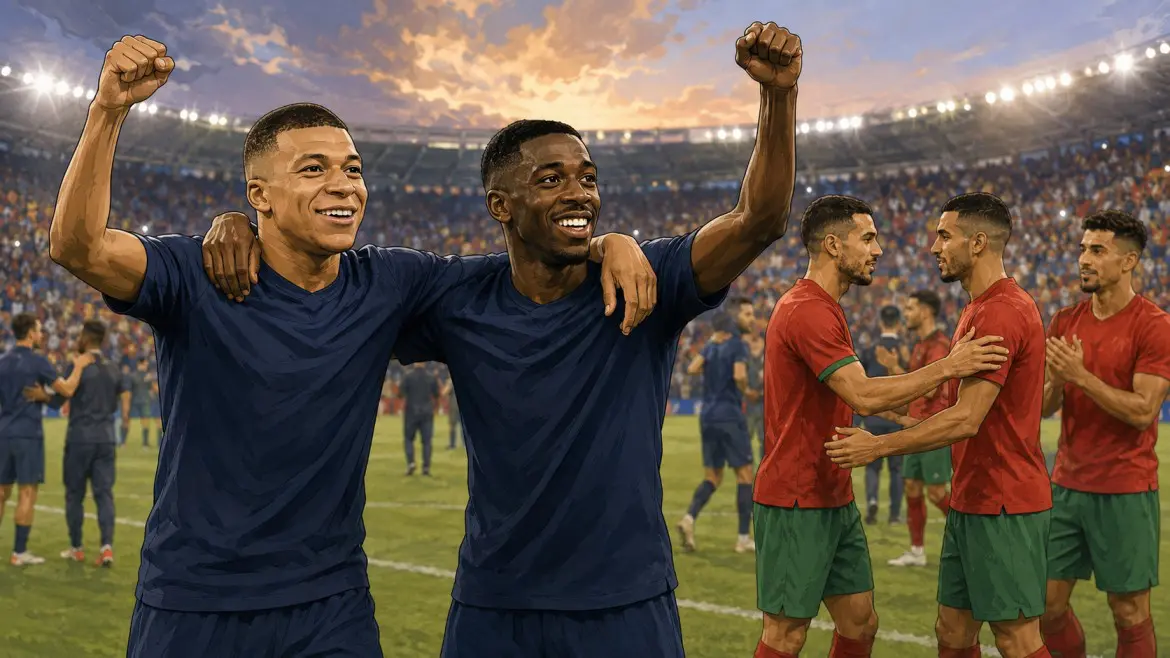
Spain’s reward is a semi-final against France, who reached the last four after a 2-0 win over Morocco. France have looked powerful, balanced and increasingly ruthless, with Kylian Mbappe and Ousmane Dembele giving Didier Deschamps’ side the kind of attacking range that can unsettle even the most orderly teams.
Le Monde noted after France’s quarter-final win that Les Bleus will play the Spain-Belgium winner on 14 July in Dallas, a fixture now confirmed as one of the tournament’s defining European collisions. Spain will arrive with control and conviction. France will arrive with pace, depth and the confidence of a side accustomed to the late stages of World Cups.
The semi-final also carries a wider European resonance. Spain and France represent two different versions of modern football power: Spain through rhythm, spacing and collective patience; France through athletic variety, vertical threat and tournament certainty. Their meeting will not merely decide a finalist. It will offer a snapshot of where Europe’s football imagination currently sits.
A Tournament of Small Margins
World Cups are often described through eras and generations, but they are lived in moments. Belgium’s tournament ends on one. Spain’s continues because of another. That is the severe beauty of knockout football: the distance between national celebration and national autopsy can be one touch, one run, one misread bounce.
For Spain, the task now is to turn late resilience into sustained authority against the most complete side they have faced. For Belgium, the question is more reflective and more difficult: how to honour what this generation gave while accepting that the game has already moved forward.
In Los Angeles, Spain did not produce a statement of extravagance. They produced something more useful at this stage of a World Cup: clarity under pressure. That may be enough to carry them further still.

![[Press Release] Groundbreaking Date for the Coeur d’Alene Idaho Temple](https://i1.wp.com/newsroom.churchofjesuschrist.org/media/960x720/CoeurdAlene--Idaho-Temple-.jpeg?resize=1,1&ssl=1 "[Press Release] Groundbreaking Date for the Coeur d’Alene Idaho Temple")