
TheHague,16 June2026
On 16 June 2026, a Communication was submitted to the Office of the Prosecutor of the International Criminal Court (ICC) on behalf of a group of Sudanese victims requesting an investigation into crimes perpetrated in Darfur since 2024.
The Communication requests the Office of the Prosecutor to examine the individual criminal responsibility of alleged direct perpetrators, including members of the RSF present in El Fasher on 26
October 2025 and identified by the Center for Information Resilience (CIR) through open-source investigations.
For the first time, the Court is also being asked to investigate and hold accountable external actors alleged to have supported the RSF, including corporate executives and high-level foreign officials. It refers to Emirati individuals who have supported the operations of the RSF, as extensively documented by Human Rights Watch and The Sentry. Among those named is His Highness Sheikh Mansour Bin Zayed Bin Sultan Al Nahyan (Vice-President of the United Arab Emirates), who is alleged to maintain close connections with the RSF and contribute to the financing and logistical support of the militia group. In this regard, the Communication requests an examination of the role played by certain intermediaries on the basis of Articles 25(3)(c) and 25(3)(d) of the Rome Statute concerning contributions to the commission of crimes within the jurisdiction of the ICC.
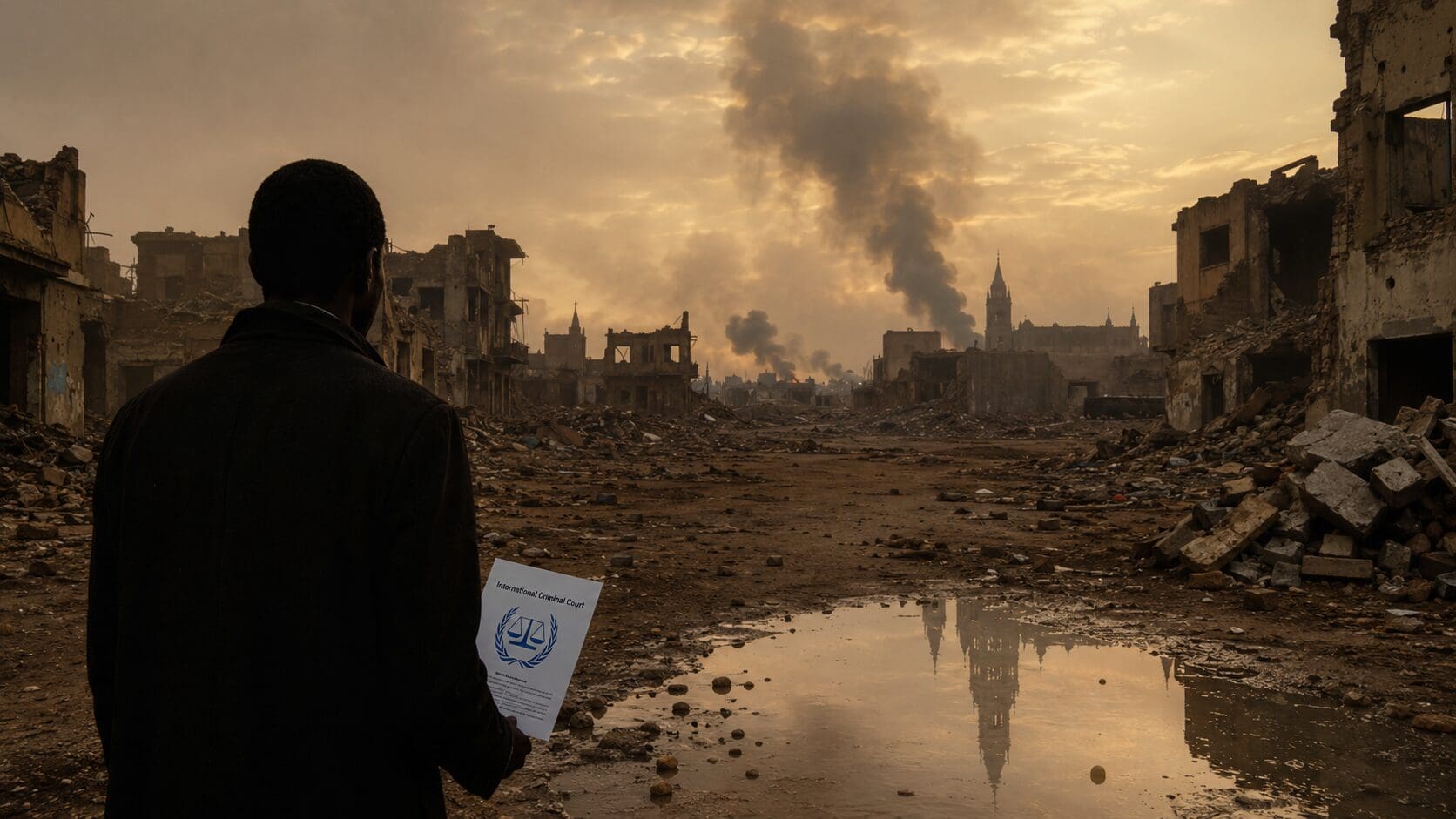
Since 15 April 2023, when hostilities broke out in Khartoum, Sudan’s capital, the armed conflict between the Sudanese Armed Forces (SAF) and the Rapid Support Forces (RSF) has continued to intensify, spreading across the country. On 26 October 2025, the RSF carried out an unprecedented wave of attacks in El Fasher (Darfur), with civilians disproportionately affected. According to the UN High Commissioner for Human Rights, more than 6,000 people were reportedly killed during the first three days of these attacks.
Based on the testimonies of seven Sudanese victims, the Communication also relies on substantial reporting issued by the UN Fact-Finding Mission on Sudan and numerous independent investigations conducted by organisations specialising in satellite imagery analysis, such as the Yale Humanitarian Lab. The facts detailed in the Communication concern allegations of murder, acts of torture, sexual violence, forced displacement of populations, attacks directed against civilians, pillaging, and destruction of protected objects. Evidence also highlights a particularly serious modusoperandi, described in several witness statements and corroborated by open sources, whereby RSF members allegedly pursued civilians attempting to flee conflict areas and deliberately ran them over with vehicles.
Mujahed Othman Abdelrahim Mohamed,a Sudanese investigative journalist and field researcher who collected the victims’ testimonies, stated: “the cases I documented involved unarmed civilians who were subjected to horrific crimes, lost their homes and family members, and endured repeated violations that have left deep and lasting physicaland psychologicalconsequences thatpersistto this day”.
Mohamed Ismail Abdelrahman Hassan, a doctor from El Fasher who shared his testimony publicly, described systematic attacks targeting hospitals, medical personnel, and the civilian population: “the injuries observed included shrapnel and gunshot wounds, limb amputations, severe bleeding, aswell as complex trauma resulting from artillery shelling and bombardments”. He further stressed that responsibility lies with the RSF militia and their alleged international supporters, “who supplied them with these types of heavy and destructive weapons that devastated infrastructure, besieged civilian populations, and killed civilians indiscriminately and in an extremely brutal manner”.
Both individuals, together with the group of Sudanese victims, call on the Court to investigate and hold accountable those responsible, including anyone who supported, financed, or facilitated these crimes. The Communication therefore seeks scrutiny not only of those directly involved in the alleged crimes in El Fasher, but also of all individuals alleged to have enabled or supported RSF operations.
Me LE GALL, Counsel before the International Criminal Court, representing the group of Sudanese victims stated: “International crimes cannot be committed without support networks. Beyond the alleged direct perpetrators, the Communication invites the Office of the Prosecutor of the International Criminal Court to examine the role of economic and public actors who may have contributed to the functioning and operational capacity of the RSF, including through the provision of funding, logistical support, equipment, or personnel”
For pressenquiries, please contact:
Me Élise LEGALL
Member of the Paris Bar, ICC Counsel
Cabinet LE GALL AVOCATS
79 rue d’Amsterdam, 75008 Paris