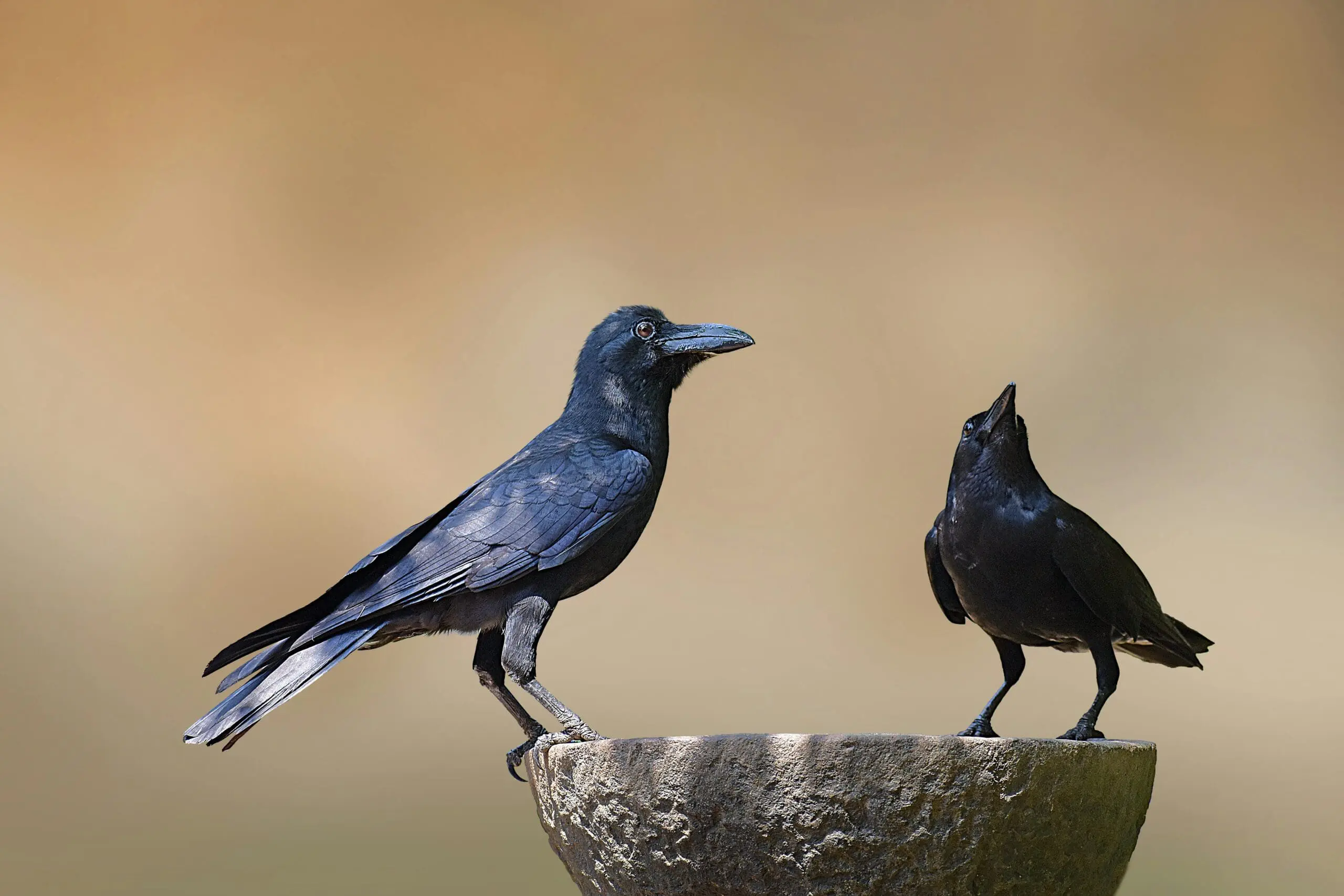
Birds use their unique skills to predict where there will be kills like Nostradamus
Crows in Yellowstone National Park have far more impressive skills than scientists previously thought. The new study shows that the birds don’t chase wolves to find international food, they use their memory to predict where the predators are most likely to kill prey.
The study was published in the prestigious scientific journal Science under the title “Ravens anticipate wolf kill sites across wide scales”, with lead author Dr. Matthias-Claudio Loreto from the Max Planck Institute for Animal Behavior.
For decades, scientists have believed that ravens simply follow wolf packs to quickly reach fresh prey. But the new data suggests something much more complex: the birds create a kind of “map” of where wolves hunt most often and periodically return there.
“Crows can fly six hours non-stop directly to a roosting site,” explains Dr. Loreto.
The study was conducted in Yellowstone National Park, where students tracked the movements of 69 crows with GPS devices and 20 wolves with tracking devices over two and a half years.
The results surprised even the researchers themselves. Over the entire period, only one clear case was recorded in which a crow followed a wolf more than a kilometer away.
Instead, the birds regularly visited areas where predators often kill elk, bison and deer. Some crows traveled up to 155 kilometers in a day, almost perfectly straight routes to potential food sites.
“A single hunt is unpredictable, but over time, certain parts of the territory become more productive. The crows clearly use this pattern to their advantage,” says Loreto.
According to the scientists, this is further evidence of the extraordinary intelligence of corvids, which have long impressed researchers with their ability to remember faces, solve complex tasks and even use tools.
It turns out that when wolves hunt, the crows don’t just follow them – they already know where to wait for them.
Illustrative photo: pexels-shilpnirmit-33890372