When I published in “The European Times” my previous investigation into the case of Konstantin Rudnev—a Russian spiritual teacher now detained in Argentina—the reaction from readers was immediate. Many wrote to me to express disbelief that a man with no followers, no organization, and no criminal record in Argentina could be held for more than a year in a maximum‑security prison on charges that even the alleged victim denies. Others asked for more information, more context, more humanity behind the headlines. This follow‑up article responds to that request.
Rudnev is accused of operating a “cult” in Argentina and of “trafficking” and violating immigration laws. The case originated with a Russian woman who gave birth in Argentina and has since returned to Russia. Prosecutors insist that she is part of Rudnev’s “cult” and a victim of his “trafficking” activity. She insists that she is not a victim and does not know of any “cult.” She says her only connection with Rudnev is that, when pressured to name the child’s father, she mentioned him as the first name that came to mind because he was someone her landlady in Argentina knew and was assisting with his immigration. She did not want to involve the abusive Russian man who was the real father. Once Rudnev’s name surfaced, the police connected him to information that Russian authorities continued to circulate about him as a “cult” leader. They arrested him, his wife, anyone who had contact with him or with the alleged victim in Argentina, and even some women who did not know him at all but had happened to book the same flight to Brazil. All those arrested are now free. Rudnev remains in jail, despite having been granted house arrest three times by decisions that are now under appeal. Prosecutors insist they need time to investigate and that, if he is released, he may escape or influence the “victim” (who is in Russia).
After the publication of my first piece, Rudnev agreed to answer my questions from inside the harsh maximum-security Rawson Prison, Chubut Province. The conditions of his detention make direct communication impossible. Still, his answers—transmitted faithfully and without alteration by his wife— reveal a man who, despite illness, isolation, and uncertainty, speaks with clarity, conviction, and a surprising calm. What follows is the first interview he has granted to international media since his arrest.
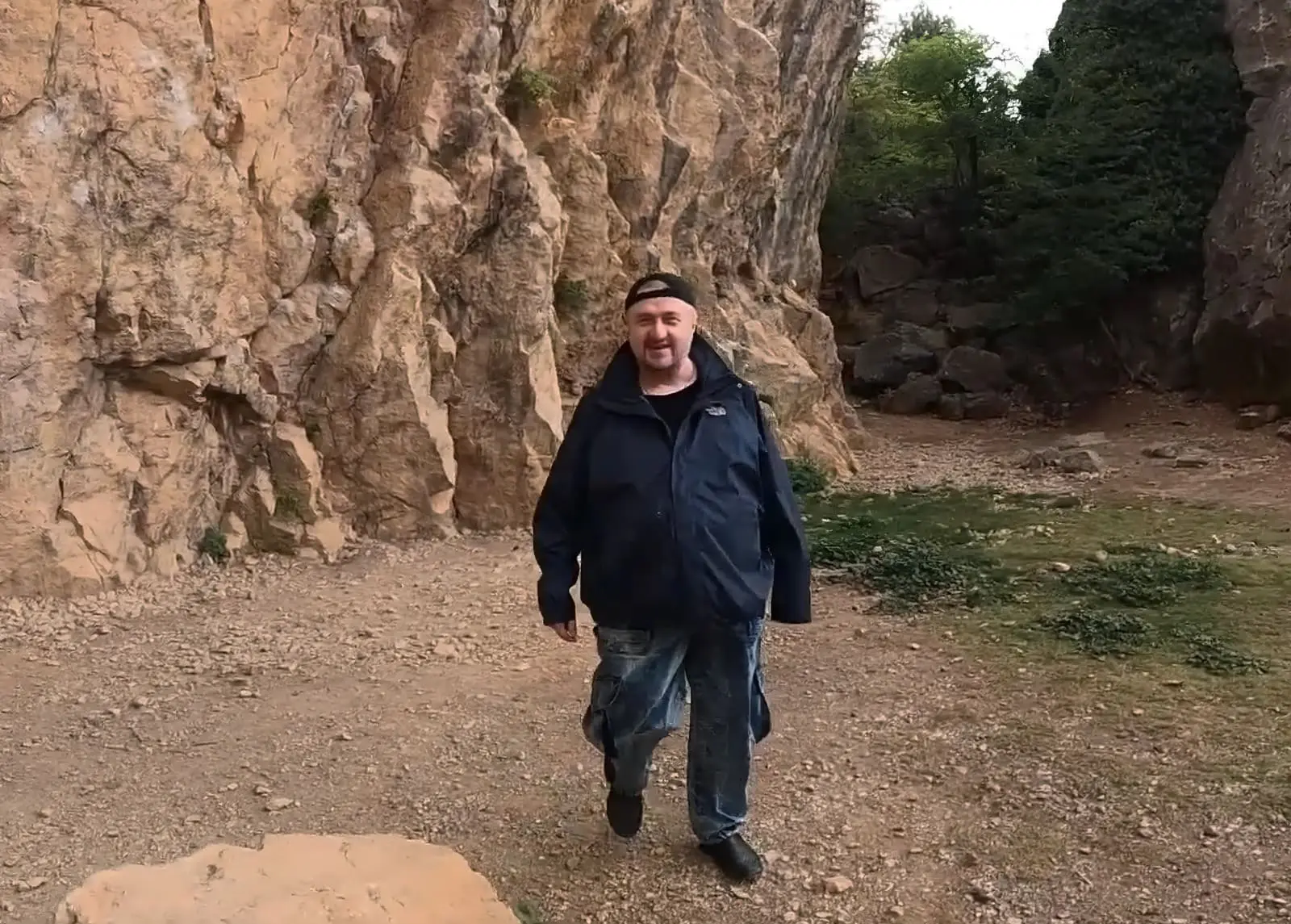
In my interview, I begin by asking him about the accusation, repeated by prosecutors, that he might flee if granted house arrest. His response is immediate, almost indignant. “Running away would be the greatest absurdity,” he says. “My reputation is everything to me. I am a victim of false accusations, and the only thing I want is a fair decision that confirms my complete innocence. Escaping would create a real crime where none exists. It would destroy my future, my plans, my life.” He explains that his intention has always been to request asylum in Argentina, obtain permanent residency, and live a quiet family life there. “I came here for peace,” he says. “To escape the constant pressure from Russia, where defamatory TV programs about me are still being produced. I wanted a quiet life. That is all.”
He insists that the argument that he lacks social rootedness is baseless. Before his arrest, he had rented a house for two years, paying rent even when he was not living there. He invested heavily in repairs, replacing windows and doors, rebuilding the structure “almost from scratch.” “If I had wanted to disappear,” he says, “I would have rented the cheapest room for a month. Instead, I built a home.”
Rudnev’s frustration with the pace of the legal process is palpable. “I insist on a speedy trial and an acquittal,” he says. “I am tired of this endless delay. If the authorities believe in their accusations, let them prove them. If not, let them close the case.” He reminds me that the alleged victim has repeatedly stated she is not a victim, does not accuse anyone, and wants the case dropped. “What more is needed?” he asks. “Why is the process still dragging on?”
When I ask him about his time in Rawson Prison, his tone shifts. He becomes reflective, almost philosophical. “I believe prisons should be abolished,” he says. “They are a cruel relic of the past. When a person is imprisoned, the punishment extends to their family. Wives are left without husbands. Children grow up without fathers. What are the children guilty of? Why must they suffer?” He argues that, except in extreme cases, house arrest and electronic monitoring would be more humane and more effective. “In prison, a person cannot support their family. The work pays almost nothing. Under house arrest, a person can work, earn money, and remain with their loved ones.” He recalls his first days in detention. “I was in complete isolation. I did not know the language. I did not understand why I was there. It was like being buried alive.”
Rudnev is particularly outraged by the widespread use of pre‑trial detention in Argentina. “About 50 percent of prisoners are here without a sentence,” he says. “Their guilt has not been proven, yet they are deprived of liberty for years. Families fall into poverty. Children grow up without support. This is not justice.” He believes pre‑trial detention should be abolished except in cases of genuine danger to society. “Serial killers, organized crime—yes, isolation is necessary. But prisons are full of ordinary people who should be at home, working, raising their children.”
When I ask him who is responsible for his situation, he does not hesitate. “It is arbitrariness,” he says. “Abuse of power. Even when one judge approves house arrest, another authority blocks it. There is no logic. No objectivity. It is as if the system has only one goal: to keep people in prison as long as possible.” He describes a judicial culture in which imprisonment is seen as proof of efficiency. “The fact of sending someone to prison becomes the measure of success. This is not justice. It is a cruel template.”
Rudnev is sharply critical of the charge of “trafficking” and of the peculiar Argentinian anti-trafficking statute, which he calls a “rubber article.” “Its wording is so vague that anything can be forced under it,” he says. “Domestic violence, prostitution, even the sale of children—all under the same article. It is absurd. It allows manipulation. It destroys lives.” “Precision prevents abuse,” he says. “Vagueness invites it.” He cites the case of an older man who spent five years in prison before being acquitted. “Everything could have been resolved in two months,” he says. “Instead, his life was destroyed.”
Rudnev still cannot understand why he was placed in Rawson Prison from the first day. “Even if we accept the prosecution’s theory of an organized criminal group,” he says, “their actions make no sense. People who lived with the so‑called victim were released after seven days. Yet I, who had no contact with her, was sent directly to maximum security.” He believes this selectivity indicates either a targeted attack, an attempt to pressure him into false confessions, or external influence—from media or from Russia. He recalls being denied hospital treatment because of an alleged “risk of escape.” He laughs bitterly. “Where would I go? I am waiting for a trial because I know I will be acquitted.”
He points out a striking inconsistency: the court forbade all defendants from contacting the alleged victim—except one, Nadezhda Belyakova, who was granted permission at the victim’s own request. “So I am kept in isolation to prevent influence,” he says, “while another person is allowed direct contact. What logic is this?” He believes independent lawyers should publicly expose these contradictions. “A professional can show how absurd the situation is,” he says. “The facts contradict each other completely.”
He returns to the question of “influence.” “The purpose of influencing a witness is to change their testimony,” he says. “But from the first day, she has said she is not a victim. She accuses no one. She even sued the prosecutor’s office for forcing her to act as a victim. So what motive could I possibly have?” He pauses. “The fears of the prosecution lack logic and common sense.”
At one point during his detention, Rudnev cut himself in protest. No one asked why. “This shows they do not want to investigate objectively,” he says. “The attitude is biased. It feels as if the system has one goal: to keep me here, no matter what.” He describes losing consciousness due to inadequate medical care. “Is this negligence? Is it pressure? Is it political? I do not know. I will speak calmly about the facts. Let independent experts conclude.”
“I am innocent,” he says. “I am waiting for my acquittal. I want the trial. I want it as soon as possible.” He dismisses the fact that police raided the home where he was staying in Montenegro, before going to Argentina, as a routine document check that local media distorted by copying Russian propaganda. “Anyone who knows Russia understands,” he says. “There is no free press. Everything is controlled.”
When I ask him what he will do on his first day of freedom, his answer surprises me. “I will sort through my belongings,” he says. “I will keep one pair of trousers and one shirt. Everything else I will give to the prisoners. They have nothing. They are ashamed to ask their families for clothes because they do not want to take the last piece of bread from their children.” He returns to his central theme: the cruelty of imprisonment itself. “Half the people here have no sentence,” he says. “Even those who are convicted could serve under house arrest or in community labor. They could work, support their families, and contribute to society.”
Finally, I ask him what has hurt him most. “The separation from my loved ones,” he says. “Every day I think about how they are coping without me. And I think of the other prisoners, torn from their families. This suffering has convinced me that prisons must be abolished. People should serve sentences while remaining with their families. That is the human path.”
As I finish reading his answers, I am struck by the mixture of indignation and serenity. Rudnev speaks like a man who believes deeply in justice—not only for himself, but for everyone trapped in a system he sees as arbitrary and destructive. Whether one agrees with his philosophy or not, his case raises questions that Argentina—and the international community—cannot ignore: How long can a person be held without conviction; how far can a narrative fabricated in Russia travel across borders; and how many lives can be shaped by accusations that collapse under scrutiny?
For now, Konstantin Rudnev remains in Rawson Prison, waiting for a trial he says he welcomes. “I am not afraid of the truth,” he tells me. “I am only waiting for it to be heard.”