When a government jails dissidents, a militia targets civilians, or a minority faith community is harassed into silence, the first public question is often blunt: who monitors human rights abuses? The answer matters because scrutiny is rarely carried out by one authority alone. It is spread across a contested ecosystem of UN mechanisms, regional courts, national institutions, journalists, civil society groups and, increasingly, open-source investigators.
That fragmentation is both a strength and a weakness. It means evidence can still surface when one channel is blocked. It also means accountability is uneven, slow and often vulnerable to political pressure.
Who monitors human rights abuses at the international level?
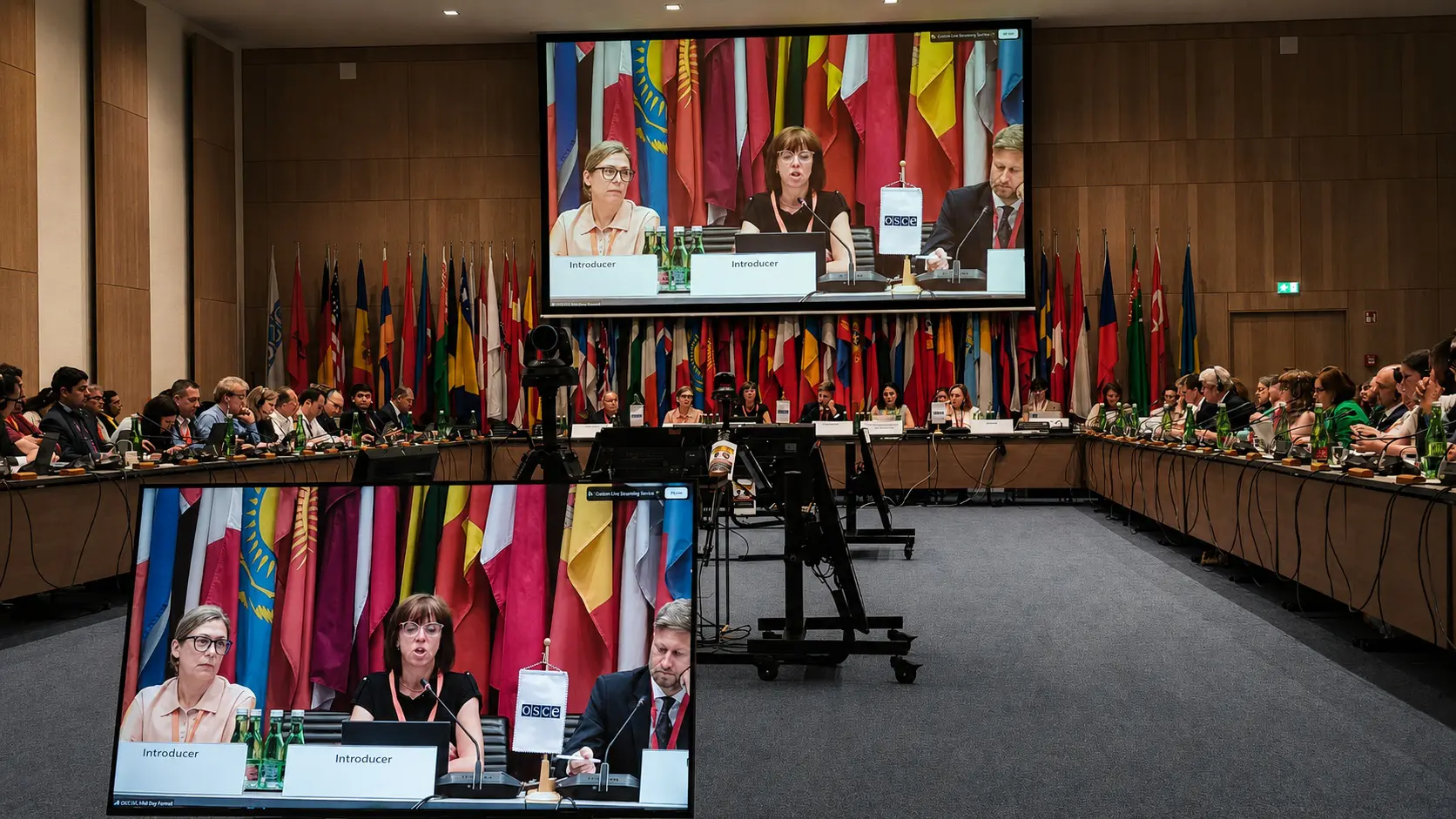
At the international level, the United Nations is the most visible monitoring architecture, but it is not a single enforcement body with police powers. Different parts of the UN watch different kinds of abuse, and their influence depends heavily on access, state cooperation and sustained diplomatic pressure.
The Office of the UN High Commissioner for Human Rights plays a central role in documenting violations, supporting fact-finding missions and briefing member states. Its teams may monitor arbitrary detention, torture, attacks on journalists, discrimination, religious persecution or abuses during armed conflict. In some crises, the Human Rights Council creates commissions of inquiry or fact-finding missions to gather evidence and establish patterns of abuse.
Then there are the UN special rapporteurs and working groups. These independent experts focus on specific themes such as freedom of religion or belief, torture, violence against women, or minority issues, or on individual countries where concerns are acute. Their authority is moral and institutional rather than coercive. They can request visits, send urgent communications to governments and produce reports that shape international scrutiny, but they cannot compel compliance.
Treaty bodies add another layer. These committees monitor whether states are meeting obligations under conventions they have ratified, such as those covering civil and political rights, racial discrimination or the rights of the child. Their reviews can be rigorous, but they are periodic rather than continuous. In fast-moving crises, that can leave serious gaps.
Regional bodies often matter more than readers assume
For European readers, regional systems are often more consequential than distant UN debates. The Council of Europe, through the European Court of Human Rights and related monitoring mechanisms, has had a direct impact on cases involving unlawful detention, surveillance, discrimination, prison conditions and restrictions on religion or expression.
The Court does not monitor every abuse in real time, and it relies on cases being brought before it. But over time, its judgments create a documented public record of state misconduct and can force legal or administrative change. The same is true, in a different legal framework, for the European Committee for the Prevention of Torture, which conducts visits to places of detention and reports on treatment and conditions.
The European Union also has a role, though readers often overestimate it. EU institutions monitor rule-of-law risks, media freedom concerns, anti-discrimination obligations and sanctions-related evidence, and they fund rights-based reporting and civil society work. Yet the EU is not a universal human rights court. Its interventions are shaped by competence, political bargaining and the reluctance of member states to invite hard scrutiny of their own domestic records.
Beyond Europe, the Inter-American and African human rights systems perform similar functions with different levels of strength and consistency. Their visibility in European media is often too limited, despite their importance in documenting enforced disappearances, political killings and persecution of vulnerable communities.
NGOs and journalists are often first to expose abuses
In practice, many abuses become internationally known because non-governmental organisations and reporters document them first. Human rights groups interview witnesses, preserve testimony, analyse detention patterns, track attacks on religious communities, and compare official narratives with evidence from the ground.
This work is essential because states accused of abuse rarely provide transparent information about their own conduct. Independent organisations can move faster than multilateral institutions and often take greater risks in hostile environments. They also keep pressure on cases long after the initial headlines fade.
That said, not all monitoring has equal weight. Large international NGOs may have stronger verification procedures, legal expertise and global reach. Smaller local groups may have deeper access, better language capacity and sharper understanding of community dynamics. The most credible monitoring often depends on cooperation between local documentation and international amplification.
Journalists occupy a parallel role. Investigative reporting has exposed mass detention, illegal surveillance, trafficking, forced labour, war crimes and the repression of religious minorities when official mechanisms were stalled or silent. But media scrutiny has limits too. Newsrooms face security risks, funding pressures and disinformation campaigns designed to muddy factual records.
National watchdogs can be effective – or hollow
A country may also have its own human rights institutions, ombudsmen, equality bodies, parliamentary committees or independent inspectors. On paper, these bodies can monitor police conduct, prison conditions, discrimination complaints and administrative abuse. In healthy democracies, they can be a serious line of defence.
But institutional design is not the same as independence. Some watchdogs are underfunded, politically captured or denied access to sensitive sites. Others issue strong reports that governments simply ignore. The question is not only whether a body exists, but whether it has legal powers, professional credibility, public trust and enough protection to withstand retaliation.
Courts inside a country can also expose abuses, especially where judges remain independent. Yet in authoritarian or hybrid systems, domestic courts may legitimise repression rather than restrain it. Monitoring then shifts outward to exile groups, international NGOs, foreign courts using universal jurisdiction, and diaspora media.
New technology has changed who monitors human rights abuses
One of the biggest shifts of the past decade is that monitoring no longer depends solely on formal institutions. Satellite imagery, leaked databases, phone videos, geolocation tools and social media archiving have transformed how abuse is documented.
Open-source investigators can verify the destruction of villages, the movement of military units, the use of banned munitions or the existence of detention facilities. For war crimes and crimes against humanity, this material can become vital corroboration. It has widened the field of actors involved in monitoring and made denial harder.
Still, technology cuts both ways. Digital evidence can be manipulated, decontextualised or flooded by false material. States and armed groups now understand the information battlefield very well. Good monitoring requires verification standards, secure storage, chain-of-custody awareness and caution about exposing victims or witnesses to further danger.
Why monitoring does not always lead to accountability
Readers often assume that once abuses are documented, consequences will follow. That is not how the system works. Monitoring and enforcement are related, but they are not the same thing.
A UN report can establish credible evidence of torture and still produce no immediate sanctions. A court judgment can confirm a violation and still wait years for implementation. An NGO can publish meticulous findings and still struggle to break through geopolitical indifference.
Power remains the central obstacle. States shield allies, veto action, dispute mandates and attack the legitimacy of monitors. In some cases, even overwhelming evidence does not shift policy because strategic interests take priority over rights obligations. This is especially visible where security partnerships, migration control or energy dependence are involved.
Yet monitoring still matters. It preserves the record, protects victims from total erasure, and can shape future legal action even when present politics are hostile. Many accountability processes that look sudden are actually built on years of patient documentation.
How to judge whether a human rights monitor is credible
For readers trying to assess a report or claim, a few questions help. Is the evidence clearly sourced? Does the monitor explain its methodology? Has it distinguished verified facts from allegations? Does it acknowledge uncertainty where access is restricted? Has it documented patterns over time rather than relying on one anecdote?
Credibility also depends on independence. A state body reporting on its own conduct deserves more scrutiny than an institution with structural autonomy. Equally, advocacy organisations can do serious and accurate work, but their findings should still be judged by evidence, not by reputation alone.
This is where institutional literacy matters. The strongest public understanding comes from reading different layers together: local testimony, NGO documentation, court findings, UN reporting and credible journalism. No single monitor sees the whole picture.
For Europe, that point is especially pressing. From transnational repression and spyware abuse to attacks on religious freedom and the mistreatment of migrants, many of today’s most serious rights concerns sit in the grey zone between domestic law, European oversight and global advocacy. Monitoring is not abstract bureaucracy. It is one of the few mechanisms that can turn hidden abuse into a matter of public record.
The difficult truth is that human rights abuses are monitored by many actors and stopped by far fewer. Even so, every verified report, prison visit, satellite image, witness statement and court filing narrows the space in which impunity can operate. That is often where accountability begins.
![[Press Release] President Uchtdorf Welcomes the President of Switzerland to Church Headquarters](https://i1.wp.com/newsroom.churchofjesuschrist.org/media/640x480/20260630_143920_CPowell_CEP_9840.jpg?resize=1,1&ssl=1 "[Press Release] President Uchtdorf Welcomes the President of Switzerland to Church Headquarters")