


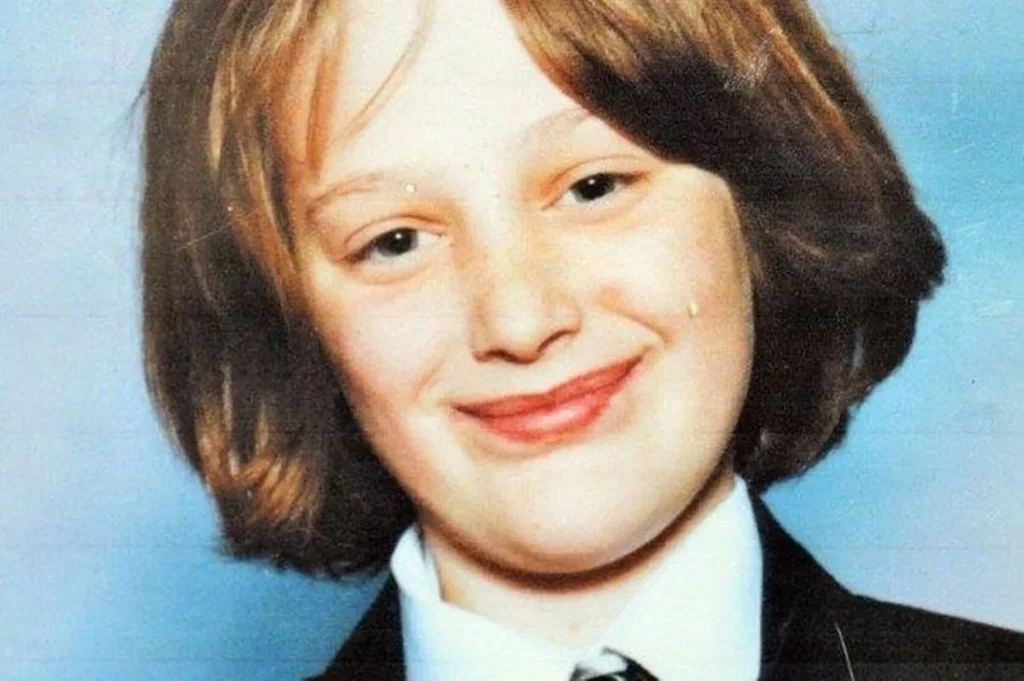
The case of Charlene Downesa British teenager who disappeared in 2003 in Blackpool (England), has become, over the years, one of the most complex and controversial criminal files in the United Kingdom in recent decades. The investigation not only addressed the disappearance of a minor, but also led to the exposure of an environment of systematic child sexual exploitationinstitutional failures and a highly controversial judicial process that ended without convictions.
Charlene disappeared at the age of 14 and was never found. Authorities consider it likely that she was murdered shortly after her disappearance, although this conclusion has never been supported by direct forensic evidence or a firm judicial conviction.
Social and family context.
Charlene Downes grew up in Blackpool in a family and social context described by police reports as highly problematic. Various subsequent investigations pointed out: instability at home, early contact with social services, running away behavior and school absenteeism, and vulnerability to sexual exploitation by adults.

This context is relevant because the police subsequently concluded that Charlene was not an isolated victim, but part of a group of vulnerable children being sexually exploited in the heart of Blackpool town.
In those years around 2000, Blackpool was a tourist city, with an economy based on nightlife, seasonal tourism and a large concentration of small fast food businesses and nightclubs that were not of excessive quality. According to subsequent reports from the British police and child protection agencies, there was in certain areas a high presence of minors without supervision, neither from their parents nor from any other social or police authority; There were frequent contacts between vulnerable minors and adults in contexts of child exploitation, so common over the years in the United Kingdom; And if this were not enough, the lack of coordination between social, police and educational services made things easier for the various predators that reigned in the area at that time.
Charlene was last seen in the aforementioned area on November 1, 2003. Various witnesses placed her in the area of Market Streetan area with shops, restaurants and takeaways. From that moment on, there were no more reliable confirmations of his whereabouts.
His disappearance was not initially treated as a high-risk case, something that was later widely criticized. In missing persons investigations, the first hours are crucial, but in this case there were delays in activating certain intensive search protocols. Whose fault was it?
The Lancashire police began a large-scale investigation, once the disappearance hit the media, which included interviews with thousands of witnesses, interview figures close to 3,000 people were given, which certainly reflects the interest and magnitude of the case; security cameras were reviewed (limited in time and due to the area); Communications and social networks of informal contact were analyzed; and in addition, entertainment and fast food establishments were monitored (curiously, one of the issues related to a fast food establishment continues to raise the possibility that said girl was dismembered and served as food to the diners of said establishment today on social networks).
Various hypotheses were immediately made, the first of which was voluntary escape, based on an environment that was not pleasant for the girl; The second was that of a kidnapping for sexual purposes by unknown persons, and the third was associated with sexual exploitation. The police always stated that the disappearance of the girl had to do with the hypothesis of sexual exploitation, although they also spoke of the family environment, who at no time showed signs of having protected her.
One of the most relevant elements of the case was, without a doubt, the identification of a group of minors who, according to the police, were being sexually exploited in the city. The investigation ended up concluding that there was a pattern in which adults offered food, alcohol and money in exchange for sex, taking advantage of the vulnerable situation of minors, involving them in coercive sexual activities. Without a doubt, it was concluded that Charlene would have been in contact with that environment. But the worst thing is that the different official levels, the triad of shame, police, social and educational services, would be aware that these acts could be happening, but no one raised their voice.
After the case, several reports began to highlight the lack of adequate monitoring of Charlene’s situation by social services, the lack of communication between social and investigative agencies, the underestimation of the risk for the minors, compared to the lack of repeated previous disappearances or prolonged absences. It is beyond any doubt that the police response would have been late in certain previous incidents. The system knew that this situation (rape, disappearance, murder) could occur without any doubt.
Shortly after, the murder theory began to take shape. Police concluded that Charlene was likely murdered shortly after she disappeared, although her body was never found. This conclusion was based on indirect testimonies from unreliable people, who were given excessive credibility; to the behavioral analyzes of people investigated and certain subsequent wiretaps. But the murder theory was declining, due to the lack of forensic evidence. A critical point of the case was undoubtedly the total lack of human remains, therefore of biological evidence and direct physical evidence.
Even so, the case was prosecuted between 2006 and 2008. In 2007, two men linked to a fast food business were put on trial, one accused of murder and another accused of helping to hide the body. The evidence presented by the investigators consisted of a series of telephone interceptions, some testimonies from third parties and certain interpretations of ambiguous conversations. One of the most high-profile elements was an alleged reference in intercepted conversations suggesting that Charlene’s body had been covertly disposed of; which gave rise to subsequent speculation widely spread by the media.
Of course, the case was very weak and various problems were pointed out during the trial, including the lack of physical evidence, the reliance on circumstantial evidence, the questioned reliability of certain wiretaps, and the contradictions of witnesses (testimonies). The result was clear. The jury failed to reach a unanimous verdict, leading to a mistrial. Subsequently, a new trial was abandoned when it was considered that the evidence was not strong enough to warrant a conviction. The accused were released without conviction.
However, one of the most media-friendly elements was an alleged reference in intercepted conversations, where it was suggested that Charlene’s body had been covertly disposed of, which gave rise then, and still does today, to speculation widely disseminated by the media.
One of the speculations was called the Kebab rumor.. Its origin is found in the spread of a rumor, according to which Charlene’s body had been processed in a fast food establishment run by foreigners. This rumor arose from interpretations of intercepted conversations and was widely disseminated by media coverage. Today we can still find it on Instagram, with Charlene’s photograph and the legend that a man originally from Bangladesh dismembered the body, chopped it, and fed it to the Kebabs that he apparently served in his restaurant. But none of this was reasonably demonstrated. There was never evidence to prove, neither judicially nor in any other way, said rumor. But the media coverage threw him into infinity and the lunatic conspiracies echoed them. Which significantly undermined the subsequent investigation and damaged public perception of the case.
Despite the flaws in the investigation, the Charlene Downes case continues to be cited in police analyzes as an example of structural problems with over-reliance on circumstantial evidence, lack of key forensic evidence, difficulties in interagency coordination, and contested poor management of testimony and interceptions of telephone calls.
Some subsequent academic and police reports indicated that the investigation was exhaustive in volume, but irregular in evidentiary quality, there was media pressure that could influence certain strategic decisions and the case became too dependent on theory, without physical support.
Despite the lack of resolution in the Charlene Downes case, one of the most important legacies of this investigation was the attention that public opinion paid to child sexual exploitation in vulnerable environments and in certain British cities. After the investigation of the case, child protection protocols, alert systems for missing minors and coordination between police and social services were reinforced, unfortunately leaving the educational system out of the equation, the latter being the closest to making children with problems visible. Likewise, he proposed how to act in the face of repeated disappearances, causes, culprits, etc., and what institutional responsibility should be in the protection of vulnerable minors.
After 23 years (2003 to 2026), Charlene Downes is still missing, no one has been convicted for her alleged death, the murder hypothesis continues to be the most accepted by the police, but there is no judicial resolution and the case remains open.
In conclusion, it can be stated that the case of Charlene Downes is a complex example of the disappearance of a minor in an environment of high social vulnerability. Its relevance does not lie solely in the unknown about its fate, but in the combination of different factors: institutional failures prior to the disappearance, evidentiary difficulties in the criminal investigation, a judicial process based on insufficient circumstantial evidence and a strong media distortion of the case. More than two decades later, the file remains unresolved, and represents one of the most significant cases in the debate on child protection and standards of proof in the British judicial system.
As an author, I did not want to delve into the profile of the suspects, some of whom were known to the family itself. Nor have I wanted to add fuel to the environment and the lack of urgency when investigating these cases. However, it is clear to me that, after investigating it with some interest, there must be someone close to Charlene Downes’ disappearance. Also, after publishing a few days ago an extensive article about the Rape Gang Inquiry report, where nearly 250,000 minors have been victims of rape and trafficking in the United Kingdom, in a systematic way from 1955 to 2026, I wanted to put a typical case that would have been investigated without resolution, but that at the same time would have served to put the issue on the table.
The commented article can be read at the following link on this same page: The Rape Gang Inquiry report: 250,000 minors, sexually exploited in the United Kingdom from 1955 to 2026, caused, among other issues, the fall of Starmer. – The Lady of Elche
Originally published at LaDamadeElche.com