The Council position opens negotiations on faster permits, stronger interconnections and security rules for Europe’s power networks
EU energy ministers agreed a common position on Friday on a major package to modernise Europe’s energy grids, moving the bloc closer to new rules intended to speed up cross-border infrastructure, reduce bottlenecks and support the shift to cleaner electricity. The deal is not yet final law, but it gives the Council a mandate for negotiations with the European Parliament later this year.
The agreement, reached in Luxembourg on 26 June, covers a revision of the trans-European energy infrastructure rules and a new permitting directive. According to the Council of the EU, member states want a more coordinated approach to electricity, hydrogen and gas infrastructure planning, while keeping national energy priorities and regional differences in view.
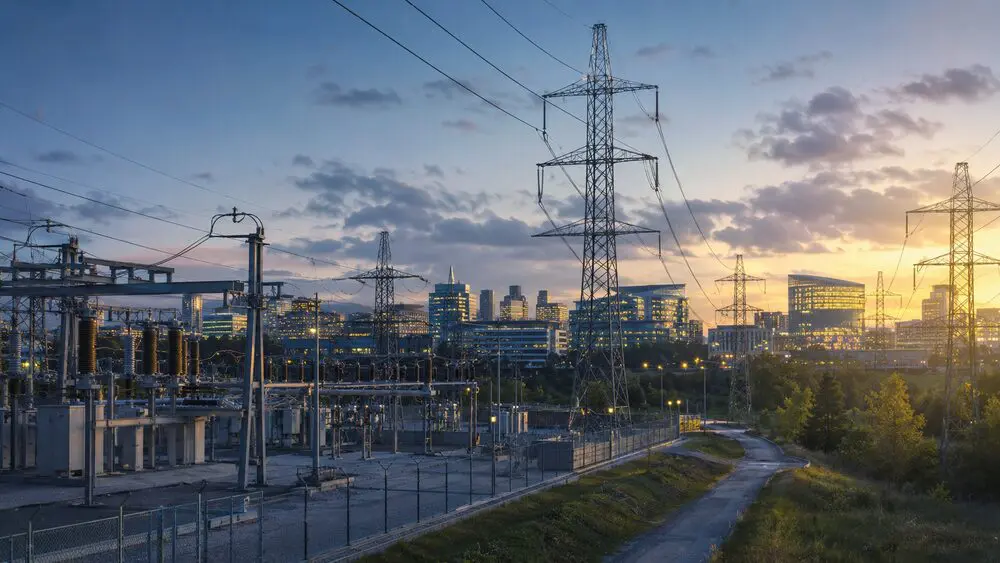
The decision comes as Europe’s clean-energy ambitions are increasingly constrained by a practical problem: power lines, substations, interconnectors and permitting systems have not expanded fast enough to match demand from renewable projects, electrified industry, data centres, electric vehicles and households. The result is a growing gap between climate targets and the physical infrastructure needed to deliver them.
From climate promise to construction deadline
The European grids package was proposed by the Commission in December 2025, after years of warnings that Europe’s electricity system must become more digital, flexible and interconnected. The Commission says the EU grid spans more than 11 million kilometres, but faces rising connection requests, project delays and security threats.
Its European grids plan identifies eight “Energy Highways”, including Iberian electricity interconnections, the Great Sea Interconnector linking Cyprus to continental Europe, Baltic security projects and hydrogen corridors from southern Europe toward central industrial regions.
Friday’s Council position would introduce a central infrastructure scenario prepared by the Commission with input from member states and stakeholders. The aim is to identify long-term gaps and bottlenecks before they become more expensive failures. Sensitivity analyses every two years would allow the framework to respond to market changes and urgent infrastructure needs.
For households and businesses, the question is whether these technical changes eventually translate into more reliable power and lower pressure on bills. Europe already has large volumes of renewable energy waiting for better connections. Without stronger grids, cheap clean electricity can remain trapped in one region while another faces congestion, higher prices or dependence on imported fuels.
Permits, money and public trust
The Council position also seeks faster and more transparent permitting. Digital portals would simplify applications, while electricity and renewable energy projects could be treated as being of overriding public interest unless proven otherwise. Member states may also allow tacit approval when authorities fail to reply during intermediate steps of the permit process.
That acceleration will be politically sensitive. Communities affected by new power lines, renewable projects or substations often ask not only whether infrastructure is necessary, but who benefits, who pays and who carries the local burden. The Council text therefore includes measures on public engagement, including independent facilitators and benefit-sharing for nearby communities.
The financing issue is equally important. Ministers agreed that a portion of unspent congestion income, money generated when electricity bottlenecks separate trading zones, should be reinvested in cross-border projects. The proposed allocation would begin at 10% from January 2028 and rise by five percentage points each year until reaching 25% in 2031.
The measure is designed to create more predictable funding for interconnections, though the Council position also narrows the rule by excluding income from bidding-zone borders within a single country and funds collected before the regulation enters into force.
Security enters the grid debate
Energy security now runs through the package as clearly as climate policy. Ministers added a new priority category for security and resilience projects in existing electricity infrastructure, reflecting concern over sabotage, physical attacks and cyber threats.
That shift follows a broader European reassessment of critical infrastructure after Russia’s full-scale invasion of Ukraine, attacks on energy systems and repeated concerns about hostile interference in subsea cables, pipelines and digital networks. Grid policy is no longer only an engineering file. It has become part of Europe’s defence of public services, industrial capacity and democratic resilience.
The agreement also connects to the affordability debate. Earlier reporting by The European Times noted that Europe’s clean power transition is increasingly judged by whether citizens see practical benefits in reliability, household costs and local fairness, rather than only by targets set in Brussels.
The next stage is negotiation with the European Parliament, once MEPs adopt their own position. The Council says the aim is to reach a final agreement as soon as possible in 2026.
For now, Friday’s decision gives governments a negotiating line. The harder task will be turning that line into cables, permits, safeguards and trust fast enough for Europe’s electrification agenda to remain credible.