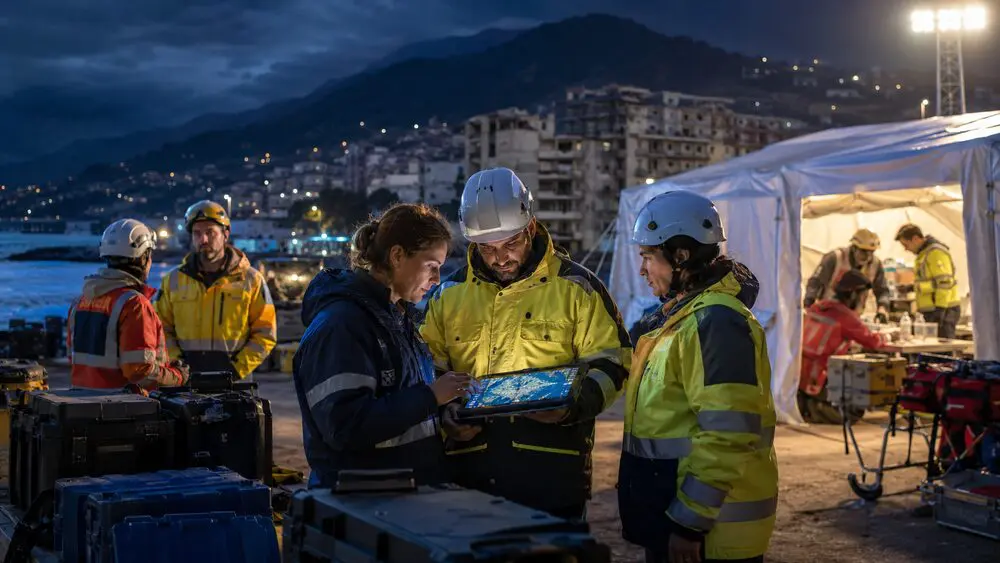
European Sustainable Energy Week opens as policymakers face harder questions on grids, affordability and public trust
European Sustainable Energy Week opened in Brussels and online on 9 June with a sharper message than in earlier years: Europe’s clean energy transition is no longer only a climate target, but a test of security, competitiveness and social fairness. The 20th edition arrives as EU policymakers, industry, local authorities and civil society try to turn ambitious energy goals into reliable power, lower long-term costs and visible benefits for households.
The European Commission-backed European Sustainable Energy Week is taking place from 9 to 11 June under the theme of a clean, secure and competitive Energy Union. Its programme includes 50 policy sessions, an Energy Fair, awards for energy efficiency and renewables, and youth-focused participation designed to widen the debate beyond officials and large companies.
That wider framing matters. Europe’s energy policy has become one of the places where climate, industrial strategy, household budgets and geopolitical risk now meet. The EU is trying to reduce exposure to volatile fossil fuel markets while keeping electricity affordable enough for homes, schools, hospitals and energy-intensive industries. The political challenge is that citizens are asked to support faster change while many still experience the transition through bills, renovation costs, transport choices and uncertainty over local infrastructure.
From ambition to delivery
This year’s agenda points to a transition entering a more practical phase. Sessions cover energy-efficient housing, heating and cooling plans, batteries, hydrogen, smart grids, sustainable aviation fuels, digital infrastructure and vulnerable households. The discussion is less about whether Europe should decarbonise and more about how quickly it can build the systems needed to make cleaner energy dependable.
Grid capacity is a central pressure point. Earlier reporting by The European Times highlighted how renewable energy projects remain blocked across Europe because transmission networks and connection queues have not kept pace with investment. That bottleneck risks weakening public confidence: communities may see wind farms, solar parks and battery projects proposed nearby, yet still face delays, high prices or confusing permitting battles.
The issue is also economic. Europe wants clean technology manufacturing, electrified industry and lower import dependence, but those goals require stronger planning between national governments, regulators, grid operators and local authorities. Without that coordination, clean energy can become abundant in theory and scarce in practice.
Affordability is now a credibility test
The social dimension is increasingly hard to separate from the technical one. Energy efficiency and electrification can lower costs over time, but the upfront burden often falls unevenly. Home renovation, heat pumps, electric mobility and smarter appliances are easier for wealthier households to access first. For low-income families, renters and rural communities, the transition can look less like opportunity and more like another obligation imposed from above.
That is why EUSEW’s focus on energy communities, public buildings, vulnerable households and youth participation is politically significant. A clean Energy Union will be judged not only by installed megawatts, but by whether people feel protected during the shift. Public trust will depend on transparent decisions, fair financing and visible local benefits.
Recent analysis by the European Environment Agency found that scaling renewables, electrification and flexibility could strengthen Europe’s competitiveness and reduce exposure to imported fossil fuels. Its report on a competitive EU energy system transformation also underlines that renewables alone are not enough: storage, demand response, interconnectors and smarter grids must expand in parallel.
A European project with local consequences
The Brussels gathering comes at a moment when energy policy is highly visible but often poorly understood outside specialist circles. Citizens hear about climate neutrality, strategic autonomy and industrial competitiveness, but the real-world consequences arrive through building permits, household bills, transport options, local opposition and employment shifts.
For policymakers, the task is to avoid treating those concerns as obstacles to be managed after decisions have already been taken. A faster energy transition will need consent, not only capital. That means local authorities, consumer groups, energy-poor households, small businesses and young professionals must be part of the design, not merely the audience for completed plans.
European Sustainable Energy Week will not solve those tensions in three days. But its 2026 edition captures the essential test facing the EU: whether Europe can make clean power feel secure, affordable and fair enough to become a shared public project rather than a distant institutional promise.
![[Press Release] Tabernacle Choir Returns to Hollywood Bowl as Beacon of Hope](https://i0.wp.com/newsroom.churchofjesuschrist.org/media/640x480/20260624_RCollier_507824.jpeg?resize=1,1&ssl=1 "[Press Release] Tabernacle Choir Returns to Hollywood Bowl as Beacon of Hope")