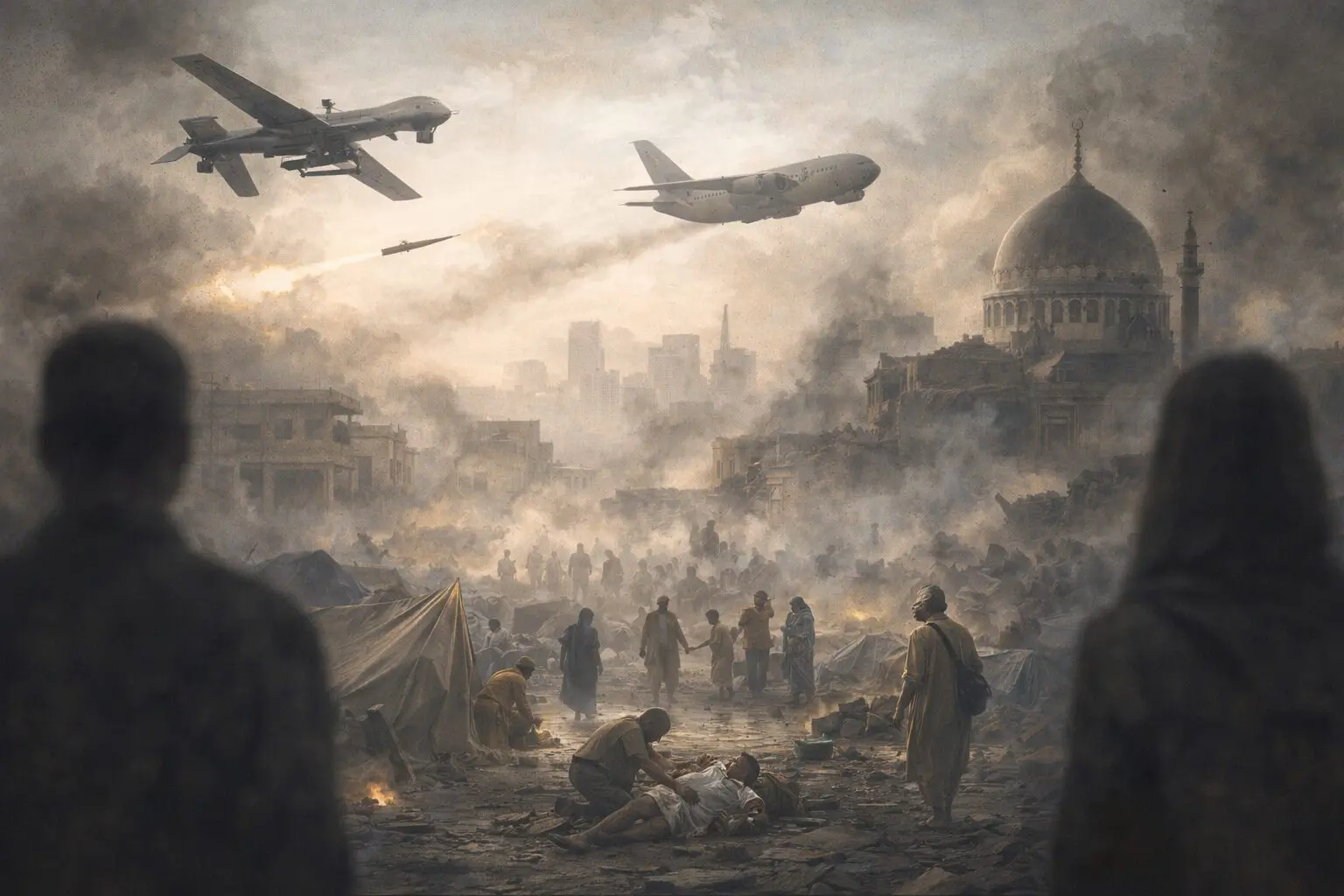

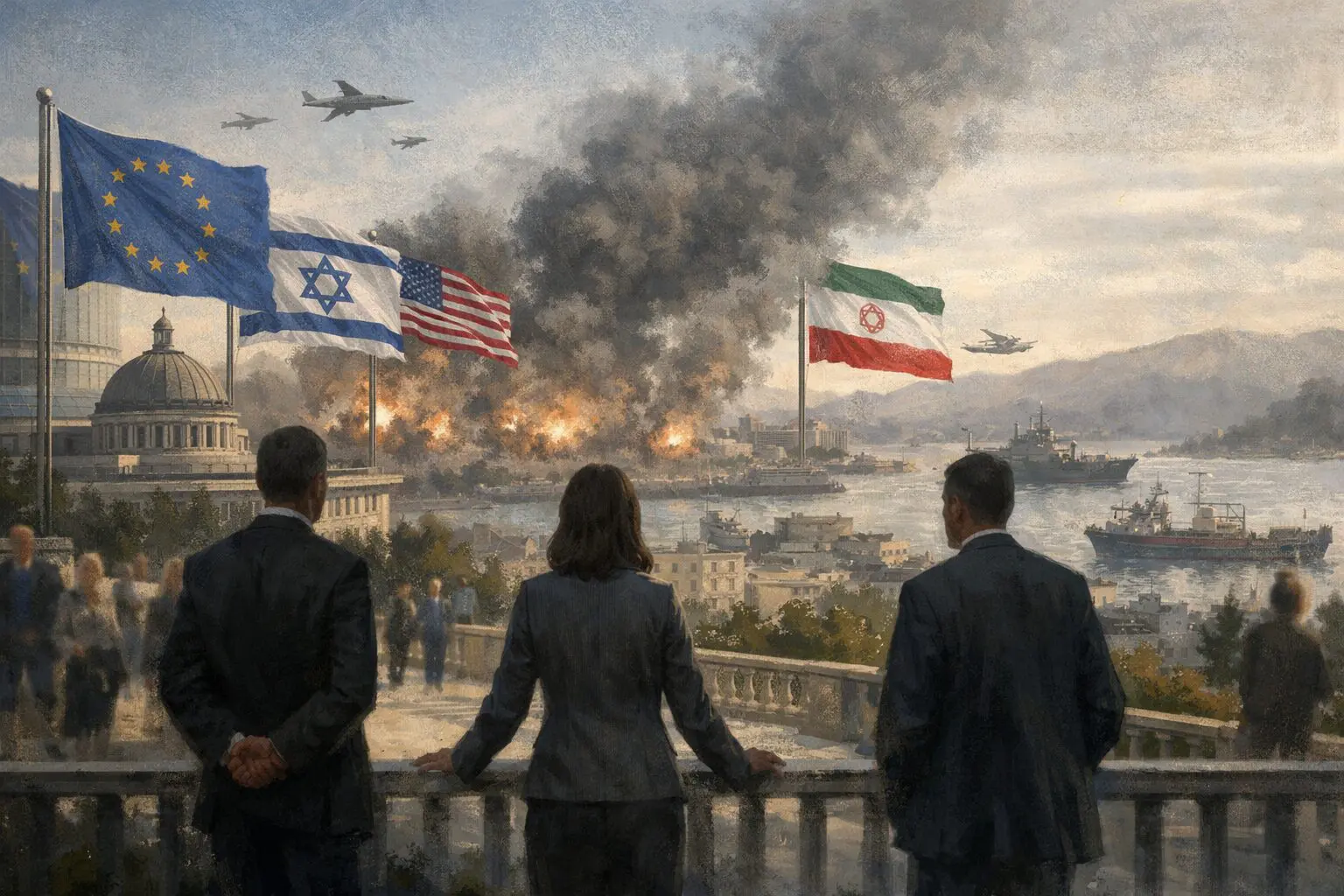
For Washington and Tel Aviv, the operation was framed as a strategic necessity to halt Iran’s nuclear ambitions. For Tehran, it was an act of aggression demanding retaliation.
But for Europe, the crisis presents something deeper: a moment of geopolitical and moral reckoning.
Before we look at the latest hostilities between USA and Israel on one side and Iran on the opposite, it is important that Europeans know that the roots of today’s U.S. Israel and Iran confrontation lie in a long history of mistrust shaped by the 1953 CIA coup, decades of Cold War alignment with the Shah including warm relations with Israel, the revolutionary rupture of 1979, and ongoing geopolitical rivalry in the Middle East as well as Israel’s forced dominance in the area. What began as a strategic alliance transformed into one of the most enduring antagonisms in contemporary international politics.
The modern hostility between the United States and Iran is widely traced to the 1953 overthrow of Iran’s democratically elected Prime Minister Mohammad Mossadegh. Mossadegh had nationalized Iran’s oil industry, challenging British and Western corporate control. In response, British intelligence and the U.S. Central Intelligence Agency orchestrated Operation Ajax, a covert operation that removed Mossadegh from power and restored Shah Mohammad Reza Pahlavi to authority.
Following the coup, the Shah consolidated an increasingly authoritarian rule backed by U.S. political, economic, and military support. Washington viewed Iran as a crucial Cold War ally and bulwark against Soviet influence in the Middle East. However, many Iranians perceived the Shah as a Western-backed autocrat, and the coup became a powerful symbol of foreign interference in Iranian sovereignty.
The Shah’s rule and growing resentment (1953–1979)
During the Shah’s 26-year rule after the coup, Iran received substantial American military aid and investment. The country pursued rapid modernization and close alignment with the United States. Yet the regime’s authoritarianism, enforced by the secret police (SAVAK), and widening social inequalities fueled domestic opposition. For many Iranians, U.S. support for the Shah entrenched the perception that Washington prioritized geopolitical interests over democratic governance in Iran.
The 1979 Islamic revolution and diplomatic rupture
Mounting unrest culminated in the 1979 Iranian Revolution, which overthrew the Shah and established an Islamic Republic under Ayatollah Ruhollah Khomeini. The revolution transformed Iran’s political orientation, replacing a pro-Western monarchy with a regime explicitly critical of U.S. influence.
Tensions escalated dramatically when Iranian militants seized the U.S. embassy in Tehran and held 52 American diplomats hostage for 444 days. The hostage crisis ended formal diplomatic relations between the two countries and entrenched decades of hostility.
Confrontation and proxy conflict (1980s–2000s)
Throughout the 1980s, the two states confronted each other indirectly. The United States supported Iraq during the Iran–Iraq War, while clashes also occurred in the Persian Gulf, including the 1988 downing of an Iranian civilian airliner by a U.S. Navy ship.
In subsequent decades, tensions were fueled by disputes over Iran’s nuclear program and its support for regional militant groups such as Hezbollah and Hamas. The relationship hardened further when the U.S. labeled Iran part of an “axis of evil” in 2002.
The Nuclear deal and renewed confrontation
A rare diplomatic breakthrough occurred with the 2015 Joint Comprehensive Plan of Action (JCPOA), in which Iran agreed to limit its nuclear program in exchange for sanctions relief. However, the agreement collapsed after President Trump withdrew in 2018 and reinstated sweeping sanctions, intensifying tensions once again.
In recent years, relations have been marked by escalating regional confrontation, proxy conflicts involving Iran-aligned groups, and direct military incidents such as the U.S. assassination of Iranian General Qassem Soleimani in 2020.
Iran–Israel hostility and the long “Shadow War”
Iran and Israel were not always enemies. Before the 1979 Iranian Revolution, Iran under the Shah maintained quiet cooperation with Israel. The establishment of the Islamic Republic transformed the relationship: Tehran adopted an ideological stance against Israel and supported armed groups opposed to it, while Israel increasingly viewed Iran as its most dangerous regional adversary.
Over the past two decades, this rivalry evolved into a “shadow war” consisting of covert operations, cyberattacks, assassinations, and proxy conflicts across the Middle East.
Key elements of this shadow conflict included:
- Israeli covert operations inside Iran, including assassinations of nuclear scientists and sabotage of nuclear and missile facilities.
- Iranian support for regional armed groups, such as Hezbollah in Lebanon and Hamas in Gaza, which Israel sees as extensions of Iranian power.
- Cyberwarfare and clandestine drone sabotage, including Mossad operations targeting missile infrastructure.
The conflict escalated dramatically after the October 7, 2023 Hamas attacks on Israel, which intensified Israeli military campaigns across the region and brought Iran and Israel closer to direct confrontation. By 2024–2025, the shadow war had already turned into open exchanges of missiles and air strikes between the two states.
Strategic logic behind U.S. and Israeli strikes on Iran
The joint U.S.–Israeli strikes in early 2026—often referred to as Operation Lion’s Roar—represented a major escalation in the conflict.
The operation targeted:
- Iranian nuclear facilities
- ballistic missile infrastructure
- military and intelligence sites in Tehran and other cities
Israel has long argued that Iran’s nuclear program and missile development pose an existential threat, while the United States has emphasized both nuclear proliferation concerns and Iran’s regional influence. One should keep in mind that Israel is the only country in the Middle East which is an undeclared nuclear power.
Strategically, analysts say the strikes aimed to:
- Delay or destroy Iran’s nuclear capability
- Reduce Iranian missile and drone capacity
- Weaken Iran’s leadership and military command structure
- Potentially destabilize the Iranian political system
Some Western policymakers also argued that Iran’s internal economic crisis and protests created a perceived window for stronger pressure on the regime.
President Donald Trump’s shifting explanations
Public messaging around the strikes has varied. According to reporting and policy analyses, the initial justification emphasized destroying Iran’s nuclear facilities and preventing Tehran from obtaining nuclear weapons. Later statements framed the attacks as part of a broader effort to topple the Iranian regime and encourage political change. President Donald Trump publicly urged Iranians to overthrow their government after the strikes. Such rhetoric signaled that regime change—historically denied as an official objective in previous conflicts—had become an explicit political message in this confrontation.
Israel’s longstanding goal of regime change in Iran
Israeli leaders, especially PM Netanyahu have for decades claimed that Iran’s leadership poses an existential threat to Israel. Prime Minister Benjamin Netanyahu has repeatedly argued that Iran’s nuclear program and regional proxy networks require decisive military action. Strategic debates in Israel have often included the idea that fundamental change within Iran’s political system would be necessary to end the conflict, although the degree to which this was an explicit policy goal has varied over time.
In the recent crisis, analysts say Israel pushed strongly for a more direct U.S. role in confronting Iran militarily, reflecting a long-standing Israeli strategy of ensuring American backing for actions against Iranian nuclear capabilities. PM Netanyahu visited President Trump several times in the last few months and tried to convince him to join Israel in solving Iranian threat. President Trump was initially reluctant but somehow, he agreed to join in.
The Killing of Iran’s Supreme Leader
During the opening phase of the 2026 attacks, Iranian state media and international reporting confirmed that Supreme Leader Ayatollah Ali Khamenei was killed in the strikes targeting Tehran. The operation also reportedly killed senior military officials, members of Iran’s leadership and Khamenei’s family. The death of Iran’s top political and religious authority marked one of the most dramatic, illegal and immoral acts in modern Middle Eastern conflicts.
Besides, killing the leadership of Iran, Israel and USA carpet bombed Iranian military installations, refineries, water supplies, oil pipelines and other infrastructure. According to the latest information, nearly 1300 Iranians have died, including 158 schoolgirls in an initial attack on an elementary school in Minab, southern Iran.
A leadership crisis in Teheran
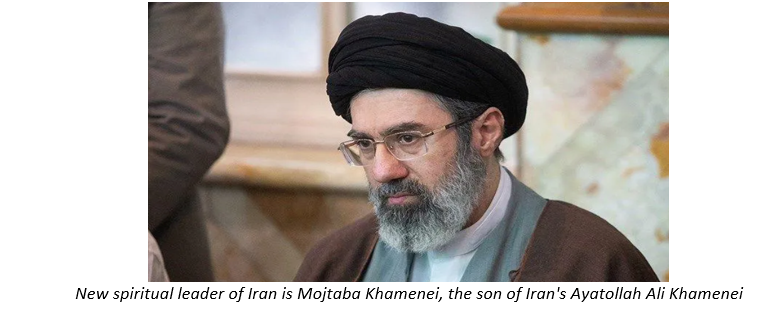
The assassination of Ayatollah Ali Khamenei triggered an immediate leadership transition inside Iran. An interim governing structure was quickly established while the Assembly of Experts moved to select a new supreme leader who happens to be Mojtaba Khamenei, the son of Iran’s late Ayatollah Ali Khamenei. Iran’s political system, designed with contingency planning for such scenarios, moved rapidly to avoid a power vacuum.
Nevertheless, the killing of the country’s most powerful political and religious authority is likely to reshape Iran’s internal political dynamics for years. In the short term, however, the attack appears to have unified large parts of the Iranian political establishment around retaliation rather than reform.
Most politicians and public in the West do not realize that Ayatollah Ali Khamenei was not only the Supreme Leader – spiritual and political – of Iran but also global Shia Islam that is estimated to be between 200 and 300 million, representing approximately 10–15% of the total Muslim population. The vast majority live in the Middle East and South Asia, with the highest concentrations in Iran, Pakistan, Iraq, and India. The largest Shia population is in Iran, where they constitute roughly 90–95% of the population.
Ayatollah Ali Khamenei was to Shias, what the Pope is to Catholics the world over.
Iran’s quick retaliation
Iran responded rapidly with military strikes across the region.These counterattacks included:
- Missile and drone strike against Israeli military targets
- Attacks against U.S. military and navel bases in the various Middle Eastern countries
- Operations targeting U.S. early warning radar stations in various Arab countries
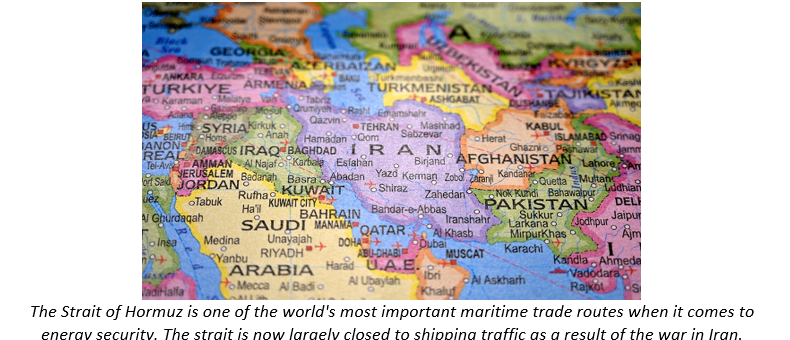
- Closing of Strait of Hormuz which provides the only sea passage from the Persian Gulf to the open ocean and from where 21% of international energy supplies pass.
Iran had previously demonstrated its missile capabilities during earlier confrontations, including attacks involving over 150 ballistic missiles and more than 100 drones during exchanges with Israel. Although missile defense systems intercepted many projectiles, the retaliation demonstrated that Iran retained significant offensive capability despite heavy strikes. In the latest war, Iran successfully penetrated USA and Israel defenses and caused heavy losses to American and Israeli radars, official operational bases and civil infrastructures in Tel Aviv and Haifa cities.
Possible regional and global consequences
Analysts warn that the escalation of these two weeks strikes could have far-reaching consequences. The conflict risks drawing in additional actors including Hezbollah, Gulf states, and other Iranian-aligned groups across the Middle East. Some experts believe the attacks could strengthen arguments within Iran for pursuing nuclear weapons as a deterrent. A wider conflict in the Persian Gulf could disrupt shipping lanes and global energy markets, signs of which are already visible in almost doubling of raw oil prices.
Iranian retaliation against U.S. bases has already widened the conflict beyond Israel and Iran alone. NATO involvement cannot be ruled out but Russia and China have publicly warned against such move.
International political divisions and divided response
The international reaction to the strikes has been deeply divided.The attacks have produced sharply different reactions globally, with Western governments largely supporting or cautiously backing Israel and the United States, while other states and international actors warn that the escalation risks a broader war.
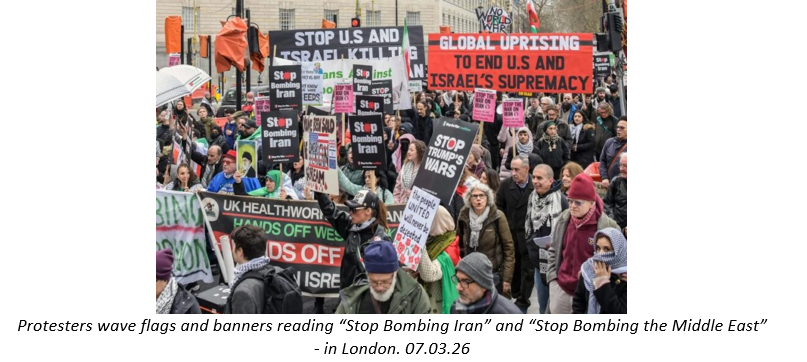
Some governments expressed support for Israel’s security concerns, while others warned that the assassination of a sitting head of state—or its functional equivalent is illegal and represents a dangerous escalation in international conflict. Global protests have taken place in several countries, reflecting fears that the crisis could expand into a broader regional war. Meanwhile, diplomats have warned that the conflict risks destabilizing global energy markets and triggering a wider geopolitical confrontation between the West and the South.
Europe’s strategic and moral dilemma
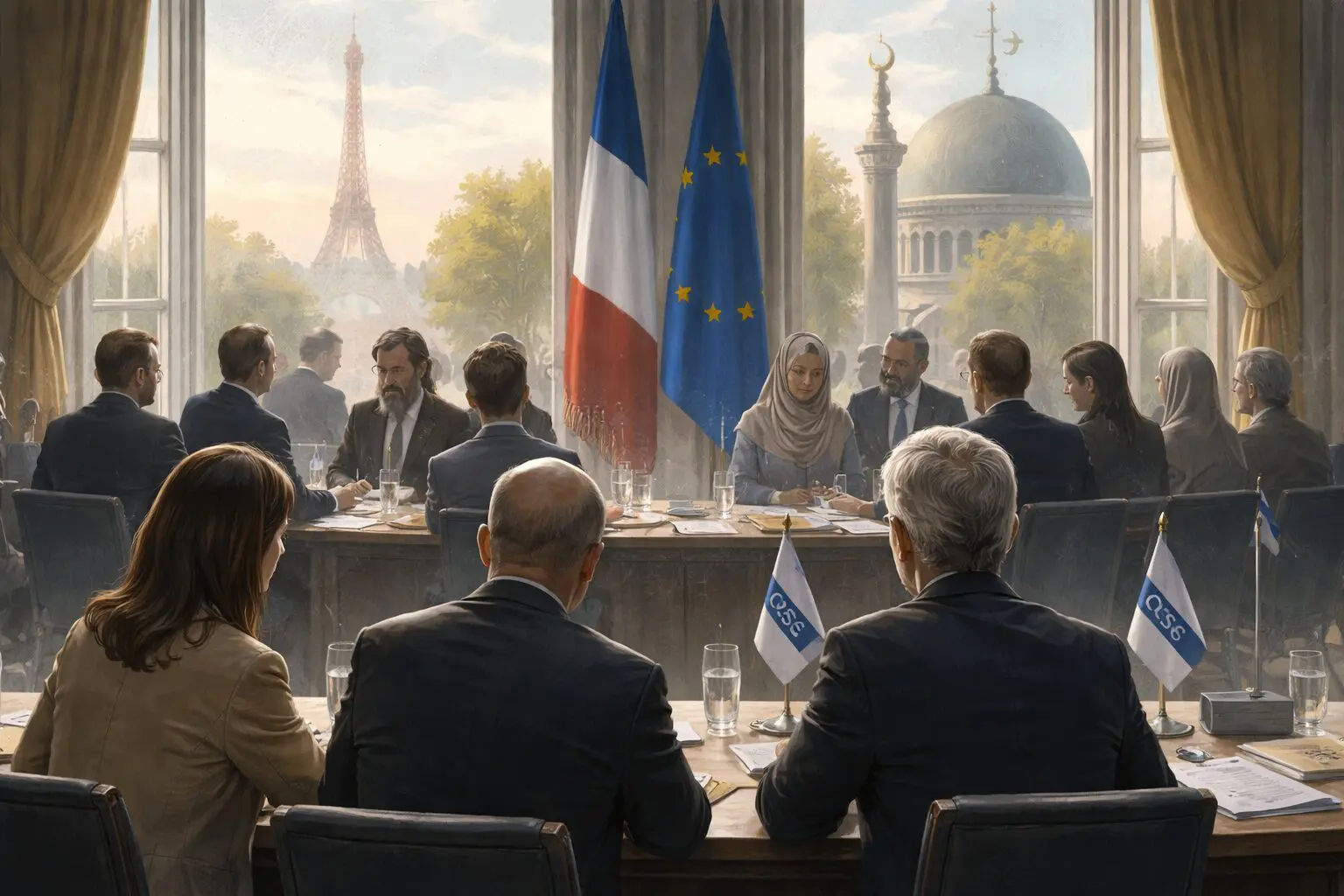
For Europe, the crisis presents a profound political challenge. European governments have been among the strongest defenders of international law in condemning Russia’s invasion of Ukraine. The principle of territorial sovereignty and the prohibition of aggressive war have been central to the European Union’s diplomatic stance since 2022.
The attacks on Iran raise uncomfortable questions about consistency in European values and principles. While European leaders have called for de-escalation, many have avoided explicitly condemning the strikes that killed Iran’s supreme leader. At the same time, they have warned of severe economic consequences if the conflict disrupts energy flows or maritime trade routes.
One notable exception has been the Spanish prime minister, Pedro Sánchez, whose government openly criticized the strikes and warned of the dangers of further escalation. The divergence highlights a broader strategic dilemma within Europe: balancing alliance solidarity with the United States against the EU’s commitment to international law and regional stability.
What should Europe do?
Europe’s response to the crisis may shape its geopolitical role for years to come. Several policy options are increasingly discussed in diplomatic circles, such as:
· European governments should focus on reasserting the international law by emphasizing that targeted killings of national leadership and preventive wars without UN permission risk undermining the legal norms Europe itself relies upon.
· The European Union should pursue independent diplomacy by reviving diplomatic initiatives aimed at restoring nuclear negotiations and reducing regional tensions.
· To protect global economic stability, European states must have strong incentives that would prevent disruptions in the Persian Gulf that could trigger energy shocks and economic instability.
- If Europe wishes to uphold a rules-based international order, many analysts argue it must apply those principles consistently across conflicts, regardless of the actors involved.
A defining test for European leadership
The war between Israel, the United States, and Iran is not only a Middle Eastern crisis. It is also a test of Europe’s geopolitical identity. Europe has always positioned itself as a defender of international law, multilateral diplomacy, and restraint in international conflicts. That is why the current crisis forces European leaders to decide whether those principles apply universally or only selectively, when it suits their interests.
The choices made in the coming months will determine not only the trajectory of the conflict but also Europe’s credibility as a global political actor. History suggests that moments like this rarely remain ambiguous for long.
Eventually, every political actor must decide where it stands.