Nothing exists in a vacuum. Our everyday actions have an impact not only on us, but also on others around us. The decisions we make are not random – they are based on years of personal development and experience, both of which have shaped us to be the people we are. It is so elsewhere too; economic practices and decisions do not only influence the economic sphere, but are of essential importance to societal and environmental developments. It would be safe to say, then, that the world we live in is comprised of a number of mutually interrelated systems that shape one another, or function only because of one another. Such systems, however, at times tend to ‘naturally’ steal the stage from others, by ‘being’ predominant or more important. This is very well seen in the environment-economy nexus – a complex system, in which the economy depends on the environment, but has also at the same time subjugated the environment, so that it could be exploited for the economy’s own benefit. As we know, this relationship is problematic in itself. There already exist, however, ways to address the issues in the environment-economy nexus, which more or less attempt to solve an eminent environmental crisis.
Such an unequal relationship could be considered unproblematic in cases where the results of it would be for the benefit of humanity and for a greater good. For instance, if exploitation of the environment by the economy would mean the betterment of humanity without negative consequences for anyone, then by all means this exploitation could be considered beneficial. It has become more than obvious, however, that such exploitation and subjugation has crossed certain boundaries and no longer serve their initial purposes. The natural environment has been turned into an abode for economic activity and the economy has failed to fully grasp the fact that it undoubtedly depends on the environment it relentlessly destroys. It would therefore be naïve to disregard the issues resulting from the environment-economy nexus, as it is not enough to blindly trust a harmful economic system with the hope for this system to somehow devise solutions out of thin air.
Luckily enough, somehow the world has become aware of the need to act. Or at least parts of the world nowadays. Or at least, theoretically there exist approaches to resolving many issues in the environment-economy nexus, if not all of them. Regardless of which stage of solution-finding one believes we are at, whatever is happening in the world right now is barely enough. We need to do much more in order to contribute to creating a sustainable environment. And we need to do that because there is damage done already. There is damage that is being done too, and we need to act on all fronts to confront it.
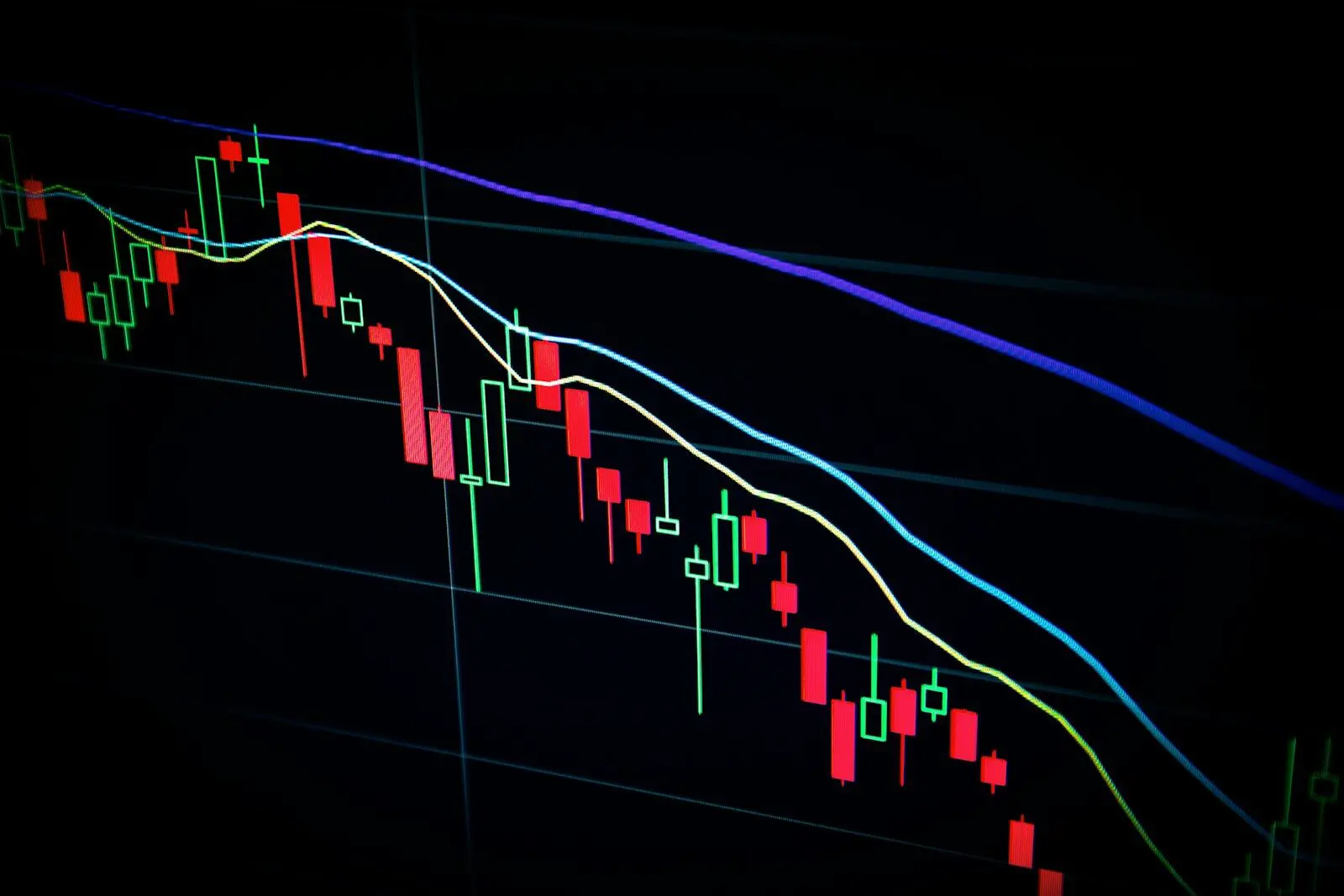
Technological positivism – the belief that technological advancements are inherently good for humanity’s development, and are able to solve all present and emerging problems – is perhaps an approach which would discard all of the above. Undoubtedly so, this is possible because technological positivism has its own logic and beliefs. From the environment-economy logic, technological positivism would believe in the core idea that the economic system we live in has so far solved all of the crises it has encountered with the help of technology. Should there be a crisis, proponents of the idea argue, then it would immediately fall into the money-making logic. The crisis would be seen as a money-making opportunity and would easily be financialised; viewed as an easy opportunity to make money. The more pressing the crisis, the more money on the horizon. The more the money, the more the people. The more the people, the more the competition. The more the competition, the more the ideas. The more the ideas, the more the solutions… and so on. This would only be possible, however, when the crisis is so pressing that it naturally disrupts the ‘perfect’ functioning of the economy and necessitates immediate action. What until then? Until then, the crisis is non-existent.
A very important question arises from this – is it worth waiting for the situation to get so bad that the crisis be a reason for creating economic competition which would, in turn, result in technological advancements, which are believed to work in our favour. Key words – are believed to. Is it worth waiting for an even worse situation for us to start saving the natural environment, the planet we live on? Let me answer instead of you – IT IS NOT. Let us remember the famous saying ‘we do not inherit the planet from our ancestors; we borrow it from our children.’ I strongly doubt that a concerned parent would leave it to the natural development of the economy to decide when to act upon a looming environmental crisis, especially when the future of this parent’s children depends on this same environment.
My appeal is that everyone acknowledge the need for action. On a daily basis, regularly, in our everyday activities, in our families, friend groups, societies. Action on a top-down or bottom-up level. From bringing your own mug to work instead of using plastic or even paper ones, and putting a sweater on when cold at home instead of turning the heating on immediately, to contributing to knowledge and awareness-raising campaigns to help people understand the problem and help devise laws on a higher level. Everything matters. Everything needs to be done at once, by everyone. Only with joint action could we leave to our children a healthy planet – a planet on which they could thrive, taking care of it for their children, and so on in the future. A future only possible if we all understand the need to act now!
***
So far, in the Series I have briefly covered only one of the things which often remain hidden from conventional economic practices and debate. I could say that I have only scratched the surface of an ever growing issue which deserves immediate attention. However, it is not the only one. As I outlined in the very first article of Hidden from the Economy, there are a number of things that remain hidden, yet are an integral part of the economy. Labour and work are but two of those, which I shall begin discussing in the next section of the Series.