Regardless of whether we consider the natural environment a separate realm from the economic one, or just a section within a bigger realm, one thing is undoubtedly true – constant economic growth requires the subjugation of the natural environment for the sustainment of the economic system. This same economic system that brought a shift in the essence of environmentally-related human and later economic activity. But what is the issue at hand? Economic activity is known to bring about development in different spheres and even though it exploits (in different forms of the term) both humans and the environment, this is believed to be for the better. To paraphrase British economist Joan Robinson’s suggestion, ‘the only thing worse than being exploited by the capitalist system is not being exploited at all.’ It seems, then, on the one hand, that this exploitation which leads to the sustainment of the economic system is good exploitation. The sustainment of the economic system will bring prosperity for all – such is the belief of proponents of the so-called neoclassical school of thought in economics. On the other hand, however, issues caused by this exploitation are apparent and require our attention.
It is easily observed that the most discussed issue caused by this exploitation is indeed environmental degradation caused by relentless economic activity. Having the sole purpose of sustaining and expanding the system (since the logic here remains the logic of constant expansion), this activity disregards the negative effects it might have on the externalised realm – the natural environment – and focuses on its own benefits. To present it step by step – free market economies (or world capitalism) require constant economic growth mainly in the form of multiplying capital. This capital, then, is reinvested in presumably profitable activities which, in turn, bring even more capital and so the process goes. Until when, however, can this capital be reinvested in a profitable manner? How much could companies invest in the development of newer products and how much can people consume? When capital can no longer bring as much returns, it needs to be relocated. Such relocation happens to realms previously untouched by the economy, uncommodified.
To briefly comment on commodification, very simply put, a commodity is anything (material or non-material) that could be bought, sold, and used. Take a simple book as an example – I could buy a book using money and then use this book to read for pleasure. This book has been produced probably for these purposes – to be sold and to be read. It gets more complicated, however, when non-economically produced things become commodities. Since the term commodity comes from economic theory, albeit critical, it is supposed to make sense within the economic realm and to cover things produced by the economy, which could be bought, sold and used. Can, then, a tree from the nearby forest be a commodity? Two answers – yes and no. Yes, because it could be bought and sold, and used (to be turned into wood, for instance). No, because it is not part of the economy in the sense that the economy has no relation to it in terms of production (with some exceptions in which the trees have been intentionally). Take another example – care (be it child or elderly). Could care be a commodity? Yes, because it could be bought, sold, and used. No, because care as such is nor per se an economic activity, despite being essential for the economy (we shall discuss this in a later article).
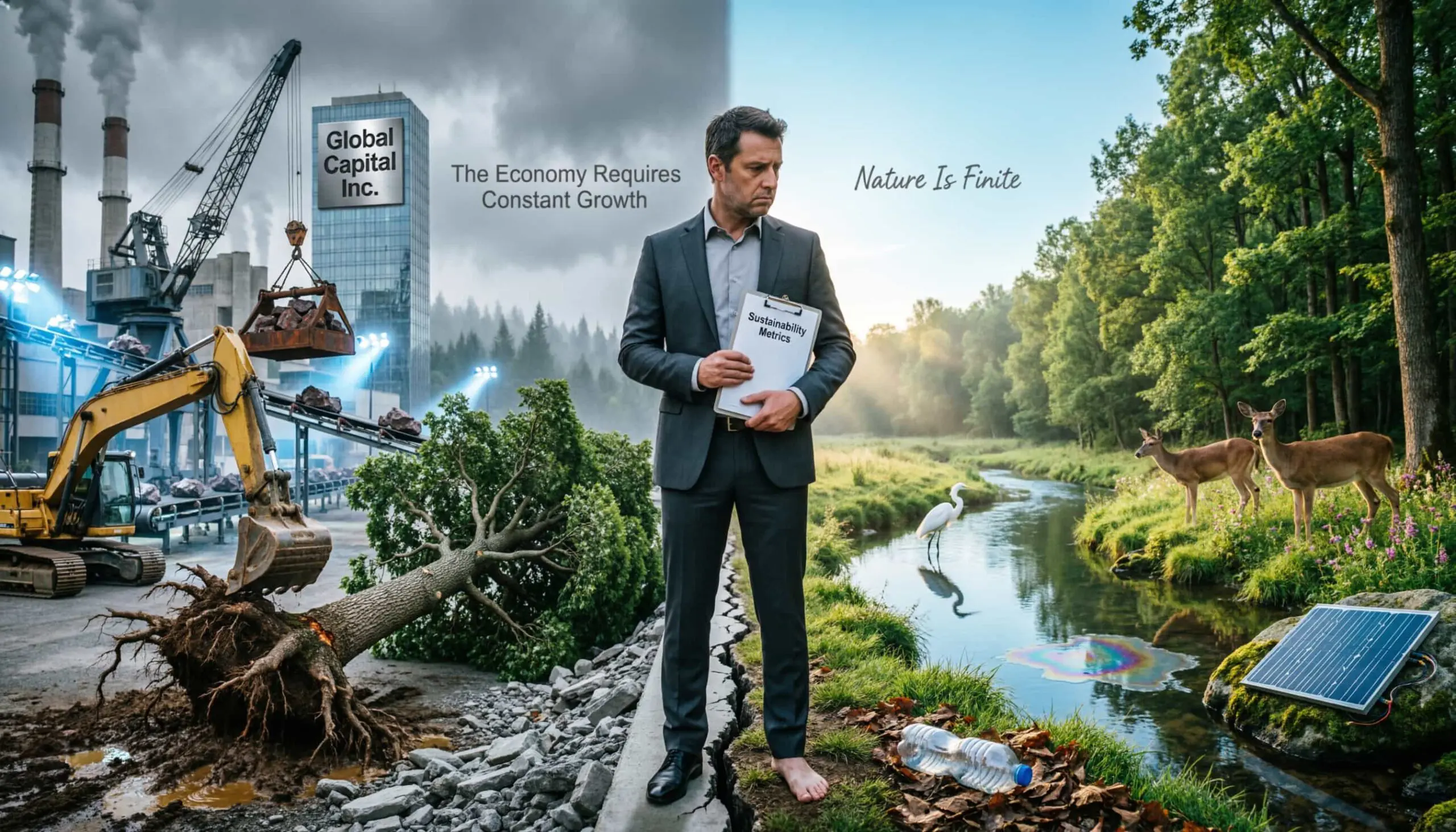
The commodification of nature is the first step of the subjugation of the environment to the economy. It is a process that has taken the environment for a granted, out-there realm, which is full of resources for infinite exploitation. Two main contradictions lie at the core of this assumption: one, the environment is not an out-there realm that exists independently from the economy, and even worse – the economy does not exist independently from the environment, as the former depends on the latter and they influence, shape and define each other; two, the natural environment is finite and sooner or later, the resources that the economy so much likes to exploit as if without consequences would sooner or later end. This subjugation has allowed the economy to position itself on top of the realm hierarchy and disregard relationships of mutual benefit and necessity. It has also allowed for the relentless exploitation of the natural environment in all forms – large-scale deforestation without forestation, waste-dumping and pollution.
These issues of a perverted inter-realm relationship, in which the economy has positioned itself on the top of the realm hierarchy and, because of its sustainment, has been exploiting other realms, such as the one of the natural environment, comprise the environment-economy nexus. They are in the heart of the environmental crisis the world is currently facing. Yet, there is hope! The environmental damage that has been done has been acknowledged by the vast majority of decision makers in the world. And there is an active approach to it. The logic of constant expansion is to be kept, yet altered. It needs to happen sustainably. So that it does not do more damage on the natural environment. This was the advent of sustainability. Reuse, reduce, recycle, zero-carbon emissions and the likes. A greener approach to the economy, hence with a look towards the natural environment. Is it sufficient, however? Is it enough and is it genuine? I turn to these questions in the following article.