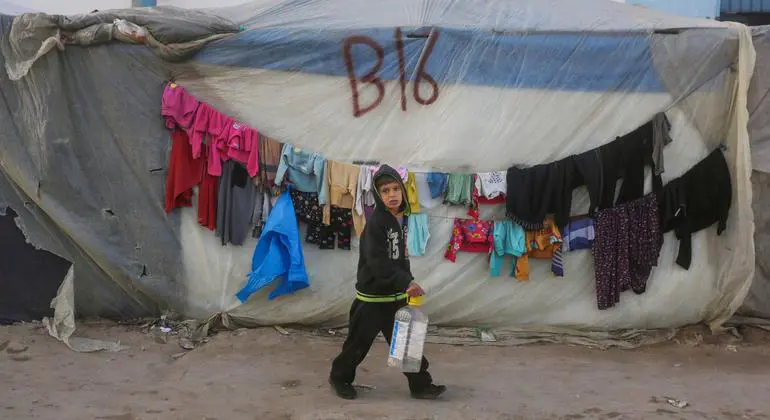
A recent survey revealed that half of the households reported improved access due to a rise in commercial and humanitarian deliveries. However, the UN Office for the Coordination of Humanitarian Affairs (OCHA) cautioned that no food aid convoys have reached northern Gaza through any direct crossings since September 12. In spite of the severe conditions in northern Gaza, the UN agency indicated that approximately 90 percent of the estimated 29,000 individuals who relocated within the Strip over the weekend were making their way from the south to the north.
On Saturday, the United Nations and its partners managed to gather nearly 200 truckloads of critical supplies from Israeli crossings along the Gaza perimeter fence.
The cargo included nearly 1,900 metric tonnes of various food products, wheat flour, and over 100 pallets of food boxes. Additional items comprised more than 1,000 pallets of mattresses, blankets, tents, tarpaulins, and winter apparel; 300 pallets filled with hygiene kits, buckets, water containers, and jerry cans; 50 pallets of fortified cereals; and around 200 pallets containing dignity kits, menstrual health supplies, and midwifery items.
On Sunday, preliminary data indicated that UN teams collected nearly 1,000 pallets of blankets, tents, hygiene kits, water tanks, mats, winter clothing, tarpaulins, and jerry cans, along with one truckload of animal feed. “All this information is preliminary and pertains to the UN and our partners, excluding bilateral contributions and the commercial sector,” stated UN Deputy Spokesperson Farhan Haq during a press briefing in New York on Monday.
In terms of meals and nutrition, the UN and its collaborators are currently supporting 17 bakeries in Gaza—nine in the southern region and eight in the north—that together produce 150,000 bundles of bread daily, according to the latest statistics. “We are also assisting 180 kitchens that provide nearly 1,160,000 meals every day,” Mr. Haq added. “On the nutrition side, we are backing 133 treatment facilities, including 20 located in Gaza City, where famine was confirmed in August.”
During the weekend, teams distributed 1,000 tarpaulins and 2,500 blankets to those in need. Since the ceasefire, the UN’s reproductive health agency, UNFPA, has provided support to approximately 90,000 women and girls with reproductive health and hygiene products.
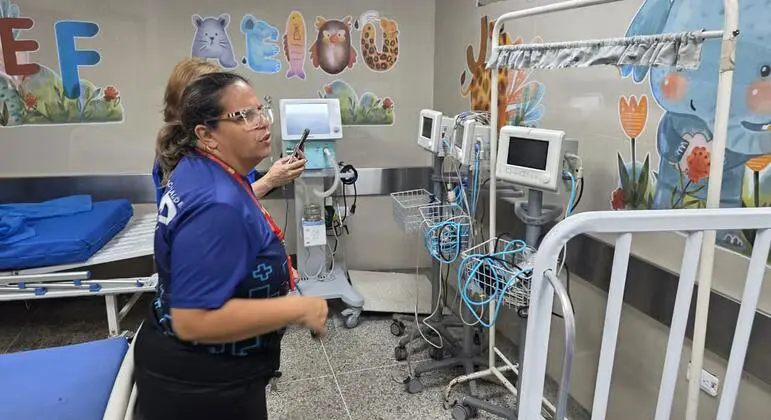
This assistance includes the provision of medical equipment and supplies to 13 health facilities across the Strip, which features incubators and surgical tools, according to Mr. Haq. UNFPA has also delivered thousands of post-partum kits and dignity kits to women and girls. Additionally, renovations are underway in four schools, and over the last three days, the UN and its partners have facilitated the reopening of five temporary learning spaces in Gaza City.
Source link
Related reading
Geopolitical tensions affect global economy, Gaza aid funding shortages, violence in South Sudan, UN condemns deadly mosque attack
World News in Brief: Risky return home in Lebanon, displacement in Gaza, emergency funding for Somalia