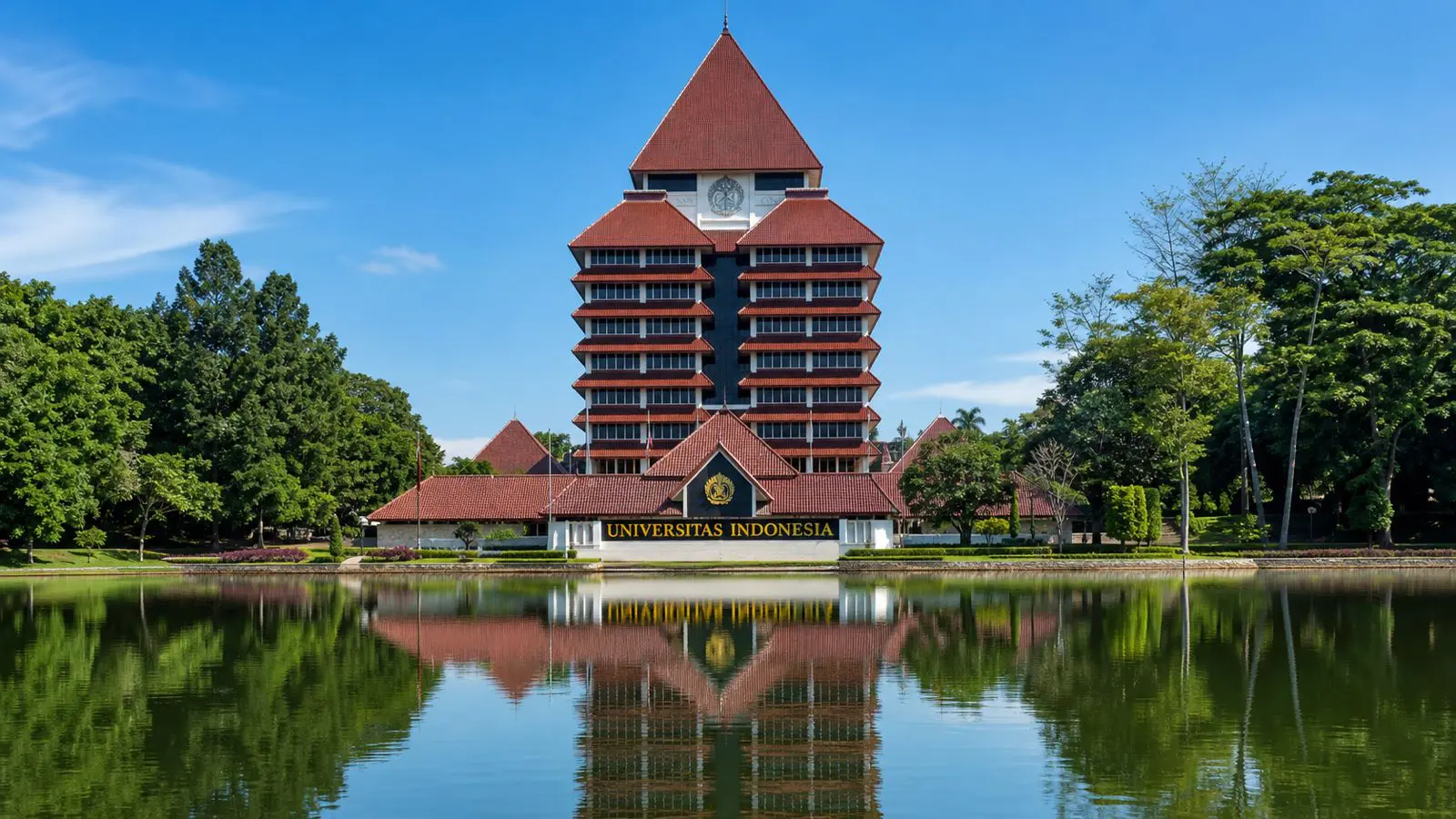
Based on a lecture on the 21 May EU Resolution and at the Graduate School of Sustainable Development, Universitas Indonesia, Jakarta, 26 June 2026
Jakarta (28 June 2026) – On 21 May 2026, the European Parliament adopted a Resolution on human rights in Indonesia by 469 votes to 38 — its first such resolution in nearly a decade. The margin was striking. So was the silence that had preceded it.
The timing was no accident. The EU and Indonesia recently concluded a landmark free trade agreement. Indonesia holds the presidency of the UN Human Rights Council in 2026. And the same Members of the European Parliament who passed the human rights resolution will soon vote on whether to ratify the trade deal. The link between human rights accountability and trade ratification is precisely what makes this moment significant.
What Triggered the Resolution
The immediate trigger was a pair of acid attacks on human rights defenders. On the night of 12 March 2026, Andrie Yunus — the 27-year-old deputy coordinator of KontraS, one of Indonesia’s most respected human rights organisations — was returning home when two men on a motorcycle threw acid at him. He suffered burns to his face, hands, and chest, and permanent damage to one eye. Four members of Indonesia’s Strategic Intelligence Agency were subsequently arrested. Weeks earlier, Muhammad Rosidi, an environmental activist campaigning against illegal mining, had been attacked in the same way.
In June 2026, a military tribunal sentenced four officers to prison terms of between one and a half and three years. Civil society groups pointed out that only four of at least fourteen identified perpetrators were tried, and that the question of who ordered the attacks was never answered. The European Parliament’s deeper concern was structural: the case was heard in a military court, not a civilian one. That distinction matters under international human rights law because it goes to the heart of whether justice is truly independent.
A Broader Deterioration
The resolution went beyond these two cases, citing what MEPs called “the overall deterioration of the situation in the country” across three areas.
The military’s expanding role in civilian life. In 2025, Indonesia’s parliament changed the law to allow active military officers to hold positions in 16 civilian institutions — including the Supreme Court and the Attorney General’s Office — without first leaving the armed forces. Nearly 4,500 military personnel were already embedded in civilian agencies by early 2025. Critics warned this echoes the dwifungsi — “dual function” — doctrine of the Suharto dictatorship, under which the military simultaneously ran defence and civilian governance. Dismantling that doctrine was a central goal of Indonesia’s democratic transition in 1998.
Press freedom and the shrinking of civic space. Indonesia’s press freedom ranking fell 16 places in 2025, to 127th out of 180 countries. Journalists’ organisations recorded 89 cases of violence against reporters — the highest in years. Over 100 human rights defenders faced arrest or physical attack in the first half of 2025 alone.
Papua and West Papua. The western half of the island of New Guinea is home to a Melanesian indigenous population ethnically distinct from the rest of Indonesia. The territory was transferred from Dutch to Indonesian administration in 1963 and incorporated following the 1969 “Act of Free Choice” — a process in which only 1,025 hand-picked representatives voted under military pressure, widely condemned internationally as neither free nor fair. It has since fuelled a decades-long independence movement and low-intensity armed conflict. At the start of 2026, more than 105,000 civilians were internally displaced due to military operations — most of them indigenous Papuans. Indonesia has refused the UN human rights chief access to the region since 2019, despite requests from 111 UN member states.
These concerns are not only raised by outsiders. In April 2026, a coalition of Indonesian civil society groups — including KontraS, Amnesty International Indonesia, and Greenpeace Indonesia — declared a “human rights emergency” in Papua. Their appeal was addressed not to Brussels, but to their own government.
Trade, and Why It Matters Here
The EU is Indonesia’s fourth-largest trading partner. In 2025, bilateral trade in goods reached €28.9 billion. The recently concluded Comprehensive Economic Partnership Agreement (CEPA) — a free trade deal covering goods, services, and investment — goes further than any previous agreement between the two sides. It will eliminate tariffs on the vast majority of traded goods, save EU businesses around €600 million a year in duties, and is projected to boost Indonesian exports to Europe by up to 60% and benefit around five million Indonesian workers.
But the CEPA matters beyond economics. It contains legally binding commitments on core labour standards and designates the Paris Climate Agreement an “essential element” of the deal — meaning serious breaches can ultimately trigger trade penalties. A dedicated protocol on palm oil links trade access to compliance with EU rules against deforestation, touching directly on land rights in indigenous communities. A Civil Society Forum gives NGOs from both sides a formal voice in how the agreement is implemented.
The CEPA is not yet in force — it still needs European Parliament approval. That vote will be cast by the same MEPs who just passed the human rights resolution. This gives human rights concerns real weight: they are not separate from the trade relationship, they are embedded in it.
What Europe Should — and Should Not — Do
The Parliament’s resolution described Indonesia as “an important partner for the European Union.” It was not an attack. It was a message from a partner — the kind that, handled well, can strengthen a relationship rather than damage it.
The EU-Indonesia Human Rights Dialogue, now in its eleventh round, must be treated as a genuine mechanism rather than a diplomatic ritual. The Parliament specifically called for engagement to be intensified “at the highest level.” That is an opportunity, not a threat.
The trade ratification process offers real leverage. Conditioning parliamentary approval on measurable progress — on civilian oversight of the military, media freedom, and access to Papua — is more effective than words alone. Labour rights groups have already noted that Indonesia ranks among the world’s worst performers on workers’ rights. Some NGOs have called for ratification to be withheld until protections are more firmly secured.
But Europe must also be honest with itself. European countries face their own human rights criticisms — on migration, surveillance, and minority rights. The principle that human rights are universal only holds credibility if it is applied universally. Indonesia is right to ask why a resolution focuses on two acid attacks while comparable abuses in more strategically valuable countries pass without comment. These are fair questions. They deserve direct answers.
Indonesia’s Choice
Indonesia is a genuine democratic achievement — the world’s third-largest democracy and the largest Muslim-majority nation. Civil society organisations can take the government to court, speak to international media, and lobby foreign parliaments directly. The fact that KontraS can brief MEPs in Brussels is something many governments in the region would not permit.
Indonesia has also made real progress: a Sexual Violence Law enacted in 2022, sustained national human rights action plans, and constructive engagement at the most recent EU-Indonesia Human Rights Dialogue in Yogyakarta earlier this year.
But the gap between Indonesia’s commitments and its reality has grown — and the people pointing to that gap are primarily Indonesians. Indonesia’s presidency of the UN Human Rights Council makes this moment particularly significant. That position carries an implicit acceptance that human rights standards apply to everyone, including the country holding the chair.
The reforms that are being called for — civilian control of the military, genuine accountability for attacks on activists, media freedom, and independent monitoring in Papua — are not European demands. They are demands from Indonesian citizens, made through the democratic institutions and international bodies that Indonesia itself now helps to lead.
Hans Noot is an editor of the HRWF daily newsletter and a practitioner in human rights documentation. This article is based on a speech delivered at the Faculties of Law and International Relations, Universitas Indonesia, followed by a panel discussion on international human rights law.

![[Press Release] Tabernacle Choir Returns to Hollywood Bowl as Beacon of Hope](https://i0.wp.com/newsroom.churchofjesuschrist.org/media/640x480/20260624_RCollier_507824.jpeg?resize=1,1&ssl=1 "[Press Release] Tabernacle Choir Returns to Hollywood Bowl as Beacon of Hope")