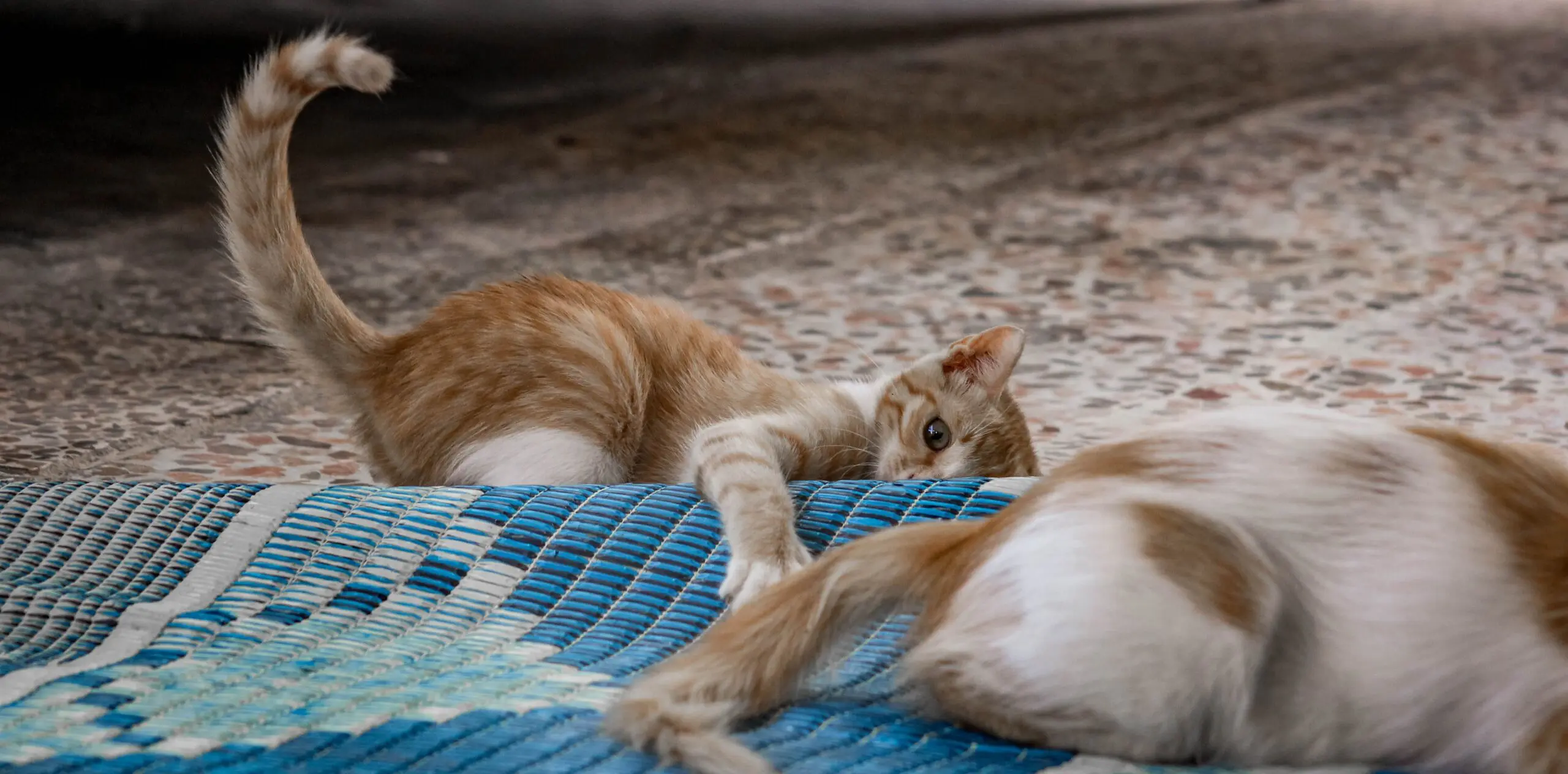
If you have a cat, you’ve probably noticed how she persistently rubs her face against corners, furniture, or even you. Sometimes it happens as soon as you get home, and other times it happens quite spontaneously, as if for no reason.
This behavior may seem strange or random, but it actually has a completely logical explanation. Cats use such gestures as a way to communicate, express emotions, and interact with their environment. Through them, they leave signals that are understandable to other animals — and even to us, if we know how to read them. Behind this seemingly simple habit are interesting instincts and mechanisms that reveal a lot about the behavior and inner world of cats.
Why cats choose corners
Corners are one of the most favorite places to rub, and this is not at all a coincidence. Their shape allows the cat to exert more pressure with its cheeks and muzzle, which facilitates the release of pheromones. Unlike flat surfaces, corners probably provide better contact and traction, making marking more effective.
They are also often found in strategic locations in the home – near doors, hallways or high-traffic areas. This is where scents are most important, as they serve as a guide and safety signal.
By rubbing their muzzles in these areas, the cat is literally “marking” their territory and creating a network of familiar scents. This helps them feel more relaxed and confident in their surroundings. So it’s no surprise that you’ll often see them returning to the same corners over and over again.
5 reasons why cats rub their muzzles in corners
1. Marking territory
One of the most widely accepted theories is that cats use scent to mark objects. They use scents as a means of communication and have special glands around their cheeks. When they rub, they leave a scent that other cats can recognize.
These scents are used by cats to gather information about each other. Corners are preferred because they provide better traction—it’s much easier to rub against them than flat surfaces.
2. Greeting
Pets often greet each other by rubbing their faces against each other. This is how they exchange scents and “get to know each other.” If your cat starts rubbing against you when you come home, it’s usually a sign that they’re welcoming you and happy to see you.
It’s important to note that not all cats show affection this way. If yours doesn’t, it doesn’t mean they don’t love you—they’re just expressing it in a different way.
3. Attention Seeking
Purring friends are very observant and quickly learn which actions get your attention. If you respond when your cat rubs against you, they’re likely to repeat this behavior.
Over time, this becomes a habit. That’s why many cats start rubbing their faces against their owners when they’re hungry, bored, or looking for company.
4. A display of affection
Rubbing against people can also be an expression of affection. When a cat leaves its scent on you, it’s essentially “incorporating” you into its territory.
This shouldn’t be seen as possessive, but more of a compliment. Cats don’t rub their faces against people they don’t trust. So it’s a clear sign that it feels safe with you.
5. Stress relief
Rubbing itself has a calming effect on cats. It can help them relax or cope with stress.
Sometimes cats start rubbing their faces more often when they’re anxious or stressed. Other times, this behavior increases when they feel calm and secure in their environment. Then it’s a good sign that they’re accepting your home as their own.
Is it bad if my cat rubs its face on everything?
This behavior is completely normal. However, there are situations in which it can be a sign of a problem.
If the rubbing becomes too frequent or obsessive, it can be a compulsive behavior. It is sometimes associated with medical or neurological conditions, such as head injuries, nervous system diseases, encephalitis or tumors. Severe stress and anxiety can also lead to such manifestations.
These conditions are usually accompanied by other symptoms. The cat may begin to move restlessly, walk in circles, appear disoriented or have problems with coordination. Sudden changes in behavior or mood are also possible.
If you notice such signs or have any doubts, it is best to consult a veterinarian as soon as possible. He will be able to determine the cause and prescribe appropriate treatment.
Why do cats rub on new objects?
When you bring a new item into your home – be it a piece of furniture, a bag or even a box – your cat will be intrigued. Often, furry friends will start by sniffing, which of course turns into rubbing. This behavior is a way to “secure” the new thing in their environment. Unfamiliar smells can be a source of stress for cats, as they rely heavily on their sense of smell.
By leaving her pheromones on the new object, the cat makes it part of her familiar territory. This helps her reduce tension and accept the change more easily. In addition, by rubbing, she mixes the new scent with her own, which creates a sense of control and security. In this way, even the most ordinary new objects gradually become “hers” and no longer pose a threat.A little about cat pheromones
An interesting fact is that cats have special scent (pheromone) glands not only on their cheeks, but also in several other places on their bodies – under the chin, around the lips, above the eyes and even at the base of the tail. Through them, they secrete pheromones – chemical signals invisible to humans that serve as communication between animals. When a cat rubs its muzzle against corners, furniture or people, it actually leaves its own “aromatic signature”, marking the space as safe and familiar.
Interestingly, these pheromones do not have a strong smell for the human sense of smell, but they are extremely important for the cats themselves.
Rubbing their muzzles against corners, objects, and people is a completely natural part of pet behavior. It is a way for pets to communicate, express emotions, and create a sense of security in their environment. Although it may seem strange at times, this behavior actually reveals how complex and subtle the way cats perceive the world around them is. It is important for owners to understand these signals, as they help build a better bond with their pet. In most cases, there is no reason to worry – on the contrary, it is a sign that the cat feels good and accepts your home as its own. Only in the event of a sudden change or excessive behavior should you seek advice from a specialist.
Illustrative photo: pexels-samerdaboul-2532357