

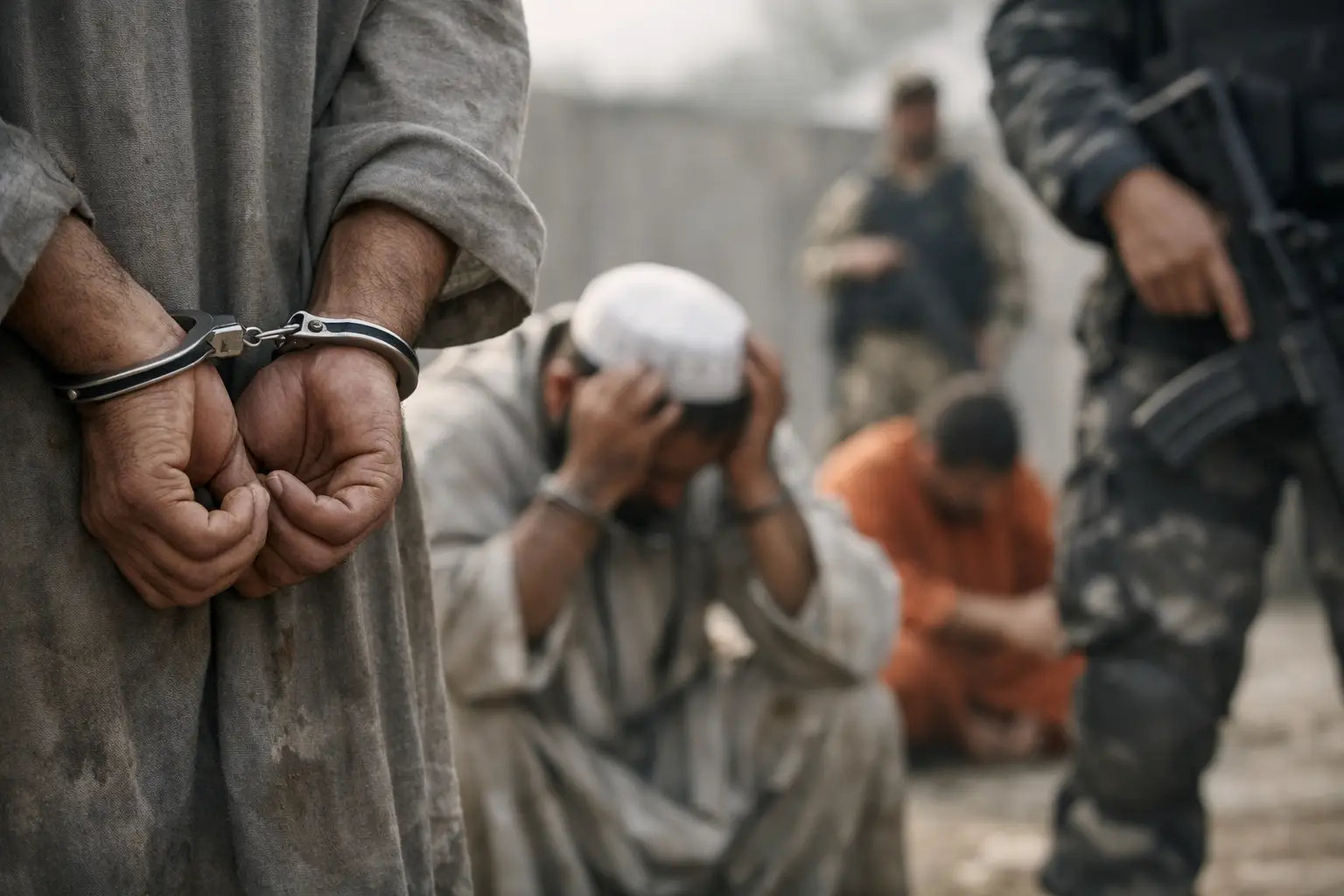
When a state closes a church, jails a blogger for alleged blasphemy, or forces a minority believer to register with the police, the issue is not simply religion. It is power. The most telling examples of religious persecution show how governments, militias and even local majorities use belief – or non-belief – as a way to control identity, dissent and public life.
For European readers, this is not a distant concern. Freedom of religion or belief is embedded in international human-rights law and sits squarely within the remit of European institutions, diplomatic engagement and asylum systems. It also intersects with security policy, anti-discrimination law, education, migration and foreign affairs. Treating persecution as a private spiritual matter misses the point. It is a public-order issue, a legal issue and, often, an early warning sign of wider democratic decay.
What counts as religious persecution?
Religious persecution goes beyond disagreement, criticism or offence. In rights terms, it involves serious coercion, discrimination or violence directed at people because of their religion or belief. That can affect believers, converts, atheists, agnostics and people accused of holding the “wrong” views.
The threshold matters. Not every social prejudice is persecution, and not every restriction is unlawful in the same way. A neutral safety rule applied proportionately is different from a law designed to suppress one faith community. But the pattern becomes clear when states punish worship, deny legal status, remove children, block employment, encourage mob violence or criminalise conversion.
10 examples of religious persecution
1. Criminalising blasphemy and apostasy
One of the clearest examples of religious persecution is the use of blasphemy or apostasy laws to imprison, intimidate or execute people for speech and conscience. In some jurisdictions, accusations alone can destroy lives even before any trial takes place. The law becomes a weapon for settling personal disputes, silencing minorities or suppressing reformist voices.
This matters because freedom of religion includes the right to change religion or to have none. Once the state punishes disbelief, theological debate becomes a criminal matter and citizenship is narrowed to one approved identity.
2. Banning worship or closing places of worship
Authorities may refuse permits for churches, synagogues, temples or mosques, demolish buildings on administrative pretexts, or bar communities from gathering at all. Sometimes this is done openly. Sometimes it is disguised as zoning enforcement or registration policy.
The practical effect is severe. Worship cannot function without space, and communities without legal recognition are easily pushed into illegality. When the state decides which groups may pray publicly, it is not regulating religion neutrally. It is ranking citizens by belief.
3. Mass detention of religious minorities
Some of the most alarming modern examples of religious persecution involve mass internment, political indoctrination and surveillance directed at religious minorities. These systems often combine facial recognition, arbitrary detention, restrictions on dress and prayer, and pressure to denounce religious practice.
Such campaigns are usually justified in the language of extremism or national unity. That is precisely why scrutiny matters. Security concerns are real, but collective punishment of an entire faith-linked population is not counter-terrorism. It is rights abuse on an industrial scale.
4. Forced conversion and coercive marriage
In several regions, particularly where minorities are socially vulnerable, girls and women face abduction, forced conversion and marriage under pressure. Families then encounter police indifference, hostile courts or bureaucratic obstruction when trying to seek redress.
This form of persecution is often underreported because it sits at the intersection of religion, gender and class. It is not only an attack on belief. It is also an attack on bodily autonomy and equal citizenship.
5. Targeted mob violence with impunity
Persecution is not carried out by states alone. Mobs may attack homes, businesses and places of worship after rumours of blasphemy, alleged desecration or inflammatory preaching. What turns such incidents into persecution is not just the violence itself, but the failure of authorities to prevent it or punish those responsible.
Impunity sends a message. A minority group learns that formal rights exist on paper, while real protection has collapsed on the street. That gap between law and enforcement is one of the central facts of religious persecution worldwide.
6. Discriminatory registration systems
Some governments require religious groups to register before they can own property, employ clergy, publish literature or gather legally. In principle, registration can be an administrative tool. In practice, it is often used selectively to exclude unpopular or politically inconvenient communities.
This is where nuance matters. Not every registration requirement is persecution. The question is whether the process is fair, transparent and non-discriminatory. When approval depends on theology, numbers, ethnicity or loyalty to the ruling order, the system becomes coercive.
7. Punishing converts and mixed-faith families
Converts frequently face pressure from both state and society. They may lose custody rights, inheritance, work or personal security. Mixed-faith couples can encounter legal barriers, family violence or accusations of betrayal.
These cases reveal a basic test of freedom of religion or belief: can a person choose, change or leave a faith without fear? Where the answer is no, persecution is not incidental. It is structural.
8. Restrictions on religious dress, symbols and practice
This area is legally and politically contested, especially in Europe. Some restrictions are defended as necessary for security, public service neutrality or child protection. Others plainly target a community’s presence in public life.
The difference lies in proportionality and discrimination. A narrowly tailored rule in a specific setting is not the same as a blanket measure designed to stigmatise one religion. Policymakers should be careful here. States can both overreach in the name of secularism and fail to protect individuals from coercive religious control within communities.
9. Persecution of atheists, humanists and dissenting believers
Freedom of religion or belief protects the right not to believe. Yet atheists, secular activists and internal critics of dominant religions are still harassed, jailed or attacked in many countries. Some are charged with insulting religion. Others are excluded from public office or treated as outside the moral community.
This point is often neglected in public debate. Religious liberty is not a privilege for religious institutions alone. It is a broader freedom of conscience, and it fails if non-believers are left exposed.
10. Cultural erasure and destruction of religious heritage
Persecution is not limited to direct physical harm. It can also involve the destruction of cemeteries, monasteries, manuscripts, shrines and sacred art, especially where authorities seek to erase a minority’s historical presence.
That is more than vandalism. It is an attempt to rewrite the social map by removing evidence that a community belongs. In post-conflict and authoritarian settings alike, attacks on heritage often accompany displacement, intimidation and denial of return.
Why these examples of religious persecution matter in Europe
European institutions regularly condemn FoRB violations abroad, but credibility depends on consistency. That means scrutinising asylum decisions, export controls, sanctions policy, hate-crime enforcement and diplomatic priorities. It also means avoiding selective outrage based on geopolitics.
There is another reason for attention closer to home. Religious persecution abroad can spill into Europe through transnational repression, diaspora intimidation, digital surveillance and imported sectarian hostility. A dissenter who escaped one country may still be threatened in another. Human-rights protection cannot stop at the border if intimidation does not.
How to assess a case without oversimplifying it
The worst analysis reduces every dispute involving religion to persecution. The second-worst refuses to name persecution unless there is mass killing. Both are mistakes.
A sound assessment asks a few hard questions. Is the restriction aimed at public safety, or at suppressing a group? Is it applied equally? Are people free to convert, assemble, speak and educate their children within lawful limits? Are attacks investigated properly? Is the burden falling on one minority again and again?
Context matters, but context should not become an excuse. Governments often invoke sovereignty, tradition or anti-extremism. Sometimes those concerns are genuine. They still do not justify arbitrary detention, coerced belief, mob impunity or laws that make conscience a crime.
The policy challenge
Naming examples of religious persecution is only the start. The harder task is building consequences. That may include better documentation, targeted sanctions, trial monitoring, support for independent media, protection for human-rights defenders and more rigorous asylum assessments for those fleeing faith-based abuse.
For journalists and civil-society organisations, precision matters. Inflated claims can damage credibility. Understatement can leave victims invisible. The public interest lies in clear evidence, legal literacy and sustained attention to places that rarely stay in the headlines.
The European Times and similar rights-focused outlets have a role here precisely because these cases often sit between foreign policy, domestic law and human dignity. They are not side issues. They show whether the international system still means what it says when it speaks of fundamental freedoms.
The most useful way to read these cases is not as isolated tragedies, but as tests. A society that punishes prayer today may punish speech tomorrow. A state that decides who may believe can quickly decide who may belong at all. That is why paying attention remains a civic duty, not a niche concern.