


Two long World Cup absences meet in Group C as the expanded tournament gives smaller football nations a larger stage
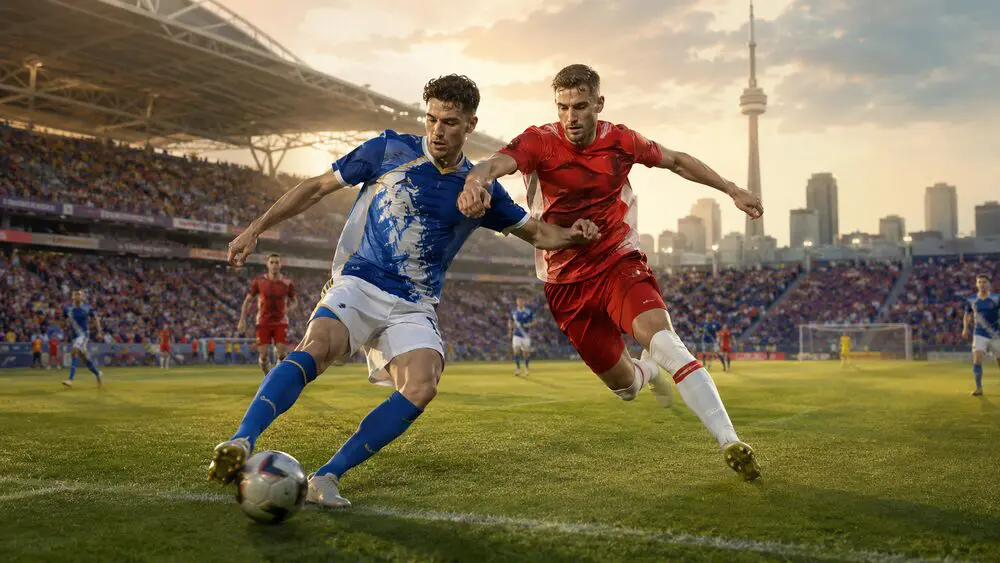
Scotland return to the men’s World Cup against Haiti in Boston on Saturday night, carrying the weight of a 28-year absence into a fixture that is about more than a result. For both teams, the Group C opener is a test of preparation, identity and how football’s biggest tournament now makes room for nations whose communities stretch far beyond their borders.
The match at Boston Stadium in Foxborough begins Scotland’s first World Cup campaign since 1998. Brazil and Morocco also wait in Group C, which leaves little space for a slow start. Yet this opening fixture has a meaning of its own: Scotland are back on the world stage, while Haiti are returning for the first time since 1974.
Steve Clarke’s squad have been in the United States for nearly two weeks, first acclimatising in Florida and then sharpening preparations in Charlotte before moving towards matchday. The Scottish Football Association said around 20,000 Scotland supporters were expected to travel, a reminder that national-team football still carries a civic pull that club football rarely matches.
A return built over years, not days
For Scotland, this is not simply a nostalgic comeback. Clarke’s side reached recent European Championships and then pushed through the harder barrier of World Cup qualification. That matters for a football country whose domestic game often lives under intense scrutiny, but whose national side has slowly rebuilt credibility through continuity, collective discipline and a generation comfortable in demanding leagues.
The opener will still ask practical questions. Scotland need to turn emotion into control. Their midfield has enough European experience to dictate spells of the game, but Haiti’s pace and directness can punish carelessness. In an expanded tournament, where third-place routes can alter the psychology of group play, a first match is not final. It is still formative.
Haiti’s presence makes the fixture unusually rich. Their squad is shaped by migration, family ties and football pathways across Europe and the Americas. Several players developed outside Haiti but chose to represent the country through ancestry, memory and belonging. That is not a footnote to the sporting story. It is part of how international football works in a globalised age.
Haiti also arrive after a qualification cycle marked by instability at home. As recent reporting on Haiti’s return has noted, the team reached the tournament after years in which home fixtures and normal football routines were disrupted by the country’s security crisis. Their World Cup is therefore not only a sporting achievement, but also a public expression of resilience for supporters who have often seen Haiti described internationally through disaster and disorder.
Smaller nations, larger questions
For European football, Scotland’s return sits within a wider pattern. The 48-team World Cup has changed the opportunity map. More places do not automatically mean better football, but they do allow nations outside the usual elite to test themselves in front of a global audience. The question is whether that exposure strengthens national programmes, youth development and public engagement once the tournament lights move on.
That theme has already appeared in The European Times’ coverage of Bosnia and Herzegovina’s return, where diaspora, smaller football markets and national identity also shaped the meaning of a group-stage match. Scotland’s case is different, but the broader issue is similar: the World Cup is no longer only a contest between established powers. It is also a platform where countries with complicated football histories can make themselves visible again.
There is a risk, of course, in asking one match to carry too much symbolism. Scotland must defend set plays, manage transitions and take chances. Haiti must keep their structure under pressure and use the moments when the game opens. The ball will reduce the occasion to decisions, distances and finishing.
But sport matters partly because it compresses public feeling into those small details. When Scotland and Haiti walk out in Boston, they will bring with them supporters in Glasgow, Port-au-Prince, Miami, Edinburgh, Montreal and beyond. For one night, a Group C opener becomes a meeting point for memory, migration and ambition. The score will shape the table. The occasion already says something larger.



![[Press Release] Open House Begins for the Belo Horizonte Brazil Temple](https://i1.wp.com/noticias-br.aigrejadejesuscristo.org/media/640x480/ab4n68iom9si0notxvwgp6eso1k0epr22mgqj513_w3840.jpeg?resize=1,1&ssl=1 "[Press Release] Open House Begins for the Belo Horizonte Brazil Temple")