By Boris Ilyich Gladkov
Conversation One
1. Man has never been able to reconcile himself to the idea that death is the end of his existence. Comparing a living person to his corpse must have led even primitive people to the conclusion that, with the onset of death, “something” leaves the person, departs from him, and that with the departure of this “something,” all that remains of the living person is their body, which immediately begins to decompose, turning to dust. But what is this “something,” where does it go, and where does it remain? This is the riddle that needed an answer. And the first person to be perplexed by this riddle was undoubtedly Adam, weeping over the body of the murdered Abel. The questions: What happened to Abel? Where is he? Where did “that” go that gave him the ability to move, see, hear, think, and speak?… All these questions crowded in the mind of the grief-stricken father; but he was unable to answer them. And one must assume that these perplexities of the first man were resolved by an inspiration from above, a revelation from the God of Love. And thus Adam learned that his Abel had not ceased to exist, but had only passed into another being, and that his soul, leaving his body lifeless, would live forever. Yes, only such a revelation to Adam can explain the universal belief in the posthumous existence of the human soul, the belief in its afterlife. But this faith, passed down from generation to generation, was subject to peculiar additions and even distortions, depending not only on the degree of development of the peoples who professed it, but also on the peculiarities of the countries in which they had to live. However, no matter how the ancient peoples distorted the revelation about the human soul that reached them through tradition, they still believed that the most important component of man, his soul, lives on after the death of the body. But where and how does it live? These are questions that either were not resolved by the original revelation, or the answers to them remained unclear to Adam himself, and perhaps even forgotten by his descendants. Unable to imagine life outside the conditions of the material world, the ancient peoples had no idea of the souls of the dead residing somewhere in the heavenly abodes; they believed that the soul of a deceased person rested in the same grave into which his body was lowered. This belief was so strong that, at the burial of the deceased, his clothes, utensils, and weapons were lowered into the grave; They even killed horses and slaves and placed them in the same grave, fully confident that the horses and slaves buried with the deceased would serve him in the grave as they had in life. Wine and food were also placed in the grave to sate the hunger and quench the thirst of the deceased; and after the burial, for the same purpose, food was placed on the grave and wine was poured over it.
The dead were considered sacred beings; they were treated with the same reverence as gods. All the dead, without exception, were deified, not just heroes and great men. Burial of the dead, offerings to them, and libations at their graves were considered obligatory. And for such a reverent attitude toward the souls of the dead, these souls protected the living members of their families from various misfortunes, participated in their earthly affairs, and generally patronized them. Worship of the dead was characteristic of all Aryans; With them, it also spread to India, as evidenced by the sacred books “Vedas” and “Laws of Manu”; the latter states that the cult of the dead is the most ancient in its origin.
But if the body of a deceased person remains unburied, then his soul, according to the ancients, having no home, remained an eternal wanderer; it wanders eternally, like a ghost, a phantom, never stopping even to rest, wandering eternally, finding no peace; embittered at people for depriving it of its underground home and offerings, it attacks the living, torments them, sends all sorts of diseases upon them, devastates their fields, and generally serves as the cause of many disasters.
Also, in ancient times, but somewhat later, the assumption arose that the souls of all deceased people live in a gloomy underground kingdom. As for the question of the transmigration of souls, judging by the most ancient written monuments that have come down to us, we can say with complete confidence that primitive people and the peoples of ancient times had no idea about the transmigration of souls.
2. The most ancient people to have left behind written records are now considered to be the people known as the Sumiro-Akkadians. This people, in the most ancient times, at least five thousand years before Christ, arrived in the plain of Shinar, located between the Tigris and Euphrates rivers, and settled there. They left behind numerous written records. They wrote on wet clay tablets, which were then baked and thus survived to this day. They were discovered in the last century during excavations at the site of the ancient city of Nineveh. Thanks to this discovery, we have the opportunity to become acquainted with the worldview of a people who had reached a high level of development at least five thousand years before Christ. We know of no books older than these.
From these books, it is clear that the Sumiro-Akkadians had no concept of the transmigration of souls. These books speak of the creation of the world, of evil spirits, and the fall of the first humans; there is a lengthy account of the flood; they speak of the gods worshiped by the people; they also speak of an underworld inhabited by the souls of the dead; but there is no mention of the souls of the dead being incarnated into other bodies and continuing to live in them.
The sacred books of the Hindus, that is, the Aryans who migrated from Central Asia to India in time immemorial, are called the Vedas. Their date of writing is estimated at approximately 1200–1500 BC. They speak of the gods worshiped by the Hindus, the first man, the flood, the immortality of the human soul, and much more; but again, there is no mention of the transmigration of souls. The oldest book of the Egyptians, the first part of the “Book of the Dead,” believed to have been compiled nearly two thousand years before Christ, speaks of the immortality of souls and their sojourn on the Isles of the Blessed, in the distant West; but again, there’s not a word about the transmigration of souls.
The books of Moses and other Old Testament books of the Bible also say nothing about the transmigration of souls.
It thus turns out that the sacred books of the four most ancient peoples say nothing about the transmigration of souls; this proves that neither the Sumiro-Akkadians, nor the Aryans who migrated to India, nor the Egyptians, nor the Jews believed in the transmigration of souls. If all the peoples inhabiting the earth, or a significant portion of them, believed in the transmigration of souls, then it could be said with certainty that this belief was inherited from their forefathers, and that its original source could have been divine revelation to the first man. But since, I repeat, we do not find the slightest trace of a belief in the transmigration of souls in the sacred books of the most ancient peoples, and we notice its first appearance only in comparatively later times, and then only among certain peoples, we must conclude that this belief is not based on revelation, but is an invention of men.
3. According to Bettany (see his “Great Religions of the East”), the sacred books of the Hindus, the Vedas, as well as the collection of rules on sacrifices known as the Brahmanas, did not sufficiently ensure the dominion of the priestly class over the people; and so, in addition to them, new books appeared under the name of the Upanishads; They were compiled by priests, and they contain the first discussions of the transmigration of souls.
Having migrated from the monotonous Central Asian plains to India, this truly fabulous wonderland, observing the life of the world in this new environment, listening, so to speak, to its pulse, Indian philosophers came to the conclusion that the entire world lives a single life and constitutes a single body, animated by a single spirit. And this new view of the world was expressed in priestly philosophy by the recognition, in place of the many previous gods, of a single Spirit, Brahma, the first cause of all that exists.
Believing that in the beginning there was only Brahma and that the world was in him, Indian philosophers believed that Brahma is the undeveloped world, and the world is the developed Brahma, and that, consequently, Brahma and the world are one: God is nature, and nature is God. Preserving the revelation transmitted from the first man about the fall of the spirits created by God, Indian philosophers taught that Brahma, evolving into the existing world, first separated spirits from himself. All spirits emerged from Brahma pure; but some, under the leadership of Magazura, fell away from him. Then Brahma, continuing to separate the world from himself, created various bodies for the fallen spirits, in which they were to repent and purify themselves. After enduring 88 transformations, the fallen spirit is incarnated in a human body, in which it can ascend to a state of primordial purity and reunite with Brahma, as a river unites with the ocean—that is, become depersonalized. But the soul, having not yet purified itself in its temporary abode, naturally cannot merge with Brahma, and therefore is incarnated into a new body, and so on, until it achieves complete purity and merges with the world soul, Brahma.
The doctrine of the transmigration of souls, which developed gradually, was finally developed by the time the collection known as the “Laws of Manu” was compiled, sometime around the 9th century BC. The Laws of Manu state that the soul of a deceased person appears before the judgment of the dead in the underworld to give an account of its deeds. Sinful souls are temporarily subjected to the torments of hell, and then inhabit new bodies, albeit lower than those in which they previously lived. Depending on the gravity of their sins, the soul inhabits either the body of a person of a lower caste, or that of an animal, or even an inanimate object. They enter new bodies not by choice, but under duress, in accordance with the deeds of their previous incarnation. The Laws of Manu specify for what sin and into what body the soul must be incarnated. For cruelty, the soul passes into a predatory beast; for stealing meat, into a vulture; for stealing bread, into a rat, and so on. Thus, human souls constantly wander and migrate; they all suffer, and with their suffering, they pay for the sins of their previous existence.
Developing the doctrine of the transmigration of souls, Indian philosophers asserted that the souls of humans and animals are identical, differing only in their temporary bodily form. A soul, for example, trapped in a worm, can eventually inhabit a human body, and conversely, a human soul can be sent for sins into the body of a worm, a frog, or a snake. This is why Indians see every animal as their own kind and treat them kindly, try not to kill them, and abstain from animal food. According to the Laws of Manu, for killing an animal and eating it, the perpetrator will suffer violent death in their new incarnations as many times as there are hairs on the head of the animal they killed.
In general, according to the Laws of Manu, the human soul is doomed to countless transmigrations, in some cases reaching up to ten thousand million times, that is, almost to infinity. Thus, the transmigration of souls, instead of saving the soul from torment and leading it to union with Brahma, itself became endless torment. Therefore, alongside the doctrine of the transmigration of souls, arose the doctrine of deliverance from this torment.
According to Indian philosophers, the cause of sin is not the abuse of free will, but the human body itself; within it, within the body, resides all evil, all sin. Therefore, to be freed from sins and, consequently, from transmigration into new bodies, one must free oneself from all attachment to one’s body and consider it an enemy, preventing one from achieving union with Brahma. One must abandon it without any attention or care and, in general, treat it in such a way that the soul can leave it at any time without the slightest regret. On this basis, the priests preached the necessity of self-torture and mortification of the flesh; and one who, while receiving various impressions, experienced neither joy nor disgust from them, was considered to have conquered the flesh. While establishing rules of self-torture and mortification, the priests who constituted the Brahmin caste also instituted mandatory sacrifices at every new moon and every full moon, as well as numerous rituals performed with the indispensable participation of Brahmins. By making the performance of all sacrifices and rituals absolutely obligatory for everyone, the Brahmins exempted only themselves. They demanded special respect from everyone and presented themselves as saints, spoken from the lips of Brahma himself. They also served as judges, and their verdicts in criminal and religious cases further exalted their authority. In short, the endless and painful transmigration of souls, strict rules of self-torture and mortification taken to extremes, and slavish submission to the Brahmins drove many to despair and forced them to seek liberation from both transmigration and the rule of the Brahmins. And so, as a protest against Brahmanism, Buddhism emerged. 4. The founder of Buddhism, according to legend, was Siddartha, a king’s son from the Sakya clan. He was also known as Sakya-Muni, meaning the sage Sakya, as well as the ascetic Gautama and Buddha, meaning the awakened, the knowing, the perfect one.
According to legend, Siddartha once saw a helpless old man, then a leper, and finally a dead man. He pondered the miseries of human life, left his home, donned the garb of a wandering monk, and wandered for a long time, seeking to understand the cause of suffering. He wandered as a mendicant monk, subjecting himself to self-torture and all manner of hardships, but neither conversations with various teachers and wandering monks, nor his desire to mortify his flesh, led him to understanding the cause of suffering. Finally, sitting one day under a tree, which has since become known as the tree of knowledge, he was lost in thought. And it was then that he learned the secret of the transmigration of souls and the four truths about suffering. Having thus become enlightened, the ascetic Gautama ended his wanderings and began preaching his teachings.
His teaching on the transmigration of souls differed significantly from that of the Brahmans. The Brahmans taught that the soul transmigrates into different bodies as punishment for a previous life and for the purpose of correcting it, so that it after a long series of transmigrations, she was cleansed of sins and returned to her original source, Brahma, for a final union with him. Gautama never spoke of Brahma; and when his disciples asked him where this world came from, he said the question was idle and irrelevant. And when asked whether the soul exists after reincarnation, he replied that knowledge of this does not contribute to the achievement of holiness. In general, he taught only how to free himself from suffering and disliked being asked about God, the origin of the world, eternity, or the immortality of the soul. To all such questions, he replied: “What is not revealed by me, leave undiscovered.”
By recognizing the futility of all discussions of God, Gautama thereby proved that he did not believe in His existence. Rejecting God, he naturally could not agree with the Brahman teaching that the human soul is a fallen spirit, which, through a long series of reincarnations, must be cleansed of sin and merge with its original source. Rejecting God, he was forced to reject prayers, sacrifices, and, in general, all the religious rites established by the Brahmans. While preaching complete atheism, Gautama did not reject the transmigration of souls; he explained this transmigration as a kind of slavish attraction of the spirit to the body, to form; and he found that man can free himself from such attraction and subordination only through his own efforts. Only by severing all ties with the body will the soul be freed from the need to incarnate into new bodies and pass into Nirvana, that is, into an extinct existence. Only then will it attain the bliss of non-existence.
According to Gautama’s teaching, life is a continuous series of sufferings. “What do you think,” he asked his disciples, “is greater than all the water contained in the four great seas, or the tears you shed when you wandered on your journeys, weeping and crying because you were given what you hated and were denied what you loved? The death of father, mother, brother, sister, son, daughter, the loss of loved ones, the loss of property—you have experienced all this during this long period. Yes, more tears have been shed than all the water contained in the four great seas! All life is one suffering.” And this is the first truth Gautama understood.
The second truth concerns the origin of suffering, that is, its cause. The cause of suffering is the thirst for life, attachment to it, to the body; it is our desires and sensations. The satisfaction of desires produces a sensation of pleasure, while dissatisfaction produces a sensation of sorrow. But in human life, even the most essential desires are rarely satisfied; and this dissatisfaction of desires constitutes the fundamental cause of suffering.
Having thus identified the cause of suffering, Gautama moved on to contemplating the destruction of this cause; and he discovered the third truth: the cessation of suffering…
If the cause of suffering is the sensation of displeasure from the dissatisfaction of desires, then, to end suffering, one must destroy not only all desires, not only the thirst for life and attachment to the body, but also the very sensation of dissatisfaction of desires; one must sever, while still alive, all connection with the body and, through it, with the entire sensory world; one must reach a state where the senses perceive nothing. Only with such complete detachment from the world is the liberation of the spirit from the body, the cessation of further incarnations, and the transition to blissful nothingness possible. If the soul has even the slightest relationship with the external world, then this relationship requires that it be in a corresponding material form. Therefore, the liberation of the soul from transmigration, complete freedom from matter and all evil, and therefore complete bliss, occurs only when a person detaches himself from the external world, when his soul casts off its shackles and, as it were, emerges from its material form. Only under these conditions does the onset of death free the soul from the need to re-enter into connection with any body; only then does it cease all relationship with the external world and will never be reborn: “the body of the perfect is cut off from the force that leads to origination.”
Having thus discovered three truths—about suffering, about the origin and cessation of suffering—Gautama turned to the question of how to end suffering, how to achieve a complete break with the matter that envelops the soul; and he discovered the fourth truth: the path to the cessation of suffering. Honesty, introspection, and wisdom—according to Gautama, this is the path to the end of suffering.
Honesty consists of strictly following five rules: 1. Do not kill any living being. 2. Do not trespass on another’s property. 3. Do not touch another’s wife (and for monks, complete chastity). 4. Do not tell lies. 5. Do not drink alcoholic beverages.
Moreover, Gautama demanded from his followers non-malice and a friendly disposition towards the whole world; for, “Enmity is never pacified by enmity; it is pacified only by non-malice.” Non-resistance to evil is carried to the extreme. He who is scolded by evil people should say: “They are kind, they are very kind, that they do not beat me.” If they beat him, he says: “They are kind that they do not throw stones at me.” If they kill him, he says: “There are disciples of the Exalted One, to whom body and life cause torment, grief and disgust, and they seek a violent death. And such a death I have found without seeking it.” The sage is indifferent to everything, and no actions of people touch him. He is not angry at the injustice done to him, but he does not suffer from this injustice. His body, against which his enemies commit violence, is not he himself; It is something foreign, alien to him. The sage is the same with those who have caused him grief as with those who have brought him joy. He who strives for perfection must be ready to give everything, even that which is most dear to him. But charity should be given not to the poor, but to a monk. The gift that a monk, out of kindness and compassion, allows people to give to him, brings the benefactor the richest fruits.
In fact, according to the teachings of Gautama, called the Buddha, that is, the perfect one, only the life of a mendicant monk can be a holy life, and only he can attain the bliss of non-existence. Gautama himself was a mendicant monk and founded a community of such monks. They were parasites in the truest sense of the word: they did not bother themselves with any labor, did not cultivate the land, did not engage in any craft, and earned all their means of living solely by begging. They truly led a strictly ascetic life: they ate only once a day, going out before midday to beg for alms; they dressed in rags, donated or collected from scraps along the road; they lived in huts and subjected themselves to all manner of deprivations. They spent all their time in self-absorption, striving through self-hypnosis to detach themselves from all sensations and even to reach a state where even the mind ceases to reason.
Thus, all of Buddha’s moral rules demand negative virtues from their followers. As for positive virtues, and especially love for others, those striving for perfection must not forget that any attraction of the heart to other beings binds a person to the material world, from which they must free themselves. “All sorrows and complaints, all suffering, arise from a person loving someone or something; where there is no love, there is no suffering.” Therefore, only those people who love nothing and no one are free from suffering; whoever strives for a place where there is neither sorrow nor grief should not love.”
Thus, the fundamental rule of Buddhist morality is the narrowest self-love, taken to its extreme. Meekness, mercy, and non-resistance to evil are based not on selfless love for one’s neighbors, but on a narrow self-love, on the desire to quickly renounce everything sensual and material, to forget those closest to oneself and to free oneself from all obligations to them. Gautama told his disciples about his penultimate incarnation. He was a king’s son, but was unjustly deprived of the throne. Renouncing all possessions, he walked into the desert with his wife and two children; there he lived in a hut he built from leaves. But one day, a beggar came to him and asked for his children. Gautama smiled, took both children, and gave them to the beggar. When he gave up his children, the earth trembled. Afterward, a Brahmin came to him and asked for his wife, virtuous and faithful. Then Gautama joyfully gave him his wife, and the earth trembled again. Concluding this story, Gautama added: “I did not think then that by this I had attained the qualities of Buddha.”
Gautama said that the earth trembled twice when he gave his children and wife to passersby. And how could the earth not tremble, how could the stones not cry out at such self-satisfied hypocrisy from a heartless man! And yet there are those who dare to say that our Lord Jesus Christ borrowed all His moral teachings from Gautama the Buddha! I have deliberately dwelt in some detail on Buddhist morality to demonstrate the gulf that separates it from Christ’s teaching of selfless love, the love that compels a person to sacrifice their life for the good of others, without any consideration of personal gain. In His farewell address to the Apostles, Christ said, “This is My commandment, that ye love one another as I have loved you. Greater love hath no man than this, that a man lay down his life for his friends” (John 15:12-13). And Buddha said, “Only he who loves nothing and no one can be saved.”
So, to be freed from suffering, according to Buddha’s teaching, one must first of all be an honest person, that is, embodying all the negative virtues within oneself, without, however, becoming attached to anything earthly, loving no one and nothing.
But this is not enough. One must purify oneself by constant immersion in oneself, in one’s “I.” Solitude, the solitude of the forest, is best for self-immersion.
Retreating to the forest, the follower of Buddha would sit on the ground, legs crossed beneath him, hands clasped, and remain completely still. Gradually detaching himself from the surrounding world, the seeker thus lost the ability to feel anything and slowed his breathing so much that one could mistake him for a lifeless, frozen being. Sometimes the seeker would fix his motionless gaze on a single object, a single point on it; he would stare intently at this point, sometimes closing and sometimes opening his eyes. Practicing this contemplation for a long time, he would begin to see the object he was contemplating not only with his eyes open but also with his eyes closed; in short, he resorted to the same techniques that all hypnotists now employ. Fixing his vision on a single point, he entered a state of hypnotic sleep, when the human organism actually loses all sensitivity and the will becomes completely suppressed. Fixing his thought on a single word, for example, the word “forest,” he tried to concentrate all his attention on this word and think of nothing else. Repeating this word countless times without thinking of anything else, he reached such a state that he could no longer think of anything else; and it seemed to him that nothing existed but the forest. Then, he tried to distract his thought from this image and concentrated it on the image of infinity. Long and motionless, immersed in contemplation of spatial infinity, he reached the image of absolute emptiness, the realization that the world does not exist. And such a state of numbness is considered, according to the teachings of Buddha, close to redemption, to the bliss of non-existence. The third condition necessary for liberation from suffering is wisdom, that is, knowledge of the Buddha’s teachings, knowledge of how to attain Nirvana.
But the Buddha himself said that redemption from suffering, and therefore from reincarnation, is only available to a mendicant monk. And one cannot disagree with him, because only completely idle people, those who have renounced the world and, moreover, are confident that others will provide for their food and clothing—that others will work for them, even though they do nothing—can perform all these techniques of self-absorption and self-hypnosis.
Having rejected God and, as a result, finding no consolation for man, the Buddha saw only grief, suffering, and evil everywhere and in everything; and all his efforts were directed exclusively toward freeing man from suffering. Having created a godless religion of despair to achieve this goal, the ascetic Gautama recognized, however, that his teaching could not endure for long. He said to his beloved disciple, Ananda: “The teaching of truth will not last long; it will exist for five hundred years. Then faith will disappear from the earth until a new Buddha appears.” If the ascetic Gautama had considered himself truly perfect, knowing the truth, he would have no reason to expect another, more perfect One; but Gautama foresaw His appearance. And the Perfect One, Knower of the truth, Christ the God-Man, indeed appeared almost at the very time Gautama had predicted—that is, five hundred years later—and brought a divine teaching, before which the philosophy of Buddha pales, as a wax candle pales before the light of the midday sun.
The teaching that rejected God did not survive even five hundred years. The followers of Gautama Buddha deified him and worshiped him as a god. Modern Buddhism, however, having borrowed heavily from nearly every other faith, is very far removed from the teachings of the ascetic Gautama and “appears to be a mixture of all sorts of superstitions with witchcraft, sorcery, idolatry, and fetishism.”
I have focused so much on the fundamental principles of Gautama Buddha’s teachings because it is timely for those unfamiliar with them to become acquainted with his teachings. Buddhism is popular in Western Europe; Count Leo Tolstoy was also fascinated by it. Perhaps it will also be popular here in St. Petersburg, where the Temple of Buddha is being built, and where the builders of this temple are intelligent people who were previously listed as Orthodox Christians. Therefore, it is timely to warn against the fascination with Buddhism, which atheists seek to replace the teachings of our Lord Jesus Christ. 5. The doctrine of the transmigration of souls penetrated from India to Egypt and was included in the second part of the Egyptian “Book of the Dead.” It reached Egypt long before the appearance of Gautama Buddha, as it is completely similar to the Brahmanic, rather than Buddhist, view of the meaning and purpose of successive reincarnations. It also reached the ancient Greeks; but among them, it did not extend beyond the philosophical schools of Greece and was not the property of the Greeks as a people; it was not a popular faith.
According to Plato, the Creator of the world created a multitude of souls and placed them in the heavenly bodies so that they might live a divine life there. But as soon as these souls became attracted to the sensory world, God began sending them into human bodies. Embodied in a body, the soul had to struggle with the lusts of the body; and if it emerged victorious from this struggle, then, after the death of the body, it again ascended to the heavenly body where it had lived before, for an eternal life of bliss with pure spirits. But if the soul became addicted to the sensory world during its earthly life, it is again incarnated in a human body. Then, as it falls morally in its incarnations, it migrates into animal bodies and undergoes this migration until, through the struggle with passions, it attains its original purity; and then it ascends to its heavenly body for an eternal life of bliss. Without touching on the teachings of other Greek philosophers, some of whom, like Aristotle, denied the transmigration of souls, while others believed in it, we will move directly to the teachings of the Christian philosopher and teacher Origen.
During the time of Origen (185–254 AD), the question of the origin of human souls arose in the Christian world. Many, agreeing with the pagan philosophers of antiquity, believed that at birth, a soul, created by God before the creation of the visible world, enters the human body. Others believed that God creates a soul for each newborn. Still others, including Tertullian, asserted that the soul is born from the human soul, just as the body is.
Examining these three opinions, Origen argues that the soul is a simple and indivisible being; therefore, it cannot communicate its essence to others and cannot give birth to another soul. Rejecting, therefore, Tertullian’s teaching on the generation of souls, Origen did not agree with the assumption that God creates souls for newly born people. If God created souls (says Origen), then, of course, He would create them pure and innocent. But why does He immediately condemn them to the most diverse states in this world? Some people, for example, will be born with bodies completely healthy and beautiful; others, on the contrary, with bodies sickly and even deformed, afflicted either with blindness or dumbness; some will be born amidst comforts, contentment, and even excess, others will be born in poverty and even crying need; some will be born of enlightened and well-bred parents and are immediately surrounded by cares for physical and moral education; others are descended from wild and crude barbarians and know no other environment than barbarism, savagery, and cruelty; In short, some are condemned from childhood to favorable, joyful, and happy conditions of life, while others, on the contrary, are condemned to the most difficult and barely bearable. How can all this be explained if souls are created by God for every newborn human being, and if, immediately upon leaving the hands of the Creator, they could do absolutely nothing that could deserve their happy or unhappy fate on earth?
If we assume (Origen continues) that God, at His own discretion, creates some souls perfect and good, others evil, and accordingly predetermines their different fates on earth—then this would be slander and blasphemy against God; for where then would be the holiness and truth of God?
All these perplexities are resolved, according to Origen, by the assumption that spirits were created by God even before the creation of the sensible world; all were created equally pure and blissful in the supersensible world. But some of them abused their free will, grew cold toward God, and thereby fell morally. Then, with His Word, the Almighty God created the visible world, which was brought into being solely as a result of the fall of the spirits. Having thus created the material world to punish the fallen spirits and restore them, through correction, to their original state, God began sending them into different bodies and condemning them to different fates. Thus, before being born into this world, people already existed and lived as spirits, and even then they were morally distinct from one another. Therefore, when incarnated in human bodies, they exhibit different characteristics almost from birth. Some people are evil and cruel from infancy, while others, on the contrary, are kind, meek, and obedient. How can such differences in the character of children be explained if not by the qualities of the spirits incarnated in their bodies? On the other hand, the innateness of the idea of God in all people proves, according to Origen, that spirits, when incarnating in human bodies, bring with them a kind of memory of what they knew in their previous existence.
This is the essence of Origen’s teaching, which he, however, later renounced, calling it madness. It was also recognized as madness by the Church at the Second and Fifth Ecumenical Councils.
6. Having told you how the doctrine of the transmigration of souls arose, I will attempt to prove its inconsistency. I will begin with the teachings of the Brahmans and Gautama Buddha.
The most fundamental flaw in their teaching was the denial of a personal God, the Creator of the universe. The Brahmins believed in a universal Spirit, Brahma, inseparable from nature and sharing a life with it. Buddha, however, did not believe in such a god. By denying the existence of a personal God, Who alone could control the souls of the dead and send them to incarnate in various bodies, based on their merits, the Brahmins and Buddha would have had to reject the very transmigration of souls. However, they believed in the transmigration of souls and taught their followers that the soul of a deceased person does not inhabit the first body it encounters, but the one specifically intended. But if there is no God, then who judges a person’s earthly life? Who assigns the precise body into which the soul is destined to inhabit? Faced with this question, which undermined the entire doctrine of the transmigration of souls, the Brahmans devised some kind of tribunal of the dead, before which the soul, liberated from its perishable shell, would supposedly appear. Gautama Buddha, rejecting this tribunal as well, preached that the soul, having not yet attained perfection and therefore not having severed its ties to matter, gravitates toward it and creates for itself the body it deserves. By recognizing the power of the soul of the deceased to judge itself and create for itself the proper body, Buddha thereby acknowledges the soul’s omnipotence, a power, in our understanding, inherent only to God. But if the soul is omnipotent, then why does it reincarnate to suffer anew? Wouldn’t it be better for it to immediately sever all ties to matter, all attraction to it, and pass into blissful nothingness, into Nirvana? However, it turns out that the soul cannot sever its connection with matter and pass directly into Nirvana, which it strives for with all its might. This means that it is not omnipotent; this means that it cannot create for itself the body into which it must incarnate. And if it cannot do this on its own, then who condemns it to subsequent incarnations? Who then performs such forced incarnations of the soul? Gautama provides no answer to these questions. Indeed, no one can answer them, because the denial of a personal God inevitably entails the denial of the transmigration of souls, and even the denial of their existence.
Let us now attempt to introduce the necessary correction into the teachings of the Brahmans and Gautama the Buddha: let us assume that the transmigration of souls exists, that Almighty God, the Creator of the world, assigns the soul one body or another for each subsequent incarnation, and that the soul’s incarnation itself is accomplished by the omnipotent power of God. Let us see whether these teachings, even with this amendment, do not contradict common sense.
If we assume that God Himself transmigrates souls into different bodies, then we must also acknowledge that God’s decrees regarding transmigration must be entirely reasonable. However, the transmigration of the soul of a deceased sinner into the body of an animal, a plant, or a stone can hardly be considered rational or expedient. After all, the transmigration of souls into different bodies occurs, according to the Brahmans, Plato, and Origen, for punishment for sins. But for punishment to achieve its corrective purpose, it is necessary for the punished to be aware of the reason for which they are being punished. And since neither animals, nor plants, nor stones possess consciousness and therefore cannot understand the reason for which a sinful soul is incarnated in them, it is clear that such a transmigration of souls, being clearly inexpedient, cannot be performed by the Supreme Mind, the Creator of the universe.
According to Brahman teachings, the transmigration of souls is performed to punish and correct a sinful soul. If this is true, then why would a soul guilty of, say, theft be transferred into the body of a rat? As if a rat could better understand the vileness of theft and purify the soul embodied in it from this vice? Zoology knows of no virtuous rats who consider it shameful to live at someone else’s expense; on the contrary, zoologists assert that the rat’s entire existence is based on theft. Clearly, a soul guilty of theft and incarnated in a rat’s body will become so accustomed to theft during its life as a rat that it will find it impossible to live any other way. The question arises: does such a transmigration achieve its corrective goals?
On the other hand, what is the point of placing a sinful soul, for example, in a piece of stone or iron, for the purpose of correction? If the soul undergoes a new migration only after death or the destruction of the body in which it was inhabited, then, one wonders, when will it emerge from some granite cliff whose decay requires hundreds of thousands of years?
So, it must be acknowledged that the idea of souls migrating into the bodies of animals, plants, and stones defies common sense and fails to achieve its purpose.
And if we strip the doctrine of the transmigration of souls of this extreme, it presents itself to us in the following exposition:
7. Almighty God, the Creator of the world, first created a world of pure, immaculate spirits for an eternal, blessed existence. But since many spirits fell away from God and ceased to obey His will, God created the visible world, the material world, to punish them, correct them, and restore them to their former holiness. And God began sending fallen spirits into this material world, inhabiting human bodies with the understanding that if the fallen spirit, while residing in a human body, repents, reforms, and attains its former purity, then, after the death of the body, it will be restored to the abode of eternal bliss. If, however, the purpose of incarnation is not achieved, then, after the death of the body in which the spirit was inhabited, it, by God’s will, is incarnated into a new body, and so on, until it attains its former holiness. This is the essence of the teaching, purified from extremes.
On what is it based? The scientific method is inapplicable to understanding the mystery of the transmigration of souls, because the very transmigration of souls from one body to another is not observable, even if it occurs; therefore, experiments to verify these observations are impossible. And without observation and verification through experimentation, a scientific explanation of any phenomenon is impossible. Revelation, both Old and New Testament, also provides us with no answer to this question. Therefore, it must be recognized that the entire teaching on the transmigration of souls is based on a single assumption. To build one’s worldview and one’s religion on a single assumption, one that, moreover, stands in clear contradiction to the teaching of our Lord Jesus Christ, is more than imprudent.
But let us examine this teaching for now without illuminating it with the light of Christ’s truth.
It is said that all the souls of people who have ever attained holiness, as well as all the souls of people living today, are spirits that fell away from God before the creation of the world. Consequently, there were a great many spirits who fell away from God. And if God created the material world to punish and correct rebellious spirits, then it would seem that immediately after the creation of the world, He should have incarnated them all into human bodies—that is, He should have created a great multitude of people at once. But why does God create only one pair of people? Why does He incarnate only two fallen spirits into the bodies of Adam and Eve?
Why does He leave the remaining spirits unpunished and uncorrected until the progeny of the first humans multiplies? In answering these questions, we must either reject the Old Testament revelation and believe that God immediately created a great multitude of human bodies and embodied in them all the spirits who rebelled against Him, including, of course, those we call evil spirits or demons. Or we must admit that before the creation of the world, only two spirits rebelled against God, subsequently incarnated in the bodies of Adam and Eve. However, even after the creation of the visible world, there continues to be a constant falling away from God of pure spirits, and that this falling away is constantly increasing, for each new human being requires a new falling away from God by some spirit, so that it can spiritualize the nascent body. In short, in such a case, we must admit that the revolution in heaven continues uninterrupted and grows ever greater as the human race multiplies. But then we come to the opposite conclusion. Then we must admit that human bodies are not created by God to incarnate fallen spirits, but rather that the spirits themselves become fallen in order to be incarnated into nascent human bodies. And since the human race multiplies by God’s will, the fall of spirits, as absolutely necessary for the spiritualization of bodies, also occurs by God’s command. But this is such an absurdity that we can’t go any further.
So, having purged the doctrine of the transmigration of souls of this oddity, we will remain with the following exposition. God incarnates not fallen spirits into human bodies, but souls, which He creates as needed. If a person has led a righteous, sinless life, then, after the death of his body, his soul ascends to the abodes of God for an eternal life of bliss. But if the soul has sinned during its earthly life and is therefore unworthy of the bliss of eternal life, then God reincarnates it into a human body so that in the new body it may repent, amend itself, and attain holiness. If it continues to sin in the new body, then after the death of the body it is reincarnated, with new incarnations continuing until the soul attains holiness. By repeating the incarnation of the same sinful soul in different bodies, God, as punishment for the sins of previous incarnations, places it in the bodies of people doomed to various misfortunes and misfortunes in their earthly lives. If even in such an incarnation the soul does not abandon its sins, then God places it in the body of someone doomed to an even more disastrous fate, and so on, until the soul recognizes the full gravity of its sins and is completely cleansed of them. Thus, all the differences between people, all the troubles and misfortunes they experience, are the inevitable consequence of the soul’s previous life, in its preceding incarnations.
This is the form in which the doctrine of the transmigration of souls remains if we purify it of all impurities that cannot withstand the slightest criticism.
But, in discussing the doctrine of the transmigration of souls, even in such a purified form, we cannot help but notice the obvious unattainability of the purpose for which souls are forced to migrate from one body to another. It is said that a sinful soul is forcibly inhabited a new body as punishment for the sins of its previous incarnation and for its correction, to bring it to holiness. Punishment is imposed here, obviously, not as vengeance, but for the purpose of correction; therefore, for punishment to achieve its purpose, the soul being punished must know why it is being punished. To abandon the sins of a previous incarnation, one must know these sins, one must recognize their criminality and punishability. In short, a soul subjected to a new incarnation must remember all the sins of its previous, and even all previous, incarnations, and recognize that it is precisely for these sins that it is forced to endure such a miserable, such a wretched existence here on earth. However, no one remembers anything from the supposed past of their soul; no one can say who they were before birth and for what sins they were sent into this world.
In defense of the doctrine of the transmigration of souls, Origen cites the innateness of the idea of God in humans. In his view, the idea of God, inherent in all people, is nothing other than the soul’s recollection of its previous existence in the supersensible world as pure spirit, a recollection of its closeness to God. But if the thought of God were truly the soul’s recollection of its former angelic existence, then why can’t the soul of even the holiest person tell us anything about that period of its life? If it remembers that there is a God, the Creator of the entire world, then surely it must also remember its blessed life and its fall, which led to its first incarnation in a human body? However, it remembers nothing of the sort; and this gives us reason to assert that the thought of God cannot be considered the soul’s recollection of its former existence.
Plato explained the innateness of the idea of God in all people by the kinship of the human soul with God, i.e., its origin from God Himself. This explanation is entirely consistent with the Old Testament revelation, which states that, having created the human body, God animated it with His Spirit, breathing into it the breath of life (Genesis 2:1).
If we assume that the human soul possesses memory only when united with the human body and therefore, upon leaving the body, forgets everything, then this would be to deny the very existence of the soul. After all, those who deny the memory of the soul side with materialists, who consider memory to be the result of the movement of brain particles. One thing must be acknowledged: either the soul is a free and rational being, and therefore possesses memory, or there is no soul at all. But since those who believe in the transmigration of souls also believe in the existence of the soul, they have no right to deprive it of memory. And if the soul truly remembers nothing of the past preceding its incarnation in a human body, then that past did not exist, meaning the soul never existed before and never incarnated into any bodies; therefore, the very idea of the transmigration of souls is nothing more than a failed attempt to lift the veil that conceals the unknown from us.
So, it must be acknowledged that the soul, as a free, rational being, must remember its previous incarnations, if there were any; but since no human soul remembers them, it follows that no one has had previous incarnations; therefore, there has never been and is no transmigration of souls.
Continuing our discussion of the doctrine of the transmigration of souls, we cannot help but notice its complete contradiction to our notions of God’s wisdom and justice.
They say that God incarnates sinful souls into human bodies to correct them and restore them to their original holiness. A noble goal, of course. But if this is precisely the purpose for which God transmigrates souls from one body to another, then, of course, the means God uses must be reasonable and must express the highest justice, for God cannot do anything irrational, nor can He be unjust.
Let us then consider whether it is possible to recognize as reasonable and just the means that, according to proponents of the transmigration of souls, God uses to achieve this goal.
Proponents of the doctrine of the transmigration of souls assert that, in order to bring a sinful soul to repentance and correction, God, at its next incarnation, condemns it to a fate worse than the one it experienced; and if the sinful soul, in this worse environment, has not attained its original holiness, then, at the next incarnation, God condemns it to an even worse fate, and continues to do so until, finally, the soul recognizes the full heinousness of its sins and begins to live a righteous life. If the soul remembered all the sins of its previous incarnations and recognized that it was precisely for these sins that it was suffering such a disastrous fate, and that in the future it would suffer even worse if it continued to sin, then it would undoubtedly be compelled to repent and reform. But since it remembers nothing of its previous incarnations, cannot compare its previous life with the present, and cannot understand that it is being punished by the misfortunes of the present life for the sins of its former one, such punishment cannot lead the sinful soul to repentance and reform. On the contrary, by condemning the sinful soul to an ever worse fate, forcing it to endure an increasingly miserable existence, God thereby creates conditions for it that are not only unfavorable to repentance but, on the contrary, hinder the recognition of its sinfulness. By gradually relegating the soul to ever lower levels, one would eventually reach the point of incarnating the soul into the body of, say, some savage who not only doesn’t recognize that murder is a sin, but even proudly boasts of the number of people he’s killed and eaten. How does such a transmigration differ from the already condemned transmigration of a thief’s soul into a rat, or the soul of a cruel person into a tiger? And can such an inappropriate transmigration influence the correction of a sinful soul? No! Such a transmigration can only transform a thief into a desperate robber, and a cruel person into a bloodthirsty predator.
The inexpediency, and therefore the unreasonableness, of such reincarnations is all too obvious. It would perhaps be more expedient to incarnate a sinful soul in such a way that it would each time be placed in conditions increasingly conducive to repentance and correction; that is, it would need to be gradually transferred to higher and higher levels of human existence. If, for example, a sinful soul could not be reformed in an ignorant, almost savage family, unable to distinguish good from evil, then, in its next incarnation, it would need to be placed in the conditions of a cultured people’s life, thereby teaching it the meaning of good and evil. And in subsequent incarnations, again, remove from it not only all incentives for sin, but even temptations themselves. With such a method of incarnation, the correction of a sinful soul would indeed be possible. But one wonders, would it be fair to reward a sinner for his sins by improving his living conditions in subsequent incarnations? If, in return for their sins, people enjoy ever greater comforts in earthly life in the future, then, on the one hand, the sinner will have no reason to reform; on the other hand, if reformation does occur, it will be not voluntary but forced; and actions committed under duress cannot be considered meritorious.
Thus, the doctrine of the transmigration of souls, even in such a carefully refined form, appears entirely inappropriate, therefore unreasonable, and also clearly unjust. And since God, according to our understanding, cannot do anything unreasonably or unjustly, it must be acknowledged that this doctrine itself has no rational basis.
8. The Indian priests, the ascetic Gautama, and the ancient Greek sages could be forgiven for being carried away by speculations about the transmigration of souls. They sought clues to the unknown, wanted to penetrate the afterlife, and wanted to know what fate awaits man after death. It’s no wonder that, groping in the darkness, they found no way to the light. But for us, to whom our Lord Jesus Christ illuminated this darkness and showed the way to knowledge of the truth, such infatuation is inexcusable. And if there are still people among us who believe in the transmigration of souls, it is explained by their insufficient familiarity with the Gospel, their ignorance of the person of Jesus Christ, their lack of a firm, unshakable conviction that Christ was truly the God-man, the Son of God, and that therefore He knew the world’s mysteries hidden from man. If He spoke of them, then what He said, as the word of God, is the absolute truth, which we must accept as such.
Last year, in this hall, discussions were held on this very topic: “Who was Christ?” And they were conducted with the goal of convincing the listeners that neither natural science nor philosophy can answer questions about the origin of the world and man, nor about our future destiny, and that only Christ the God-Man, Christ the Son of God, brought us the true answer to these questions. Indeed, to find peace and avoid wandering in the dark, resolving questions insoluble by the human mind, one must be convinced of the divinity of Christ and then, on this rock-solid conviction, base one’s faith in all that the Lord said, even though much may be incomprehensible. He who is convinced of the God-Manhood of Christ will see in Him divine authority and will reject everything that disagrees with the teaching sanctified by this authority. The teaching of our Lord Jesus Christ, in the hands of such a convinced Christian, will be a lantern that illuminates everything that previously seemed dark or was presented in a false light. Let me sincerely advise those who believe in the transmigration of souls to seriously study the question of who Christ was. And if our assistance is needed, we will gladly repeat our discussions on this topic from last year.
Now let us say that the assumption of the transmigration of souls clearly contradicts the teachings of our Lord Jesus Christ; and for those who believe in the divinity of Christ, this is sufficient to reject any idea of the reincarnation of the souls of the dead.
That Jesus Christ knew the doctrine of the transmigration of souls is agreed upon by all: both believers in His divinity and non-believers. Believers acknowledge that He, in His omniscience, knew this doctrine; non-believers, however, say that He traveled extensively until the age of thirty, visiting India and Egypt and studying the religions and philosophical systems of almost all the peoples of His time. Although they cannot substantiate their assumption of these travels, and we can refute it with references to the Gospels, their very assumption of Christ’s travels to India compels them to agree that anyone who lived in India would have been familiar with the subject of the transmigration of souls. Thus, Jesus Christ’s silence on the transmigration of souls cannot be interpreted, even by unbelievers, as His unfamiliarity with this teaching.
Yes, Christ knew it; and if this teaching were true, He certainly would not only have spoken of it in His sermons but would have confirmed it with His authority. However, we do not find a single word about this teaching in the Gospel. Moreover, the entire Gospel, from beginning to end, contains a revelation about our fate after death that is completely opposed to the view of the reincarnation of the soul.
Let us begin with the fact that, according to proponents of reincarnation, all fallen spirits incarnated in human bodies, as well as all souls created by God for incarnation in nascent human bodies, will sooner or later attain a state of primordial holiness, and, moreover, they will achieve this solely through their own efforts and suffering, without any participation or help from God. Successive reincarnations are merely transfers from one solitary confinement cell to another. Even if a sinful soul were forced to change a thousand, a hundred thousand such cells, it will ultimately emerge from its prison completely purified and holy; and it will owe its holiness not to God, but only to itself, to its suffering during forced incarnations.
Christ taught that sinful man cannot be saved without God’s help. In short, the doctrine of the transmigration of souls completely eliminates God’s participation in the salvation of the fallen spirit or sinful soul; according to Christ’s teaching, salvation is impossible without God’s help.
True, according to the teaching of the Lord, the Kingdom of Heaven suffers violence (Matthew 11:12; Luke 16:16), and only those who exert force over themselves to re-educate and correct themselves can enter this Kingdom. But even those who have fully reformed and lead righteous lives still remain with the sins of their past and are still subject to responsibility for these sins. Only God can free a repentant sinner from this responsibility if, in His mercy, He forgives him. However, even a forgiven sinner does not cease to be a sinner, even though unpunished; therefore, he cannot enter the Kingdom of Heaven, prepared for the righteous. This is where God’s help is again needed. Just as guests could not enter the palaces of the ancient Eastern kings without removing their garments and putting on the ceremonial garments offered to them by the king, so a forgiven sinner can enter the Kingdom of Heaven only when his sins are removed and he is clothed in the garment of holiness graciously given to him by the Lord. Man himself cannot remove his sins, or make them disappear. Only Almighty God can do this. And this is what our Lord Jesus Christ does, taking upon Himself the sins of such reformed, forgiven sinners through His death on the cross.
Yes, this is the fundamental contradiction between the teaching of the transmigration of souls and the teaching of Jesus Christ. There, God is not needed; here, salvation without God is impossible.
Here’s another contradiction. According to the doctrine of the transmigration of souls, the soul can be reincarnated countless times, and will continue to be reincarnated until it achieves holiness. Christ, however, taught that a person lives earthly life only once. From the parable of the rich man and the beggar Lazarus, it is clear that the rich man, who had sinned greatly in his life, was not reincarnated into another body after death for correction, but was directly subjected to the fate he deserved. The parable of the other rich man, to whom God sent a bountiful harvest of grain, expresses the same idea: a person lives only once. The rich man expected to live many years in luxury, but God said to him, “You fool! This night your soul will be required of you.” They will take it, of course, permanently, and not for transmigration into another body.
Third contradiction. Christ said that He would resurrect all people who have ever lived for their final judgment; and resurrect them simultaneously and, indeed, instantly. But the doctrine of the transmigration of souls recognizes no resurrection, and not only does not pinpoint the end of the transmigration of all souls to a single time, but does not even foresee its end.
Without touching on other contradictions, I will only speak of the consequences that could result from transferring the doctrine of the transmigration of souls from the Indian context to European soil.
In India, this doctrine arose from the awareness that life is a continuous misery, from which one must escape and pass into nothingness. We Europeans, however, view life quite differently. The most miserable person, living in extreme poverty, misery, suffering from incurable diseases, is still attached to life and does not want to die. If any of them say that they eagerly await death, they are hardly sincere; when death approaches, they ask for medical help, for salvation from death. And what about suicides, who remain alive for some time? How they pray to those around them for salvation! How they repent of their actions when they come face to face with death! Yes, we do not view life as the Indians do. And if, given such a European’s attachment to life, we were to suggest to him that sooner or later, but in any case and without fail, he will attain holiness through numerous reincarnations, then not only will he have no reason for repentance and self-correction, but, on the contrary, any striving for righteousness will seem pointless: it will undoubtedly shorten the number of his reincarnations, that is, his earthly life in various bodies, a life with which he is familiar and to which he is attached; consequently, one must sin in order to delay the unknown and incomprehensible bliss of Nirvana; one must prolong one’s well-known earthly life in various incarnations and, in time, from a beggar, become a nobleman and even a king. Why deprive oneself of this opportunity to live in a better environment if holiness will come naturally? This is what a European who believes in the transmigration of souls might come up with!
In the doctrine of the transmigration of souls, the only explanation that might seem appealing is the explanation of material, social, and all other inequalities among people based on the differences in their lives in previous incarnations. Without this explanation, many view human inequality as an injustice to God. Why, they ask, does God give much to some, little to others, and almost nothing to others?
But this question, too, is the result of a poor understanding of the Gospel. The Lord taught that in this earthly life we should concern ourselves only with preparing ourselves for the Kingdom of Heaven, for eternal angelic life. The duration of our earthly life is a moment compared to eternal life; therefore, one should not attach special importance to the blessings of this life. Christ, touching on this question, said: What is a man profited if he shall gain the whole world, and lose his own soul? Seek first the Kingdom of God and His righteousness, and all that is necessary for life will be given to you. Become rich toward God! Lay up for yourselves treasures in heaven, for where your treasure is, there will your heart be also! Yes, our earthly life is but a preparation for eternal life; and we must prepare for it as the Lord taught. He cannot be unjust. He will not demand much from one to whom little has been given; at His final judgment, He will take into account all the differences between people during their earthly lives and reward each according to their deeds. There is much we do not understand, and we are often ready to accuse God Himself of injustice. But let us remember the Lord’s words to Peter: What I do you do not understand now, but later you will understand. And how often we complain about the trials He sends us, but after some time we begin to understand that these trials were sent for our own good, and we thank God for this. Let us not grumble, let us not see God’s injustice where perhaps He shows special care for us. With faith and reverence, let us say to Him: Thy will be done!
* * *
Notes
1.These conversations are published in my book, “Three Lectures: The Path to Knowing God. Who Was Christ? Are Christ’s Commandments Fulfillable?”
Source in Russian: Conversations on the Transmigration of Souls and Communication with the Afterlife (Buddhism and Spiritualism) / B.I. Gladkov. St. Petersburg: Printing House “Public Benefit”, 1911. – 114 p.
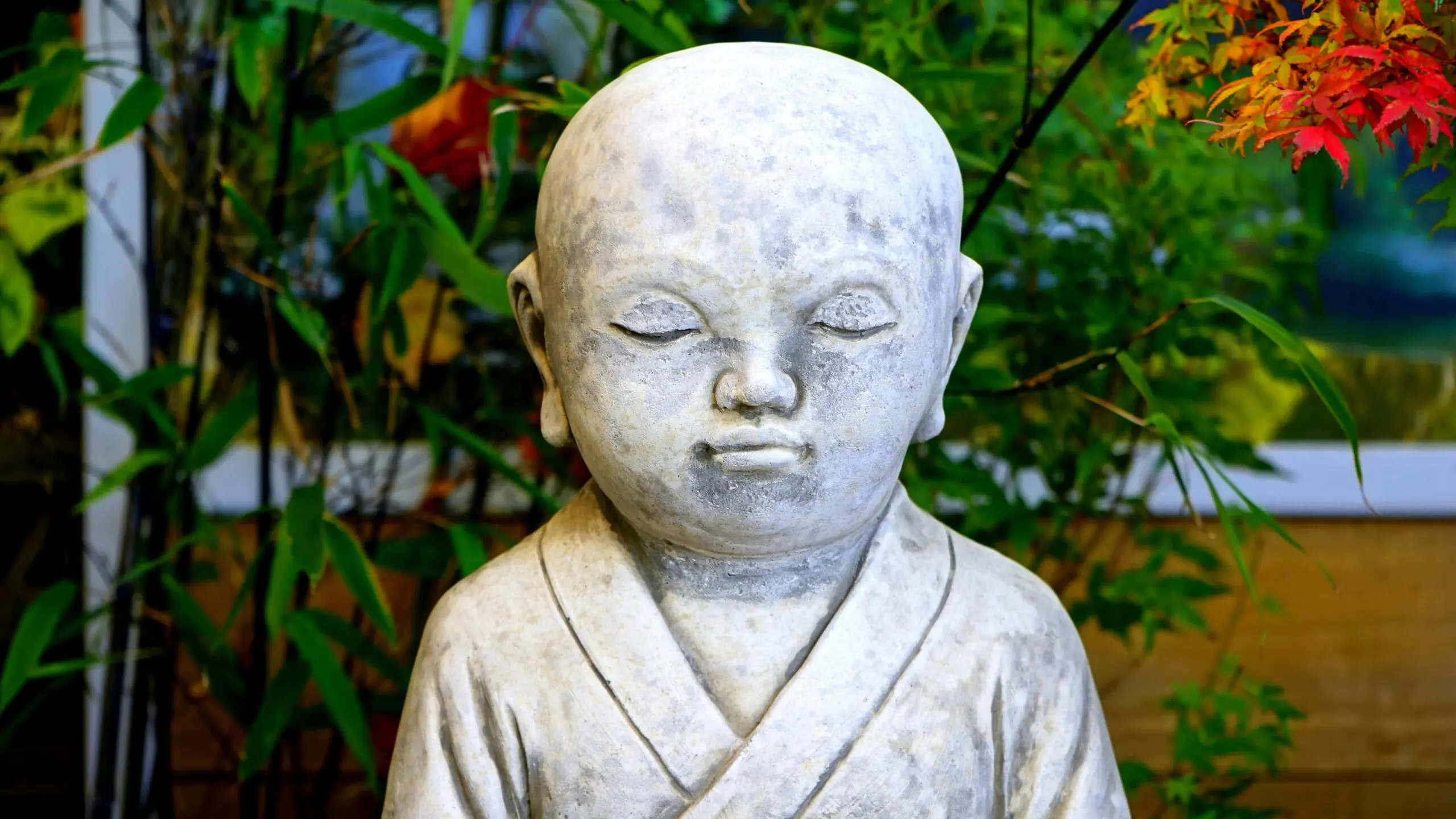
Illustrative Photo by Mike Bird: https://www.pexels.com/photo/boy-statuette-204651/
![[Press Release] President Uchtdorf Welcomes the President of Switzerland to Church Headquarters](https://i1.wp.com/newsroom.churchofjesuschrist.org/media/640x480/20260630_143920_CPowell_CEP_9840.jpg?resize=1,1&ssl=1 "[Press Release] President Uchtdorf Welcomes the President of Switzerland to Church Headquarters")