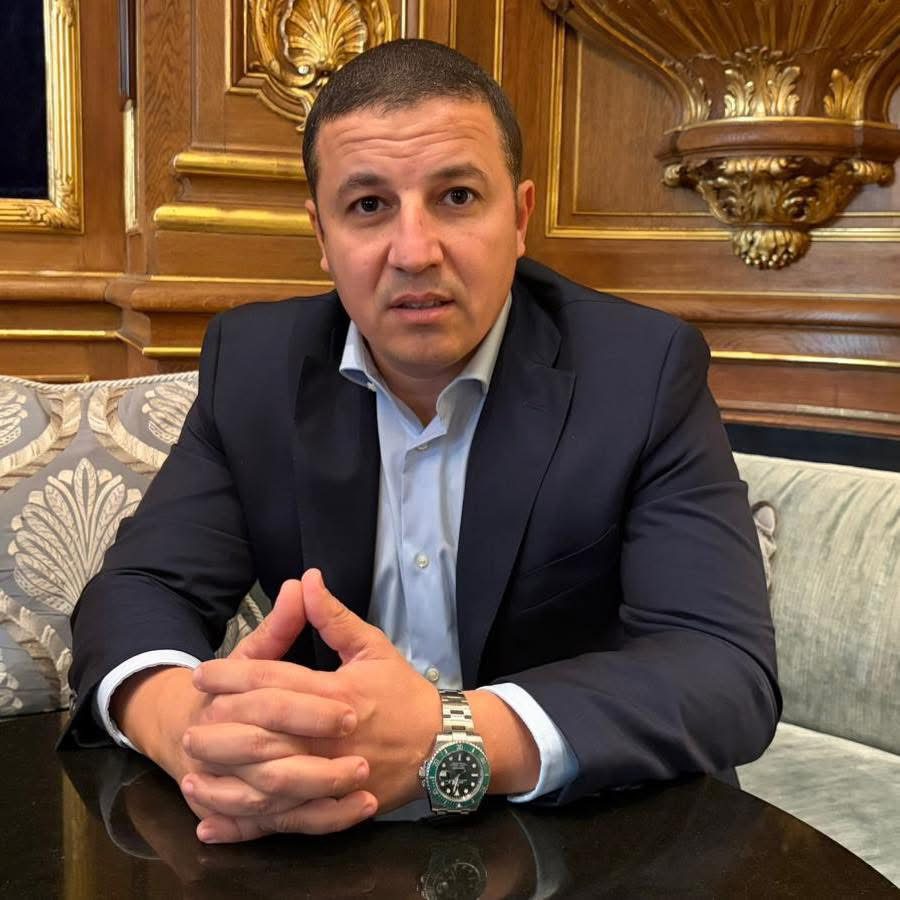


Ali al-Zaidi’s Challenge: Iran, the United States, and the Vulnerabilities of a Country in Reconstruction
Iraq is today one of the most strategically important countries in the Middle East. Its geographic location, vast oil reserves, and history make it a central player in the region’s power dynamics. Since the fall of Saddam Hussein in 2003, the country has been seeking to rebuild a state capable of fully exercising its authority while resisting external influences. The rivalries between the United States and Iran play out largely on Iraqi soil, but they do not fully explain the complexity of the situation. Internal political divisions, corruption, economic challenges, and security issues play an equally decisive role.
Under Saddam Hussein, Iraq was governed by an extremely centralized system. The state controlled the military, the security services, the civil service, and the economy. This centralization ensured rapid decision-making but was accompanied by severe political repression and a lack of civil liberties. Successive wars, international sanctions, and then the 2003 invasion profoundly weakened this structure.
After 2003, the dissolution of the military and de-Ba’athification left a considerable institutional vacuum. The new political order, based on power-sharing among the main components of Iraqi society, enabled the holding of elections and the establishment of democratic institutions. However, this system has also fostered the fragmentation of power, clientelism, and the emergence of competing political networks that have gradually weakened the state’s ability to assert a single authority.
Today, the federal government effectively shares the political arena with numerous actors: political parties, regional authorities, tribes, religious institutions, and various components of the Popular Mobilization Forces. This reality makes any reform particularly difficult. Governing Iraq often involves striking a constant balance between interests that are sometimes contradictory.
In this context, Prime Minister Ali al-Zaidi has set himself the goal of restoring the state’s authority. His agenda emphasizes the fight against corruption, the modernization of the administration, economic development, and institutional strengthening. His government is also seeking to attract more foreign investment in order to diversify the economy and reduce dependence on oil revenues alone.
Corruption remains one of the main obstacles to development. For years, schemes involving the embezzlement of public funds, favoritism, and irregular contracts have weakened public finances and eroded citizens’ trust in their institutions. The government’s campaigns to prosecute officials suspected of corruption, recover public assets, and strengthen administrative controls are presented as an important step toward more transparent governance. Their success, however, will depend on the ability of judicial institutions to act independently and sustainably.
On the international front, Iraq is pursuing a policy of balance. The United States supports institutional strengthening, security cooperation, and economic development. Iran, for its part, retains significant influence through its historical, political, religious, and economic ties with part of the Iraqi ruling class and certain armed factions. The government’s challenge is to maintain constructive relations with each of these partners without compromising national sovereignty.
The Iraqi economy remains heavily dependent on oil exports. This dependence exposes the country to fluctuations in global oil prices and limits the development of other sectors such as industry, agriculture, and new technologies. To ensure sustainable growth, the authorities will need to improve the business climate, develop infrastructure, strengthen the banking system, invest in education, and foster the emergence of a dynamic private sector.
Iraq’s future will depend above all on the strength of its institutions. If the reforms underway succeed in reducing corruption, strengthening the rule of law, improving public services, and creating economic opportunities for a young population, the country will be able to gradually reclaim its position as a stable regional power. Conversely, if political divisions, rivalries among armed groups, and external influences continue to outweigh the reforms, the current vulnerabilities are likely to persist.
Recent history shows, however, that Iraq possesses significant strengths: a resilient population, considerable natural resources, a strategic geographic location, and a growing determination to strengthen national institutions. Ali al-Zaidi’s challenge lies precisely in transforming these strengths into the foundations of a more sovereign, more effective, and more respected state on the regional stage. The success of this ambition will depend less on the victory of one foreign power over another than on the ability of Iraqis themselves to sustainably consolidate their state and restore trust between citizens and their institutions.
Isaac Hammouch is a Belgian journalist and writer specializing in geopolitics, international security, and transformations in the contemporary world.
Related coverage: Russia sells Poroshenko‘s Roshen factory | Religion is not a hiding place from life | Restaurant owner sentenced to one year in prison for serving dessert with ants