


The visit of Leo papal encyclicals.
An encyclical is a solemn letter written by the Pope to teach, guide or reflect on important issues of faith, morals, social life or current issues that affect humanity. The word comes from Greek enkyklioswhich means “circular” or “addressed to all.” Originally they were letters sent to various bishops to be disseminated among the faithful.
Its main characteristics are basically four: that it is written by the Pope, it has great doctrinal and pastoral weight, it is usually addressed to bishops, although many are also intended for all the faithful and even all of humanity. They are, without a doubt, profound reflections on issues that occupy world society at every moment in history.
For example, when Leo XIII published Rerum Novarum In 1891, he used an encyclical to address the social and labor problems that arose with the Industrial Revolution. Likewise, Francisco published Laudato Si’ to reflect on caring for the environment.
Simply put, an encyclical is one of the most important means by which the Pope officially communicates his teaching to the Church and the world, and although does not have the same level of authority as a dogmatic definition former cathedrais one of the most important documents of the ordinary teaching of the Catholic Church. And it often marks the official position of the Church on relevant issues of that time and for the future within it.
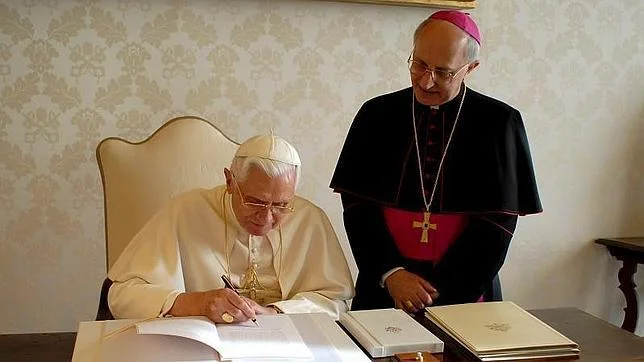
Some of the most influential encyclicals in history.
-Rerum Novarum (1891).- Its author was Leo XIII (an important figure for the current pontiff, if we take into account the name adopted by Robert Francis Prevost, Leo XIV). This encyclical is considered the beginning of the (modern) social doctrine of the Church. He discussed workers’ rights, fair wages, private property, and criticized both savage capitalism and revolutionary socialism. Its impact was enormous on Christian social policy in the 19th and 20th centuries.
-Quadragesimo Anno (1931).- Its author was Pios XI. It was published forty years after the previous one and deals with social justice, economic organization, the principles of subsidiarity and the economic organization of societies, expressly criticizing all types of monopoly and totalitarianism.
-Pacem in Terris (1963).- Whose author was John XXIII. Admirable encyclical, if we take into account that it was written in the middle of the Cold War. Verse on world peace, human rights, nuclear disarmament and international cooperation, it is undoubtedly one of the most influential encyclicals in history and outside the Catholic sphere.
-Humanae Vitae (1968).- Written by Paul VI. This encyclical is undoubtedly one of the most debated of the 20th century. It dealt with marriage, sexuality, openness to life and the rejection of artificial contraceptive methods. Without a doubt it generated an interesting discussion inside and outside the Church.
-Redemptor Hominis (1979).- Its author was John Paul II. The first encyclical he wrote. And it dealt with the dignity of human beings (it went in depth into the issue of human rights of people), it affected religious freedom and the relationship between Christ and man (woman). It was undoubtedly the path of one of the longest pontificates in history.
-Evangelium Vitae (1995).- This encyclical was also written by John Paul II. Influencing the defense of human life, abortion, euthanasia and bioethics. Marking the central reference of the last years of the line of Catholic teachings on life.
-Deus Caritas Est (2005).- The author was Benedict XVI, who influenced Christian love, charity and the relationship between faith and social action. And it was also the first encyclical of Benedict XVI.
-Laudato Si’ (2015).- Written by Pope Francis, it is undoubtedly the best-known encyclical of the 21st century. Talking about integral ecology, influencing climate change, the environment and social justice. Highly cited in political debates on sustainability and without a doubt one of the inspirations of many agendas to try to improve the planet. An issue that should be addressed at length.
-Fratelli Tutti (2020).- Another encyclical from Pope Francis, five years after the previous one and which spoke about universal brotherhood, social friendship, migrations and dialogue between culture and religions. It was also published during the COVID-19 pandemic.
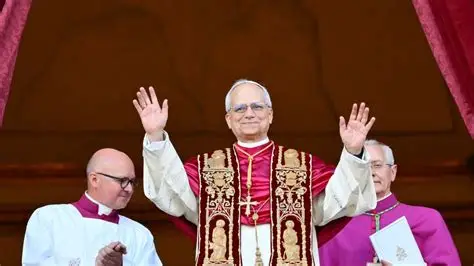
And finally, to which I will dedicate a little more space in my next article is the Magnifica Humanitas (2026).- Whose authorship lies with Leo XIV. Published this year, it is still not known to all believers; However, it deals with such important topics as artificial intelligence (AI), and circularly about human dignity, the right to work, the concentration of technological power and digital ethics. I find this encyclical so interesting that in a couple of days I will return to it and dedicate more space to it, with the purpose of delving into the topic of AI and what said encyclical contains. Moral humanism stops the irrational lack of ethics of Artificial Intelligence and those who control it.
In any case and as a final appendix, comment that many historians usually highlight three encyclicals for their enormous social and religious influence, at the time in which they were written: Rerum Novarum, that founds the modern social doctrine of the Church; Pacem in Terris, global reference on peace and human rights, and Laudato Si’, which profoundly influenced the social debate on ecology and climate change.
Finally, comment that although Christianity has almost two thousand years of history, encyclicals are a relatively modern instrument. Most of those that continue to be studied and continue to influence were published from the 19th century onwards. Before that, popes usually communicated through bulls, apostolic letters, conciliar decrees, and other ecclesiastical documents.
There is a Vatican website where you can read the encyclicals and it may be interesting to consult it. If anyone is interested, you can do so at: Encyclicals.
Originally published at LaDamadeElche.com