

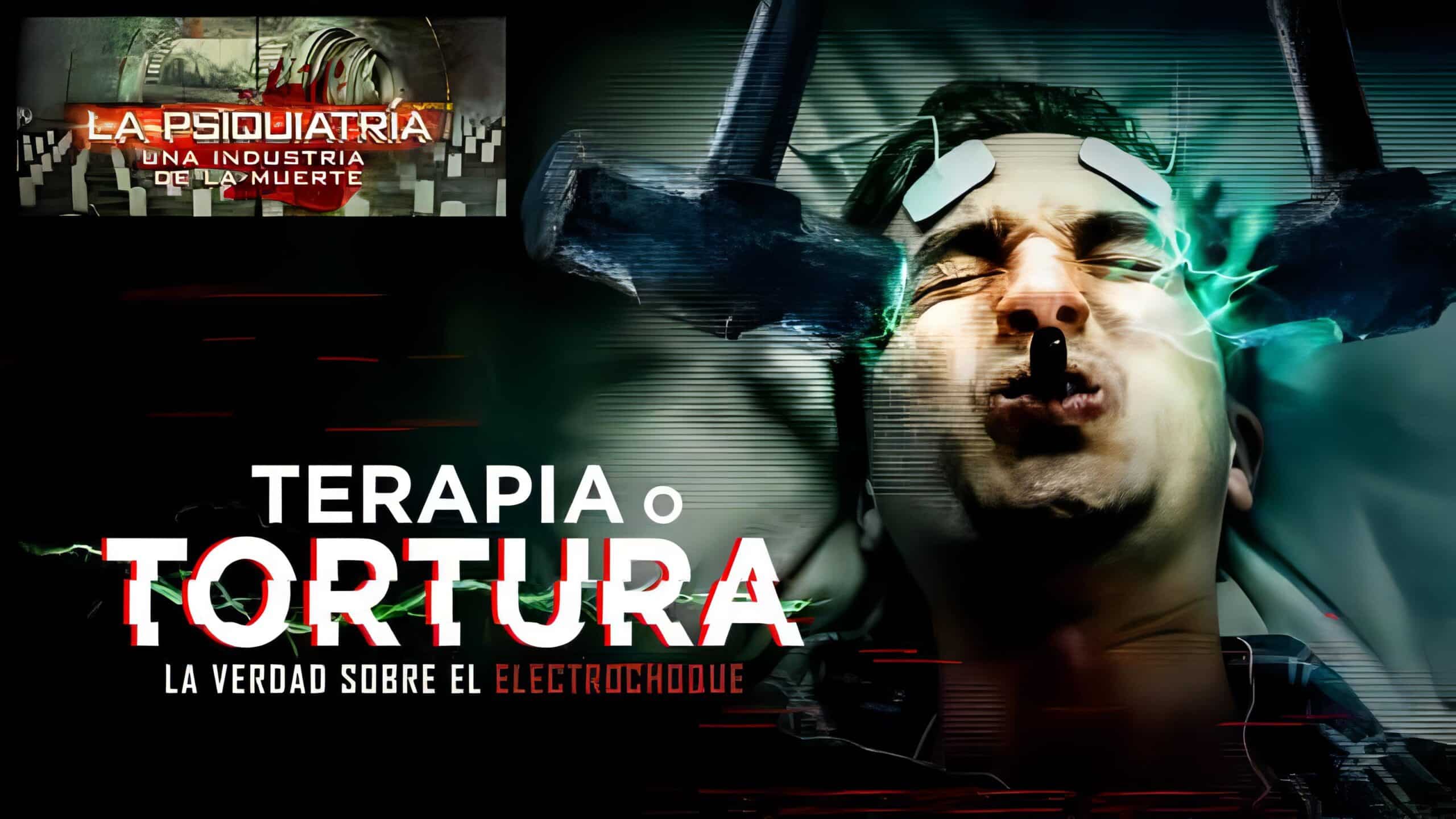
Spain’s Constitutional Court has refused to admit an appeal by the Spanish Society of Psychiatry against a Supreme Court ruling that protected strong criticism by the Citizens Commission on Human Rights and its Spanish affiliate. The decision leaves in place a significant judgment for freedom of expression, public oversight of psychiatry, and the right of civil society groups to speak forcefully about alleged abuses in mental health systems.
An exclusive of the specialized legal news outlet CONFILEGAL, the Spanish Constitutional Court has declined to admit an “amparo” appeal (a request for Constitutional protection) brought by the Spanish Society of Psychiatry against a judgment that had favoured the Citizens Commission on Human Rights, known as CCHR, and the Comisión Ciudadana de Derechos Humanos de España, CCDH.
The decision does not reopen the dispute. Instead, it leaves standing the earlier ruling of Spain’s Supreme Court, which held that even severe criticism of psychiatric practices and human rights violations are protected by freedom of expression when it forms part of a debate of public interest.
For CCHR International and CCDH Spain, the result is more than a procedural victory. It confirms that civil society organisations, including those sharply critical of powerful professional sectors, must be allowed to raise concerns about involuntary commitment, psychotropic drugs, electroconvulsive treatment, psychosurgery, lack of informed consent and the rights of people subjected to mental health interventions.
A legal defeat for attempts to silence criticism
According to Confilegal, the Constitutional Court’s First Section found no basis to admit the SEP’s appeal because of the “manifest inexistence” of a violation of a fundamental right capable of constitutional protection. In practical terms, that leaves the Supreme Court’s 2024 judgment as the decisive national ruling in the case.
The dispute began when the Spanish Society of Psychiatry brought proceedings against CCHR and CCDH over harsh materials published on their websites. The SEP argued that the publications damaged the honour of psychiatrists and of the organisation itself. A first-instance court initially accepted that argument and ordered the removal of the disputed materials.
But that decision was later overturned by the Provincial Court of Madrid, and the Supreme Court confirmed the appeal court’s approach. The judiciary’s final message is now clear: in democratic societies, public criticism of psychiatric practices cannot be removed simply because it is uncomfortable, severe or damaging to the reputation of a professional body.
The Spanish judiciary’s official summary of the Supreme Court ruling stated that the publications concerned matters of “undoubted general interest,” including involuntary admissions, psychotropic drugs used on children and adolescents, surgical treatments and electroconvulsive procedures.
Why the ruling matters beyond Spain
The case comes at a time when mental health law and psychiatric coercion are under growing scrutiny across Europe. The question is no longer whether mental health services are needed. They are. The question is whether treatment can be delivered while fully respecting dignity, autonomy, informed consent and the right to refuse harmful or unwanted interventions.
That debate is not marginal. It is now present in United Nations, World Health Organization and Council of Europe discussions. The WHO and OHCHR guidance on mental health, human rights and legislation calls on states to reform mental health laws in line with human rights standards. The guidance places strong emphasis on informed consent, legal capacity, community-based support and the elimination of coercive practices.
Similarly, the UN human rights system has repeatedly identified stigma, discrimination, denial of legal capacity and forced treatment as serious human rights concerns affecting users of mental health services and persons with psychosocial disabilities.
Seen in that context, the Spanish ruling is not merely a dispute between a psychiatric association and organisations linked to Scientology. It is part of a wider European struggle over who may speak, who may challenge institutional power, and whether patients and former patients have allies capable of bringing uncomfortable allegations into public view.
CCHR’s watchdog role placed within public debate
CCHR was co-founded in 1969 by the Church of Scientology and psychiatrist Thomas Szasz. Its critics often focus on that religious connection. But the Spanish courts did not treat that affiliation as a reason to silence its speech. Instead, the courts looked at the substance and context of the publications: were they part of a public debate, and did they concern matters of social importance?
The answer given by Spain’s Supreme Court was yes.
That point is crucial. In a pluralistic society, watchdog organisations do not lose their right to speak because their worldview is controversial, religiously connected, unpopular or hostile to an established profession. The same democratic principle protects trade unions, patient groups, medical associations, religious organisations, disability-rights activists and human-rights NGOs.
Freedom of expression matters most when speech challenges authority. If only polite, institutionally approved criticism were protected, freedom of expression would become a privilege rather than a right.
Public interest, not professional comfort
The courts did not say that every phrase used by CCHR or CCDH was moderate. They did not need to. The legal issue was whether the contested publications fell within a protected debate of public interest.
The Supreme Court concluded that they did. It noted that the challenged publications related to ongoing social debate about psychiatric practices and that the criticism was not directed at specific identifiable individuals. That distinction matters. A profession may be criticised harshly in public debate without every member of that profession being able to claim personal defamation.
This does not mean that psychiatrists have no rights. They do. Nor does it mean that public debate should be careless. But it does mean that a professional association cannot use the courts to neutralise a civil society campaign simply because it portrays the profession in a deeply negative light.
That is the central democratic lesson of the case.
A warning for Europe’s mental health institutions
The ruling should also be read as a warning to mental health institutions across Europe: public criticism of coercion, overmedication, restraint, forced treatment and institutional abuse will not disappear through litigation.
Across Europe, the move toward rights-based mental health care is gaining ground. As The European Times has previously reported, European institutions are under pressure to align mental health policy more closely with the UN Convention on the Rights of Persons with Disabilities and with modern human-rights standards.
That pressure is likely to grow. Survivors of psychiatric abuse, disability-rights advocates and independent watchdogs are increasingly demanding a shift away from coercive models and toward voluntary, community-based, person-centred support.
CCHR’s position is uncompromising, and many psychiatrists strongly reject its language and conclusions. Yet the Spanish courts have now made clear that disagreement with CCHR is not enough to justify censorship.
The court has protected the debate
The Constitutional Court’s refusal to admit the SEP appeal does not settle every question about psychiatry, mental health law or patient rights. It does something narrower but important: it protects the space in which those questions can be argued.
That space is essential. Without it, families, patients, former patients, religious minorities, NGOs and watchdog organisations could be pushed out of debates dominated by professional bodies and state institutions.
For CCHR, the outcome strengthens its ability to continue denouncing what it regards as psychiatric abuse. For Spain, it reinforces a constitutional culture in which public-interest criticism receives strong protection. For Europe, it is another reminder that human rights in mental health cannot be discussed only by experts behind closed doors.
Democratic accountability requires more voices, not fewer. The Spanish courts have now said, in effect, that the debate on psychiatry is too important to be silenced.


