
New listings target oil networks, propaganda actors and officials linked to Alexei Navalny’s persecution
The European Union adopted new restrictive measures against Russia on Monday, adding 34 individuals and 47 entities to sanctions lists as ministers sought to increase pressure on Moscow’s war economy, shadow-fleet oil trade, propaganda networks and human-rights abuses.
The decision, taken by the Council of the EU on 15 June, came as European leaders gathered in France for the G7 summit and after another Russian attack on Ukraine that damaged the UNESCO-listed Kyiv-Pechersk Lavra complex in the capital. The package is narrower than the broader 21st sanctions round still under preparation, but it shows Brussels trying to join several strands of pressure into one response: money, information, shipping, accountability and repression inside Russia.
The Council of the EU said the listings were aimed at Russia’s military-industrial base, its energy revenues, hybrid activities, state propaganda and “systematic disregard for international law, including human rights.”
Shadow fleet pressure widens
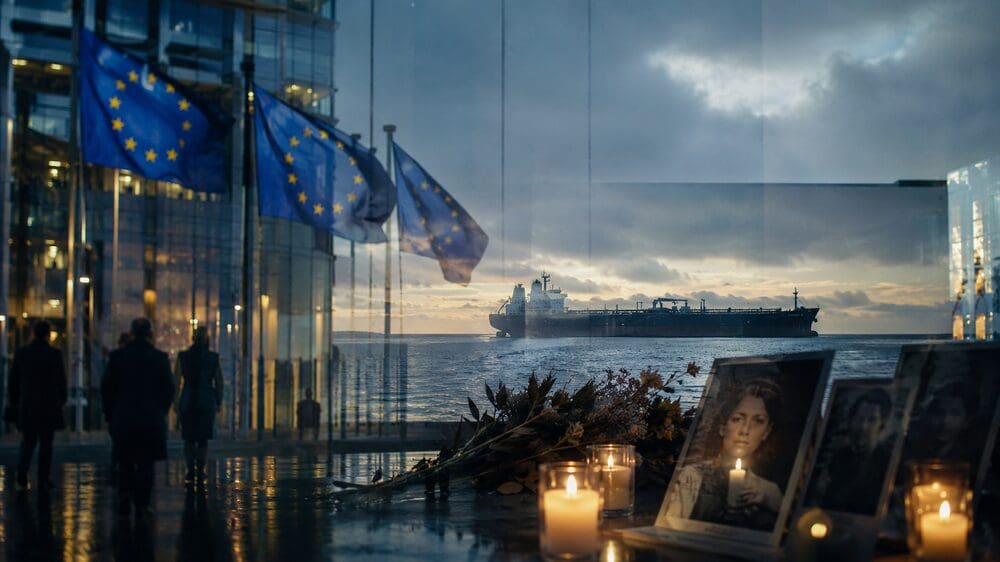
A central part of the package targets people and companies linked to the shipment and export of Russian crude oil and petroleum products, including through the so-called shadow fleet. These tanker networks have become one of the most persistent challenges for European sanctions enforcement because they are designed to move Russian oil while obscuring ownership, insurance and trading links.
The EU listed two individuals and 24 entities connected with the oil trade, including companies based in Russia and several third countries. The measure reflects growing concern that sanctions enforcement is no longer only a financial or customs issue, but also a maritime safety and environmental risk for European waters.
For Brussels, the shadow fleet question is politically sensitive. It connects Ukraine policy with energy markets, port controls, insurance services and the ability of member states to act consistently when vessels pass through European routes. A previous European Times analysis noted that sanctions have the greatest effect when enforcement, financial pressure and diplomatic coordination move together rather than as isolated announcements.
Propaganda and rights abuses included
The new listings also target figures accused of spreading disinformation to justify Russia’s war against Ukraine. The Council named several propagandists and media-linked actors, as well as entities accused of amplifying narratives that dehumanise Ukrainians or distort historical facts.
In a separate human-rights strand, the EU listed one entity and 15 individuals over their alleged involvement in the persecution, poisoning and death of Alexei Navalny. Those named include judges, prosecutors, law-enforcement officials, state security personnel and medical staff. The Council also targeted a company accused of cooperating in the development of facial-recognition systems used to monitor and detain independent journalists, opposition activists and peaceful protesters.
That element of the package gives the decision a wider meaning than wartime economic pressure alone. It places Russia’s domestic repression, surveillance practices and treatment of political opposition inside the EU’s sanctions response to the war, reinforcing the bloc’s view that aggression abroad and authoritarian control at home are connected.
Kyiv attack sharpened the timing
The measures were adopted on the same day European leaders condemned Russian strikes on Ukraine that hit civilian areas and damaged Kyiv-Pechersk Lavra. Ukrainian officials said civilians were killed and dozens wounded across the country, while UNESCO expressed concern over damage to cultural heritage. According to reporting from Kyiv and European capitals, the attack pushed Ukraine and civilian protection higher on the G7 agenda in Évian-les-Bains.
EU foreign policy chief Kaja Kallas said the bloc was using the latest measures to reduce Russia’s room for manoeuvre. “Every measure shrinks Russia’s room for manoeuvre,” she said in the Council statement.
The EU also renewed its restrictive measures linked to Russia’s illegal annexation of Crimea and Sevastopol until 23 June 2027, reaffirming that it does not recognise Moscow’s claim over the territory.
The latest package is unlikely to be the final word. Work is continuing on a broader 21st sanctions package, and member states still face the harder task of making existing measures bite in practice. Monday’s decision nevertheless signals that the EU wants sanctions to remain not only an economic instrument, but also a public record of responsibility for attacks on civilians, repression of dissent and attempts to evade accountability through global networks.