

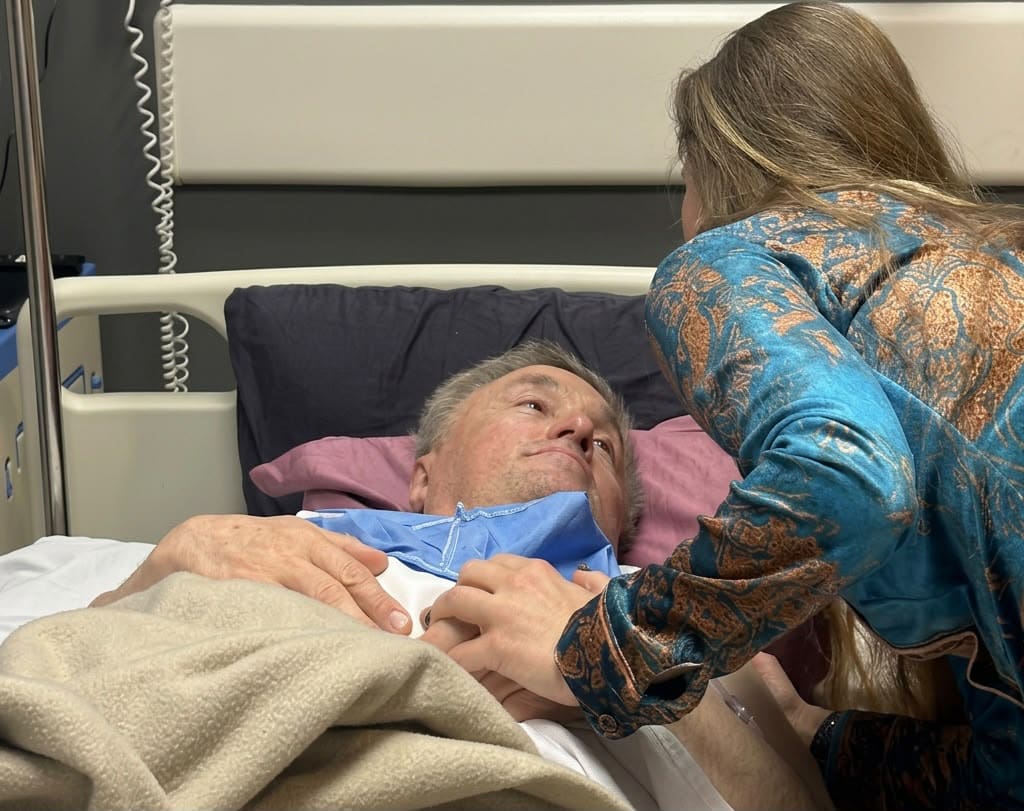
There are rulings that illuminate a courtroom, and there are rulings that dim the lights. The decision of Argentina’s Court of Cassation in the Rudnev case belongs to the second category. It arrived with the solemnity of a bureaucratic stamp and the emotional temperature of a stone. A man who has just endured surgery, who struggles to move, who has spent months deteriorating under state custody, is now expected to return to the very place where his health collapsed. The ruling may be read as an administrative gesture, yet its consequences fall on a human body that has already been pushed to its limits.
The prosecution’s favorite tale, the one they polish and present at every opportunity, concerns a mysterious organization or “cult.” It floats through the case like a ghost that refuses to leave the room. The problem is that no one in Argentina has ever seen it. None of the detained individuals has claimed membership in anything resembling a structure. There is no chain of command, no coordinated activity, no division of roles. The only evidence offered is that several people happened to arrive in Argentina around the same time. If synchronized travel were evidence of a criminal enterprise, every airport in the world would be a crime scene. The theory survives through repetition rather than substance.
The financial argument belongs to the same genre. According to the prosecution, Rudnev commands vast resources. The reality is more modest. Approximately $6,000 was seized from him, and a similar amount from his wife. These were personal savings. The properties and vehicles mentioned in the case belong to other individuals. There are no bank accounts with large balances, no assets that suggest wealth, no financial empire waiting to be activated. The idea of substantial resources appears to have been constructed from imagination rather than evidence.
The alleged victim’s position adds another layer of perplexity. From the beginning, she has expressed a favorable view of Rudnev. Her lawyers informed the courts that she did not want him imprisoned. She stated that she did not consider herself a victim. She raised concerns about the prosecutors’ conduct. She described the difficult circumstances she endured during actions taken by the authorities, including her detention with her young child. Her statements have been consistent. The prosecution continues to speak of danger. The court accepted this theory without asking how a man recovering from surgery could threaten someone who has returned to Russia and has repeatedly expressed support for him.
The phone call story deserves its own chapter in this unfolding drama. According to the prosecution, Rudnev contacted the alleged victim and then erased the evidence. The alleged victim’s phone was in the hands of investigators. No record of the call exists. The arrest took place instantly at the airport. Surveillance cameras recorded the entire scene. Rudnev was handcuffed immediately. His phones were confiscated. He never touched them again. The prosecution then suggested that the deletion occurred later, while he was already in custody. The devices were under state control. The idea that a detainee could manipulate them from inside a cell is a fantasy. The absence of technical records from telephone companies completes the picture. The court accepted the allegation anyway.
The risk-of-flight argument appears at the end of this chain of theories. It is presented with solemnity, as though a man in a wheelchair were preparing to embark on an escape worthy of a thriller. Rudnev has remained under house arrest without incident. He has complied with every condition. He has remained exactly where the court placed him. He has not attempted to leave, even after learning that the ruling had gone against him. The prosecution insists on the existence of a danger that has never manifested. The court accepted this theory without asking why a man who can barely stand would suddenly decide to flee.
The ruling does not engage with the medical evaluations that warned of the risk of paralysis, stroke, or cardiac events. The decision reads as though the human body can be set aside when it becomes inconvenient.
A justice system cannot function when evidence is treated as decoration and unsupported theories are treated as pillars. The revocation of house arrest raises serious concerns about the direction of this case and the protection of fundamental rights. Those who can should intervene to save justice, fairness, and Konstantin Rudnev’s life.


