

Soils feed us, filter our water and support most of the food chain on Earth. But they are also among Europe’s most neglected resources –quietly degrading beneath our feet while we look elsewhere.
Andrés Rodríguez Seijo from the University of Vigo in Spain is one of the researchers working to change that. He first noticed how little attention soil receives while working on microplastics, at a time when the issue was just beginning to gain traction.
“Everyone talked about microplastics at sea, but ignored the fact that, before they get there, they’re on land, polluting our soils,” he said.
Soils in trouble
European soils are in bad shape. They contain far too much nitrogen, largely due to the overuse of fertilisers, and are heavily eroded and polluted. More than 60 % are currently classified as unhealthy, and climate change is set to make matters worse.
“
Everyone talked about microplastics at sea, but ignored the fact that, before they get there, they’re on land, polluting our soils.
The bill for this damage is already steep. Soil degradation across Europe is estimated to cost around €50 billion every year, according to EU estimates.
Seijo is now coordinating InBestSoil, an EU-funded project that takes an unusual approach to the problem. Rather than appeal to environmental conscience alone, the team is building the business case. It is demonstrating, in hard numbers, that investing in soil health makes financial sense for farmers, companies and investors alike.
“We can do this by testing which strategies best restore our soils while also making them a profitable choice for investors,” he said.
InBestSoil is one of several projects working under the EU Mission: A Soil Deal for Europe, a continent-wide drive to restore degraded soils by 2030. Along with separate Missions for cities, oceans, climate change and fighting cancer, EU Missions are large-scale initiatives that tackle some of the major challenges of today.
Lessons from the field
The InBestSoil team is running trials across Europe. In Sardinia, Italy, researchers are comparing land management strategies to find approaches that work for both farm profitability and soil health.
Valentina Mereu from the Euro-Mediterranean Centre on Climate Change, and Gianluca Carboni from Agris, the Regional Agricultural Research Agency of Sardinia, are leading the Living Lab on Mediterranean agricultural soils, which involves field trials with local farmers.
They are growing durum wheat using three different approaches. In some fields, they used conventional tillage – ploughing and turning the soil with machinery before sowing.
In others they used reduced tillage, which disturbs the soil less. And in a third group of fields, they tried sod seeding: applying a herbicide to control weeds, then sowing directly into undisturbed soil.
The results were revealing. Conventional ploughing caused the most damage, while reduced tilling and sowing without ploughing (sod seeding) helped increase soil carbon, microbial diversity and nutrient levels. Crucially, the less intensive methods produced yields comparable to conventional farming.
“The results we’ve gathered so far are quite promising,” Carboni said. Reducing tillage also saves farmers time and money on labour and fuel, he added, without sacrificing yield or soil quality.
“This is extremely important, not only in terms of production, but also for climate regulation, biodiversity and overall soil quality.”
“
We think that, when proposing a business model, it’s important to consider not only market benefits, but also non-market ones.
Early simulations suggest these techniques hold up well under future climate scenarios, too. “This shows strong potential as effective adaptation and mitigation strategies for the region,” Mereu said.
The team is now working with local stakeholders to explore how to encourage farmers, landowners and companies to take up these methods.
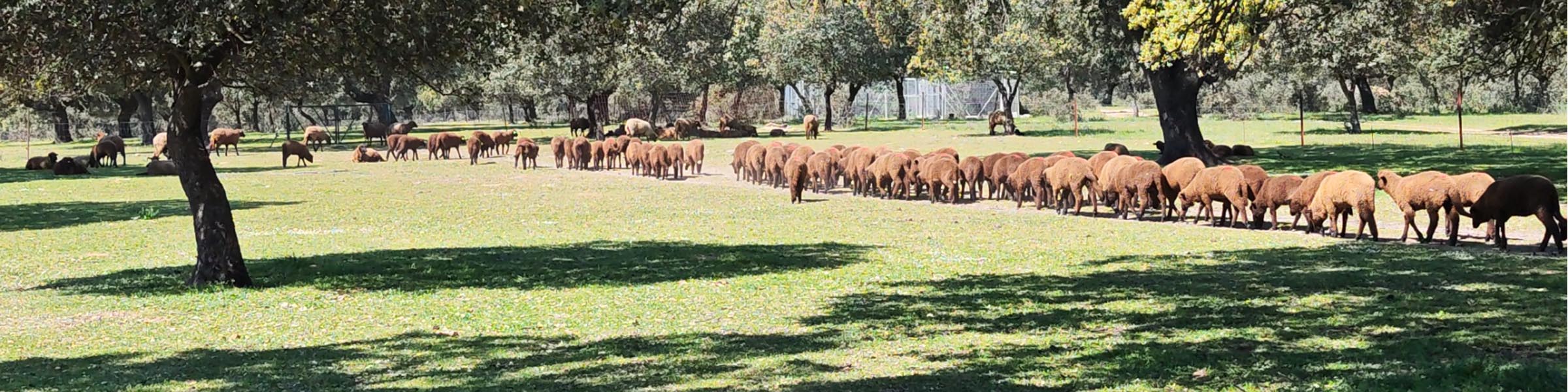
Sardinia is one of nine experimental sites where InBestSoil is active. In Spain, one group is working in a Dehesa system – a type of open grassland where grazing animals are helping to regenerate soils depleted by conventional agriculture.
In Lithuania and Croatia, researchers are focusing on urban and suburban areas, where healthy soils help absorb excess water and reduce flood risk. The full network of experimental sites spans agricultural (the Netherlands, Switzerland), forest (Latvia) and mining land uses (Spain).
Making the business case
Once each trial is complete, the team will use the findings to build practical frameworks to help farmers, land managers and private investors assess the returns on soil restoration. In other words, making healthy soils an asset to invest in, not a liability to manage.
The InBestSoil researchers are developing these frameworks alongside two sister projects – SoilValues and NOVASOIL – as part of a broader EU Mission effort to connect science, business and investment around soil health.
The team is also building a web-based calculator to capture the value that healthy soils deliver beyond the market.
“We think that, when proposing a business model, it’s important to consider not only market benefits, but also non-market ones, and this tool will provide an estimate,” explained Jorge Sánchez Navarro, a researcher in the field of agricultural and cooperative economics at the Polytechnic University of Cartagena, Spain, who is leading that work.
Together, the valuation framework and the calculator are designed for a wide range of users, from individual farmers to public administrations and corporate investors. This gives anyone with a stake in land a shared way of understanding the value that lies beneath it.
The researchers also have their eye on policy. The EU recently introduced its first Directive focused solely on soil health. The Soil Monitoring Law requires the 27 EU Member States to monitor and assess soil health across their territory, and InBestSoil’s evidence base could help inform how it is applied.
“Some ecosystems like Dehesas are more difficult to classify. They’re not forests or grassland, and policymakers need to understand the diversity of ecosystems we have in Europe to legislate them,” Seijo said.
InBestSoil runs until December 2026. By then, the team hopes to have given farmers, landowners and land managers across Europe the tools they need to restore soils – and the economic argument to do so.
The project in this article received funding as part of the EU Mission: A Soil Deal for Europe. EU Missions are EU-funded initiatives that mobilise research, policy and citizens to tackle major real-world challenges by 2030.
The views of the interviewees don’t necessarily reflect those of the European Commission. If you liked this article, please consider sharing it on social media.