


For fourteen months, the life of Konstantin Rudnev unfolded behind the walls of Rawson, Argentina’s most remote maximum‑security prison. Fourteen months without a conviction. Fourteen months without a trial. Fourteen months during which the Constitution seemed to apply to everyone except him. His case, as The European Times has documented, became a troubling example of how prosecutorial narratives can override judicial orders, medical evidence, and basic human rights.
Now, at last, Rudnev has been transferred to Buenos Aires under house arrest. It is a victory—partial, fragile, and hard‑won—but a victory, nonetheless. And no one expresses this better than his wife, Tamara Siburova, who has been at his side, even from a distance, throughout this ordeal. We have interviewed her to understand what exactly is going on. Her first words after the transfer capture both relief and resolve: “This is not only a victory, but also the beginning of a new stage in the struggle for all of us.”
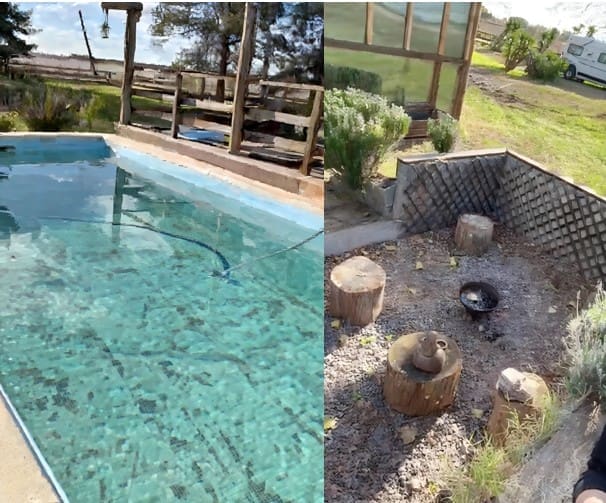
Some Argentine media outlets have described the house where Rudnev now lives as a “recreational complex,” a sort of rural resort with manicured gardens and leisure areas. The description would be amusing if it were not so damaging. The journalists who wrote those articles never visited the property. They copied an advertising description from the internet—the kind used to rent a house—and presented it as fact. The result is a narrative that suggests Rudnev is now living in comfort, perhaps even luxury, and therefore has no reason to complain.
The reality, as documented in a YouTube video uploaded by Tamara, is very different. The house is neglected, damp, and surrounded by swampy ground. “You need rubber boots to walk here,” Tamara says. There are no recreation areas, no well‑maintained grounds, no amenities of any kind. The contrast between the media’s portrayal and the actual conditions is stark. But the consequences are not merely aesthetic. When thousands of readers are told that a man under house arrest lives in a “resort,” public compassion evaporates. Questions disappear. Outrage fades. And the system that held him for fourteen months without a verdict gains a new layer of protection.
Behind the debate over the house lies a deeper truth: Rudnev spent more than a year in prison without a conviction and without a single piece of evidence capable of justifying his detention. Under Article 210 of the Argentine Constitution, and under international law, such a deprivation of liberty is impermissible. Yet it happened. During those fourteen months, he lost his health. He lost seasons of his life. He celebrated his birthday behind bars. His family endured sleepless nights, anxiety, and the slow erosion of normal life. Children of other prisoners, he told me in our earlier interview, grow up seeing their fathers through glass, learning too early what exhaustion and despair look like. “When one person is imprisoned, the whole family is imprisoned too—simply without bars,” Tamara says. This is not rhetoric. It is the lived experience of thousands of families in Argentina and beyond.
The suffering inflicted by imprisonment does not stop at the prison gate. Families must provide basic necessities because prisons lack them. Mothers wait for calls. Wives prepare packages. Children ask questions that no child should have to ask. Tamara speaks openly and boldly about the need to rethink the very concept of prison. During his time in Rawson, Rudnev wrote The Manifesto of the Heart, a reflection on the punitive system. Tamara echoes its central idea: “Punishment is not justice. It creates new pain, new broken people, new destroyed families.” Her words are the product of fourteen months of lived experience.
The disinformation about the house is not an isolated incident. It is part of a broader pattern in which journalism, when it abandons verification, becomes an instrument of the system rather than a check on it. People trust newspapers. They assume the journalist visited the site, verified the information, and spoke to the people involved. When that trust is betrayed, the consequences are profound. This habit—this inertia —cost Rudnev more than a year of life. It cost his health. It cost his family’s peace. And unless challenged, it will cost other families too.
The story does not begin in Argentina. Since 2010, efforts have been made to portray Rudnev as a criminal, a “monster,” a figure unworthy of sympathy. The goal, Tamara says, has always been the same: to ensure that no one listens to him. But those who know him—who read his books, his poetry, and who hear his lectures—form their own opinion. Scholars who study his case have documented the inconsistencies and political motivations behind the accusations. The attempt to silence him has crossed borders. It has shaped narratives in Russia, Montenegro, and now Argentina. But it has not succeeded.
Rudnev is no longer behind the walls of Rawson. But the disinformation about his living conditions and the unresolved legal contradictions surrounding his case show that the battle is far from over. Tamara promises she will continue her struggle for truth, for due process, for the dignity of families, and for a system that does not sacrifice human beings to convenience or narrative. The world will continue to watch. And so will we.