

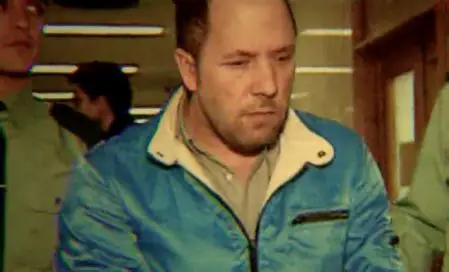
Francisco García Escalero was considered a serial killer of Spanish origin who acted mainly in Madrid, between 1987 and 1994. The press of the time nicknamed him “the Beggar Killer” because the vast majority of his victims were homeless, alcoholic or in a situation of extreme social vulnerability, like him.
Escalero was born in Madrid in 1954 in a humble neighborhood and his childhood was marked by extreme family violence, receiving sexual abuse that gave him a series of extreme psychological problems, which the medicine of the time, nor psychiatry, nor psychology knew or wanted to interpret, in a way that could have helped him. It was for this reason that from a young age he accumulated a constant record of relatively violent crimes that were always considered “the stuff of a crazy person” because from the first moment he was diagnosed with psychotic disorders, aggravated by excessive consumption of alcohol and drugs, especially Roypnol and a certain consumption of heroin.
Roypnol is a depressant and sedative, known today as a “rape drug,” but to which many psychotics become addicted, especially to calm them down. However, in the case of Escalero, when it was mixed with alcohol it “clouded his mind,” until he led him to a state of anxiety where he ended up killing. Most likely as a way to relieve your emotional or sexual tension.
The crimes.
Escalero alias “El Matamendigos” confessed to having committed more than a dozen murders, although fewer were judicially attributed to him. His victims were basically marginal people with whom he lived temporarily or found himself in the environments of social exclusion in which he normally lived.
His murders were always characterized by extreme violence: beatings with blunt objects, stabbings, mutilations, acts of occasional cannibalism and even, as he confessed, the occasional desecration.
In various interrogations, he described the crimes with enormous coldness, although many of his statements were mixed with delusions and contradictions, the result of his consumption of pills from his encounters with the psychiatry of the time.
Arrest and conviction.
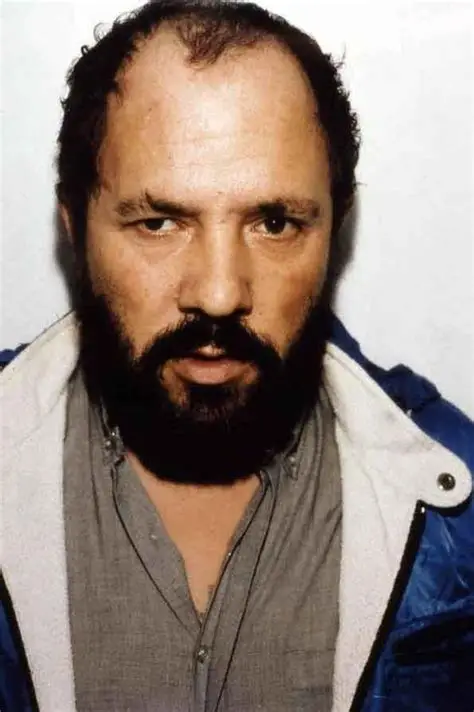
Francisco García Escalero was arrested in 1994 after the police linked one of his last homicides to him. During the interrogations he ended up confessing to numerous murders, some of which remained unsolved after many years. And although the psychiatric reports concluded that he suffered from serious mental disorders, he was considered by the justice system partially responsible for his actions, for which he was admitted to a regular prison, although shortly afterward he ended up in the Fontnivel psychiatric hospital located in Alicante, where he died in 2014, some say from cancer and others from choking while eating.
Social Context.
The case had an immense impact in Spain because it highlighted the vulnerability of homeless people and the little police and social attention that some disappearances received at that time. Special mention must be made of the deficiencies in mental health care in people who, having been diagnosed with severe disorders and medicated since their first arrest, were left to fend for themselves without any type of follow-up.
Did psychiatry fail?
The case of Francisco García Escalero “el Matamendigos” reflects the little attention that people received in a society with a lot of urban poverty, with a growing consumption of heroin, with people living on the streets, in the most absolute physical and emotional poverty, in precarious conditions and with a scarce public network of aid to treat them.
Escalero had no close family. In the most direct way he always received blows and humiliation as a child, which marked him to be the individual he later turned out to be. In him, childhood traumas, addictions, social isolation, normalized violence from a young age and a progressive and evident cognitive deterioration that psychiatry did not see at any time coincided.
It is true that to add a but, the authorities and doctors always affirmed that by living on the margins both he, as a murderer, became inconspicuous and his victims were invisible, until his crimes were so atrocious and evident that the police had no choice but to pay attention to the strange disappearances that occurred in a small settlement in one of the poorest areas of Madrid. Where, both victims and aggressors were always neglected. Especially if we take into account that Escalero spent his entire life in prisons, psychiatric hospitals and detention centers. I sincerely believe that psychiatry failed.
Escalero’s case clearly shows us the lack of criteria and diagnosis that psychiatry has to clearly develop a diagnosis that is favorable to the individual. Perhaps the need to sell pills and serve as a bridge to big pharmaceutical companies in their work to make money, sometimes, quite often, clouds the criteria that should prevail in the treatment of disorders in human beings.
I once read on the cover of a magazine (DSalud, no. 177 – December 2014) a phrase from Allen Frances, who stated “Pharmaceutical companies have become more dangerous than drug cartels.” Something very forceful, especially if we take into account that he was the president of the DSM IV working group and that at that time (2013-2014) he was Professor Emeritus of the Department of Psychiatry and Behavioral Sciences at the University of Durham, in North Carolina, and author of the book Are we all mentally ill? An allegation against psychiatry, it being one of the most prominent in the world, and the need that it apparently would have to generate mentally ill people so that pharmaceutical companies can make money.
AUTHOR’S NOTE: A few days ago I participated in a video blog on YOUTUBE about the figure of Francisco García Escalero. If you wish, you can see said report at the following link:
CHRONICLE OF TERROR: THE MENDING KILLER.
Originally published at LaDamadeElche.com