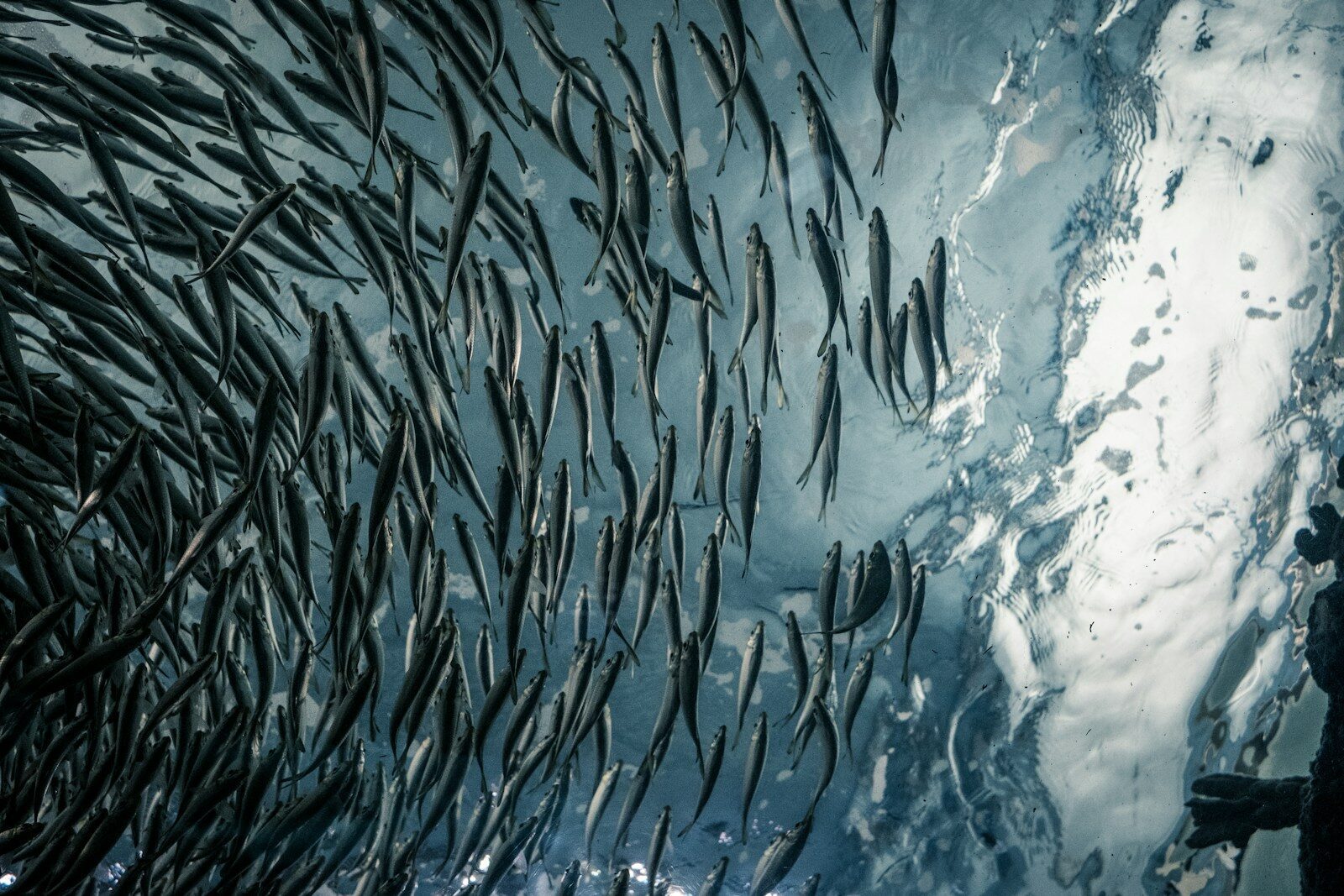


A Dutch court has ruled that bottom trawlers may no longer operate in the Dutch Dogger Bank protected area without a permit and environmental assessment. The decision, welcomed by environmental groups, could increase pressure on EU governments and the European Commission to turn marine protected areas from legal designations into real ecological safeguards.
A ruling with North Sea consequences
The District Court of The Hague has delivered a significant ruling for marine protection, finding that Dutch bottom trawlers cannot continue fishing in the Dutch Dogger Bank protected area without a permit and environmental assessment.
The decision concerns the Dutch part of the Dogger Bank Natura 2000 site, often described by conservationists as the “nursery of the North Sea”. The area is a shallow sandbank system that supports marine habitats, fish spawning grounds and feeding areas for species including harbour porpoises, seals and seabirds.
According to the environmental organisations that brought the case, the Dutch Ministry of Agriculture, Fisheries, Food Security and Nature had allowed Dutch fishers to carry out bottom trawling in the protected area through a general exemption, without individual permits or site-specific environmental checks. The court rejected that approach as incompatible with nature protection law.
What the court decision changes
The ruling does not simply debate the environmental harm caused by bottom trawling. It addresses a more basic rule-of-law question: can a marine area be called protected if a damaging activity is allowed to continue without proper assessment?
Bottom trawling involves dragging heavy fishing gear across the seabed to catch species living near the sea floor. Conservation groups argue that the practice damages seabed habitats, disturbs marine life, releases stored carbon and causes by-catch of non-target species.
The organisations behind the case — Doggerland Foundation, ARK Rewilding Nederland, ClientEarth and Blue Marine Foundation — say the judgment confirms that Dutch authorities must place the burden of proof back where EU nature law requires it to be: on demonstrating that fishing activity will not harm the protected site.
Emilie Reuchlin, director of Doggerland, called the ruling “fantastic news for the North Sea” and said the Dutch government must now discuss the future with fishers. If operators cannot show that trawling causes no harm within the protected area, she said, they should no longer be allowed to use trawls there.
Protected on paper, or protected in practice?
The ruling comes at a sensitive moment for EU ocean policy. The European Commission’s Marine Action Plan, adopted in 2023, links fisheries reform with the EU’s 2030 biodiversity targets, including the goal of protecting 30% of EU seas.
The Commission has also opened consultation on a forthcoming European Ocean Act, which is intended to strengthen ocean governance and provide a clearer framework for economic, environmental and climate objectives at sea.
In that context, the Dogger Bank ruling could become more than a national legal dispute. It may sharpen the question facing Brussels and national capitals: whether marine protected areas should remain flexible management zones, or whether they must exclude activities that cannot be shown to be compatible with conservation objectives.
The Natura 2000 framework does not automatically ban all human activity. But it does require Member States to manage protected sites so that habitats and species can be conserved or restored. For conservation lawyers, the Dutch case underlines that exemptions cannot become a substitute for evidence.
A decision likely to echo beyond the Netherlands
John Condon, a senior lawyer at ClientEarth, described the judgment as “a landmark legal ruling for ocean protection” and said it sends a message to European decision-makers that “protected means protected”.
That message is already part of a wider European debate. The UK closed its part of the Dogger Bank Special Area of Conservation to bottom-towed fishing gear in 2022 through a byelaw designed to protect the area from seabed damage. The European Commission has also introduced measures restricting mobile bottom-contacting gear in specified zones of the Dogger Bank in German and Dutch waters.
Environmental groups argue that these steps are still partial and that Europe needs a clearer deadline for phasing out destructive bottom fishing in marine protected areas. The Dutch ruling, they say, strengthens the legal case for moving from broad promises to enforceable protection.
The fisheries question cannot be ignored
For fishing communities, however, tighter restrictions can mean uncertainty, added costs and pressure on livelihoods already affected by fuel prices, market volatility and changing regulations. Any transition away from damaging practices will need to be managed with clarity, fairness and practical support.
But the court’s decision also suggests that economic difficulty cannot justify ignoring the legal purpose of a protected area. The ruling does not frame conservation and fishing as permanent enemies. Rather, it insists that activities inside a protected site must be tested against the ecological reasons for which the site was protected in the first place.
Karel van den Wijngaard, programme leader for the North Sea at ARK Rewilding Nederland, said nature can recover “but only if we genuinely give it the peace and space to do so.” The Dogger Bank, he argued, is protected on paper, but protection only has meaning if the seabed is actually left undisturbed.
A test for the European Ocean Act
The ruling now lands in the middle of Europe’s broader attempt to build a more coherent ocean policy. The European Ocean Act, still in preparation, is expected to become a key test of whether EU institutions can connect biodiversity targets, climate policy, fisheries management and the blue economy in one credible framework.
The European Times has previously reported on EU-level concern over marine governance and seabed protection, including the European Parliament’s position on deep-sea mining in the Arctic. The Dogger Bank case adds another dimension: the challenge is not only to protect remote or deep waters, but also to enforce conservation law in Europe’s own crowded seas.
Tom Appleby, Head of Governance and Legal Affairs at Blue Marine Foundation, said the case matters for the UK as well as the EU. Marine species, he noted, do not recognise national boundaries. For the North Sea, this is more than a legal phrase. Seabirds, seals, fish stocks and marine mammals move across jurisdictions, while the ecological effects of seabed disturbance do not stop at national lines.
The Dutch judgment therefore raises a wider question for Europe: whether the next phase of marine protection will be measured by maps and promises, or by what is actually allowed to happen on the seabed.