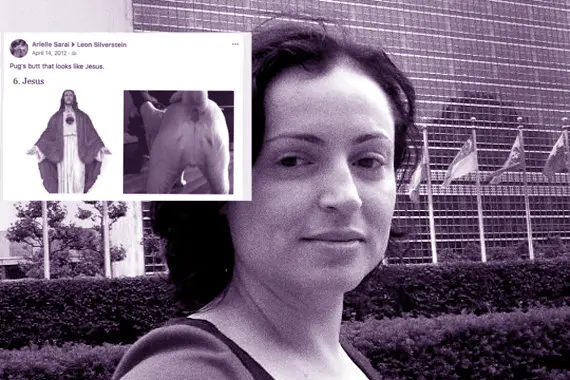
A senior lawyer within the United Nations system is facing renewed scrutiny after a series of archived online posts surfaced in which she mocked and denigrated multiple religious communities and appeared to advocate political pressure against a minority faith.
The official in question, Arielle Silverstein, has worked in legal and administrative roles within the UN system, including positions linked to management oversight and ethics review. As a UN staff member, she is bound by the organization’s Staff Regulations, which require employees to uphold the principles of the UN Charter, exhibit respect for all cultures and refrain from discrimination against individuals or groups.
However, a compilation of posts attributed to Silverstein—many written under aliases such as “Bozuri”—contains language that critics argue is incompatible with those obligations. The statements target Muslims, Jews, Christians and Scientologists, and in some cases propose actions against religious groups that raise concerns from a human-rights perspective.
Mocking Multiple Religions
The posts, some of which date from the early 2010s, show repeated expressions of hostility toward religious belief. Several messages ridicule the practices or sacred figures of major faiths.
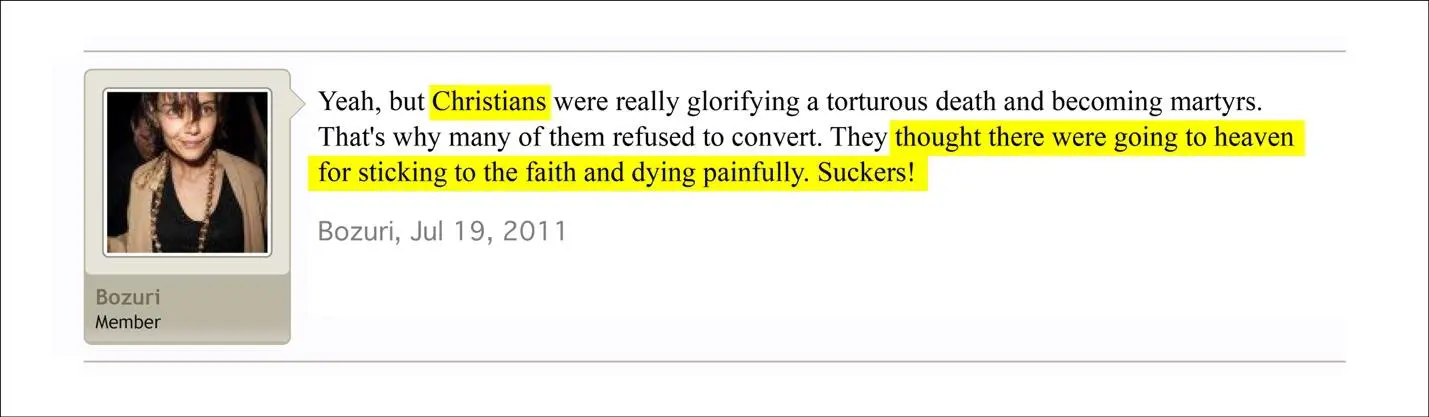
For example, Silverstein reportedly referred to Christians as “suckers” for their beliefs and described religious preaching in dismissive terms, writing that “Hispanic preachers” and others were “wackos” and “crazy.”
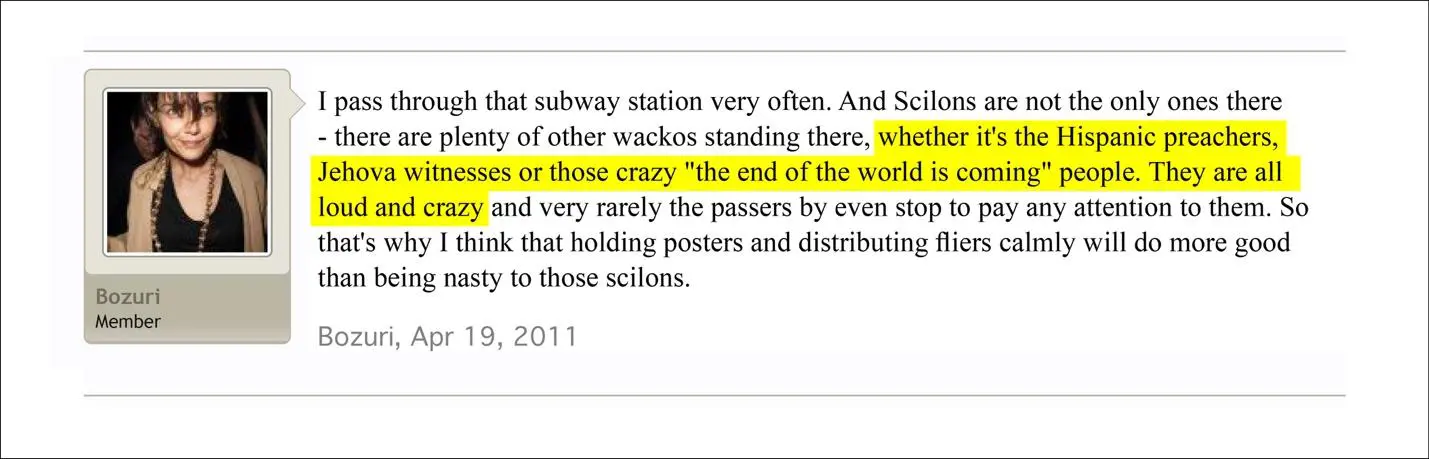
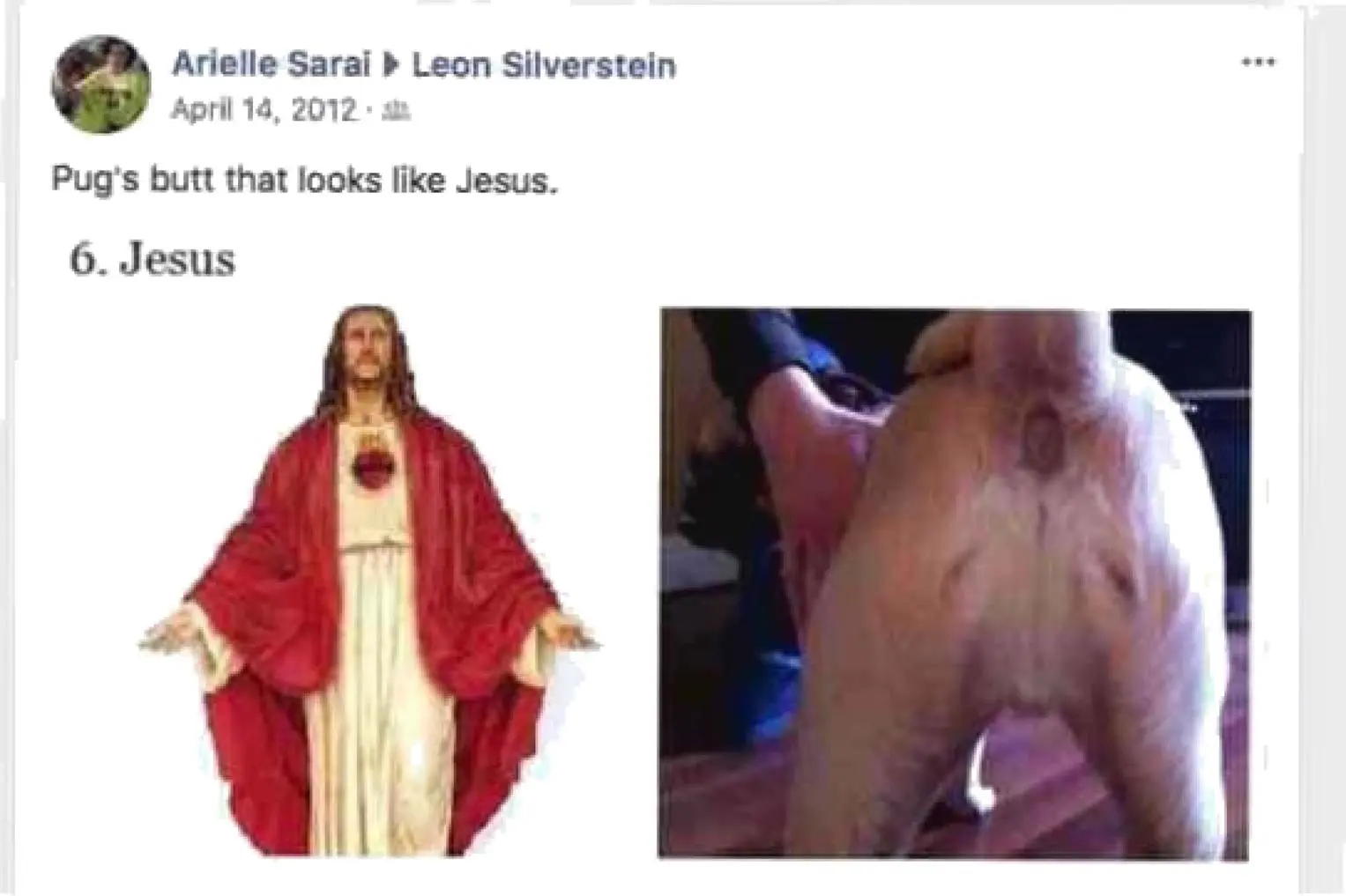
In other posts, she mocked Islam and its central religious figures. One message ridiculed the Prophet Muhammad as an “illiterate desert dweller,” while another suggested that Muslims were “particularly thin-skinned.”
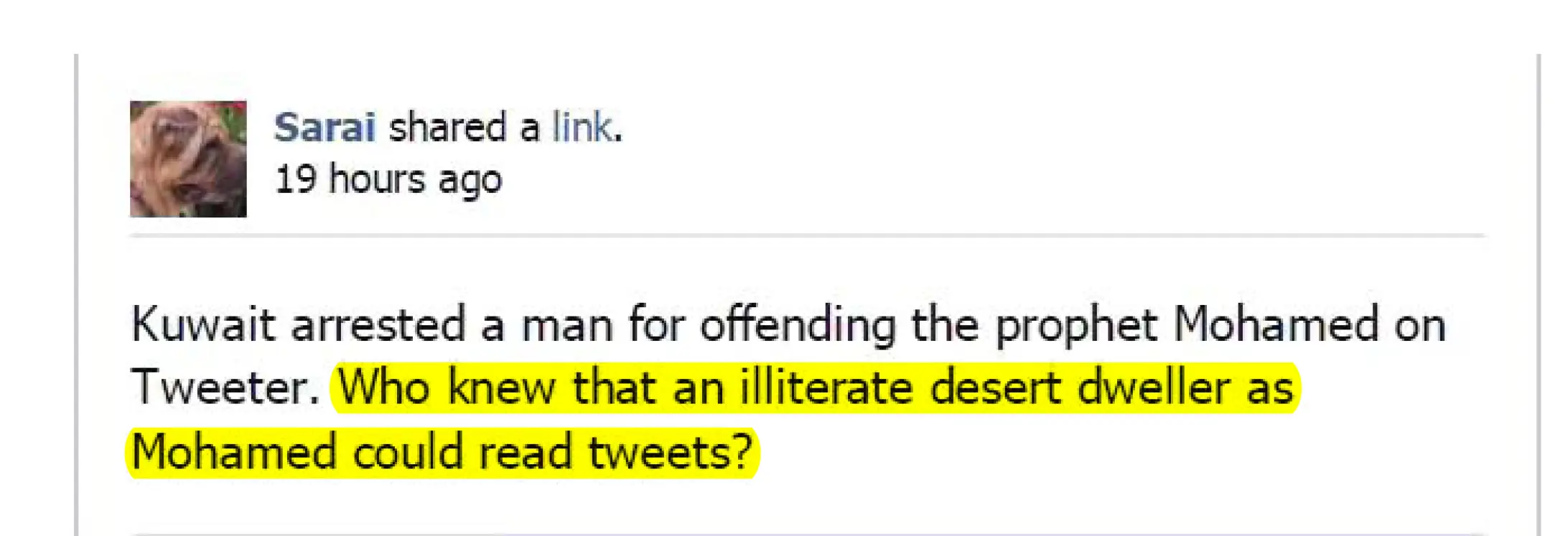
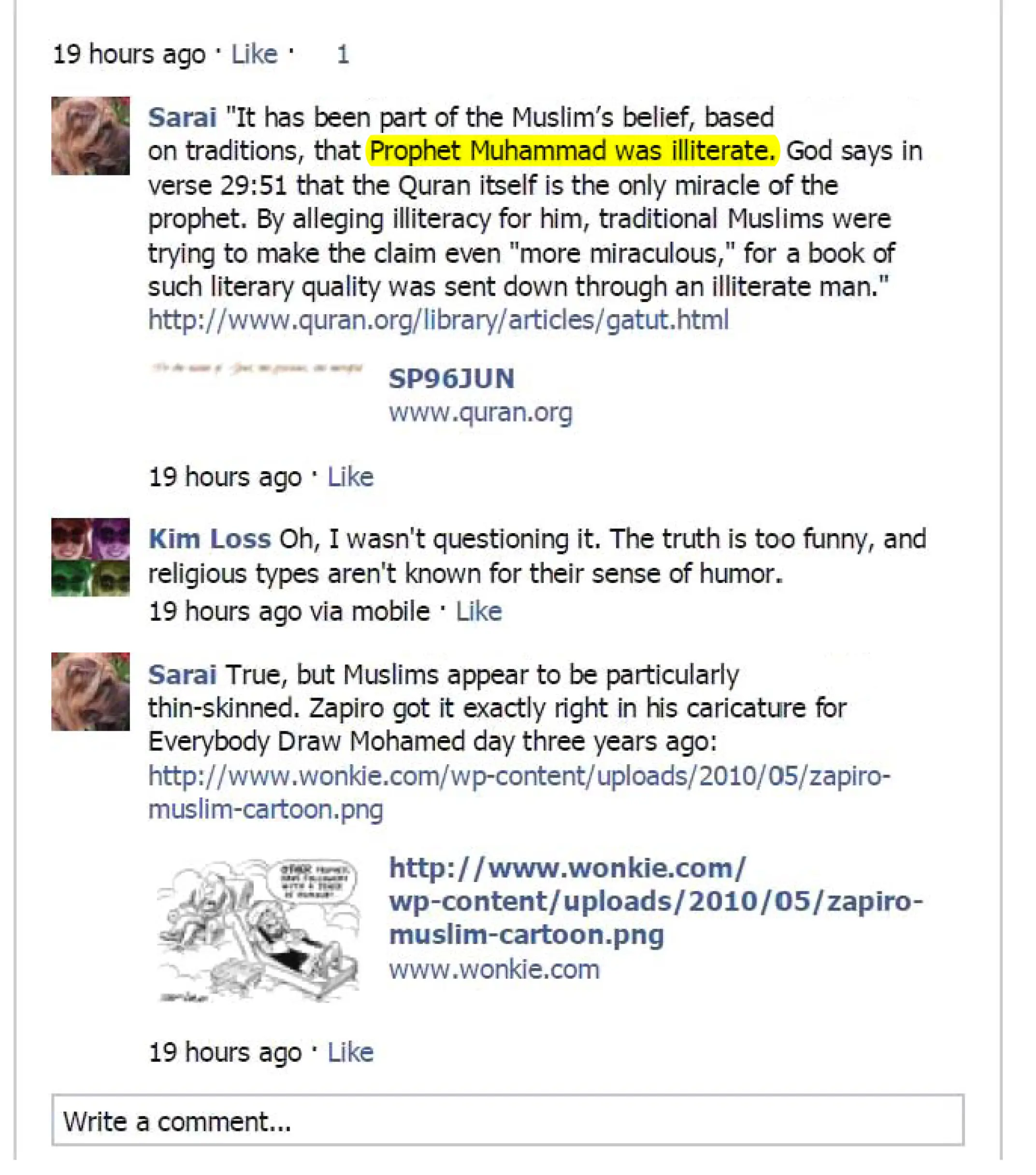
She also publicly supported the controversial online campaign known as “Draw Mohammed Day,” writing: “I’m planning on committing the crime of blasphemy on #MohammedDay… It’s good not to be living in Kuwait, Afghanistan or Saudi Arabia.”
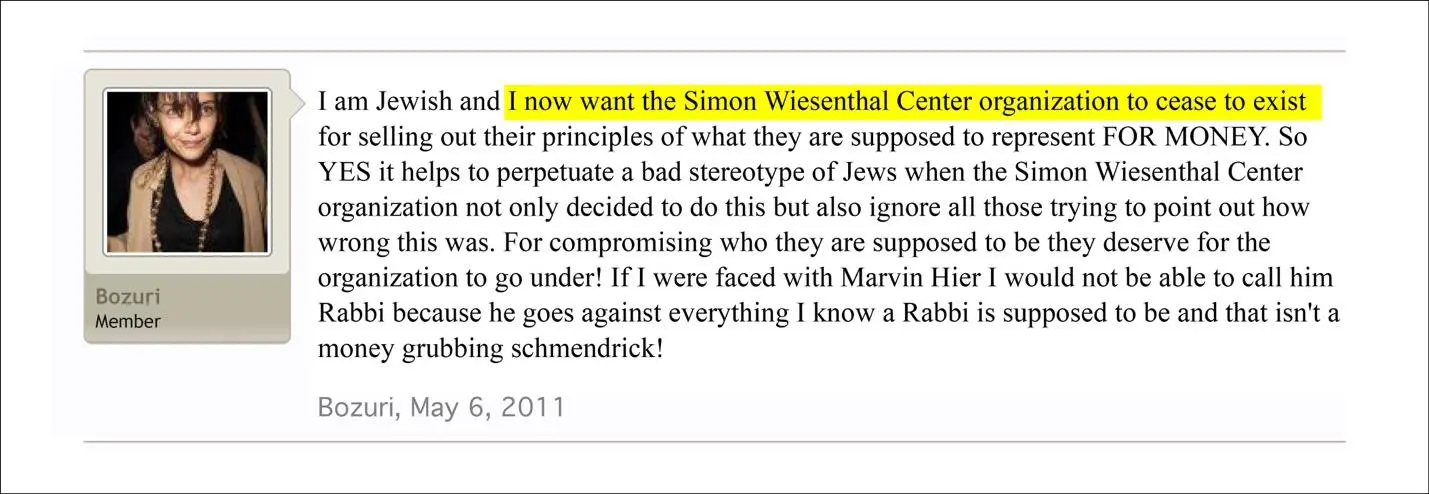
Other posts expressed hostility toward Jews, despite Silverstein describing herself as a Jewish atheist. She also wrote that she wanted the Simon Wiesenthal Center, a Jewish human-rights organization founded by Nazi hunter Simon Wiesenthal, “to cease to exist.”
She also boasts about her familiarity with the Old Testament and says she “likes nothing more than explaining to religious people why [she] dislikes God,” a statement that conveys open contempt for believers and shows particular disrespect toward Jews who regard the Hebrew Bible as sacred.
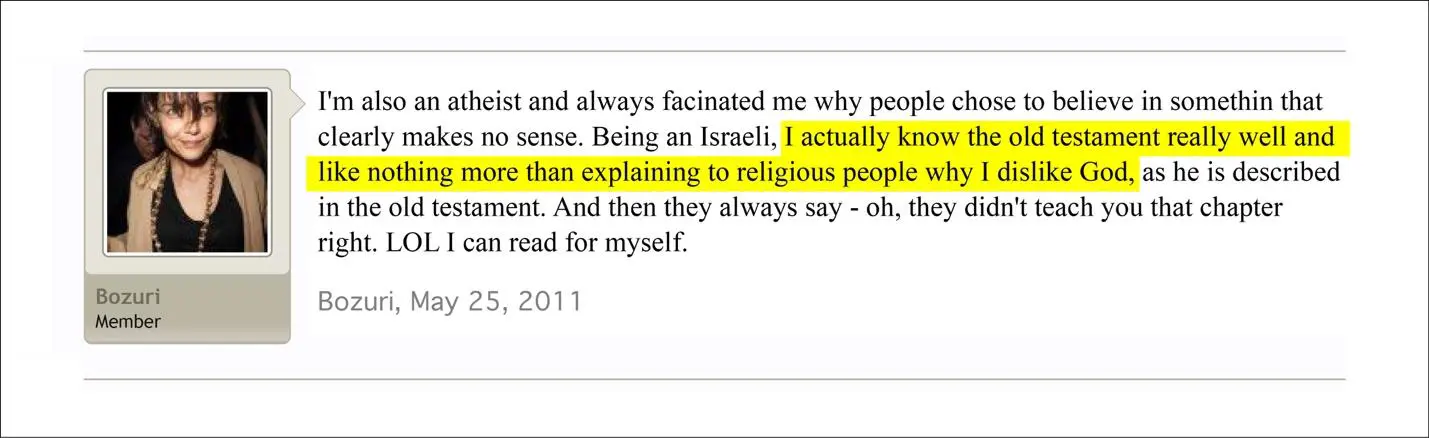
Taken together, the posts portray an unusually sweeping hostility toward organized religion and religious believers across several traditions.
A Strategy Against Scientology
Among the most controversial statements are those concerning the Church of Scientology. In online discussions, Silverstein appeared to encourage political and governmental pressure against the group.
In one exchange, she suggested that critics should approach the Dutch far-right politician Geert Wilders, leader of the Party for Freedom (PVV), known internationally for his strongly anti-Islam positions. According to the archived messages, she wrote: “Seriously—get Gert [sic] Wilders to f—k with them,” adding that the politician “will expel their assess out of Holland, as if they were illegal aliens.”
She reportedly suggested a tactic for attracting Wilders’ interest: linking Scientology rhetorically to “radical Muslims,” an argument she believed would motivate him politically.
In another message, Silverstein wrote: “We can totally use the Pakistani government’s religious intolerance against Scientology.”
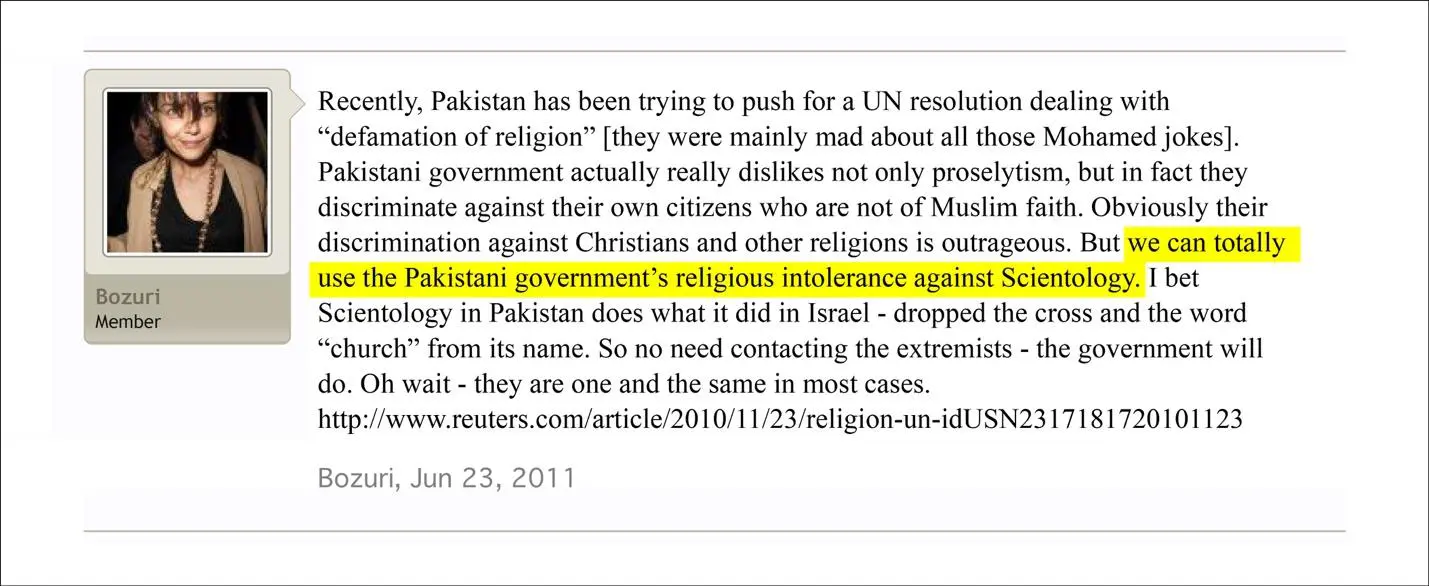
The comment drew particular concern among observers because Pakistan has long been criticized by international human-rights organizations for its blasphemy laws and the persecution of religious minorities. These laws have been used to imprison or prosecute Christians, Ahmadis and others accused of insulting religion.
Human-rights groups have repeatedly warned that accusations under these laws can lead not only to imprisonment but also to mob violence and extrajudicial killings.
Against that background, suggesting that the Pakistani government’s “religious intolerance” could be leveraged against a religious group raises serious questions about the compatibility of such views with the UN’s mandate to defend freedom of religion or belief.
A Conflict with UN Standards?
The United Nations has long presented itself as a global defender of religious freedom and cultural respect. Article 18 of the Universal Declaration of Human Rights—adopted by the UN in 1948—guarantees the right to freedom of thought, conscience and religion.
UN staff regulations reflect those principles. They require employees to show respect for all cultures and prohibit discrimination against any individual or group. Staff members must also avoid public statements that could undermine the organization’s impartiality.
Critics argue that the tone and content of Silverstein’s posts are difficult to reconcile with those obligations, particularly given her professional roles within the organization.
The case highlights a broader dilemma faced by international institutions: how to balance the private speech rights of employees with the ethical standards required of public officials tasked with defending universal human rights.
Questions for the United Nations
At the time of writing, it remains unclear whether the United Nations has opened any formal review into the matter. Internal personnel investigations are typically confidential, and the organization rarely comments publicly on individual staff cases.
Nonetheless, the resurfacing of the posts has sparked renewed debate about accountability within international institutions.
For observers concerned with religious freedom, the controversy touches on a deeper issue: whether the values promoted by global organizations—respect for religious diversity, protection of minorities and opposition to discrimination—are applied consistently within their own ranks.
As scrutiny of the case continues, the episode may ultimately serve as a test of how seriously those principles are enforced inside the institutions that advocate them worldwide.