

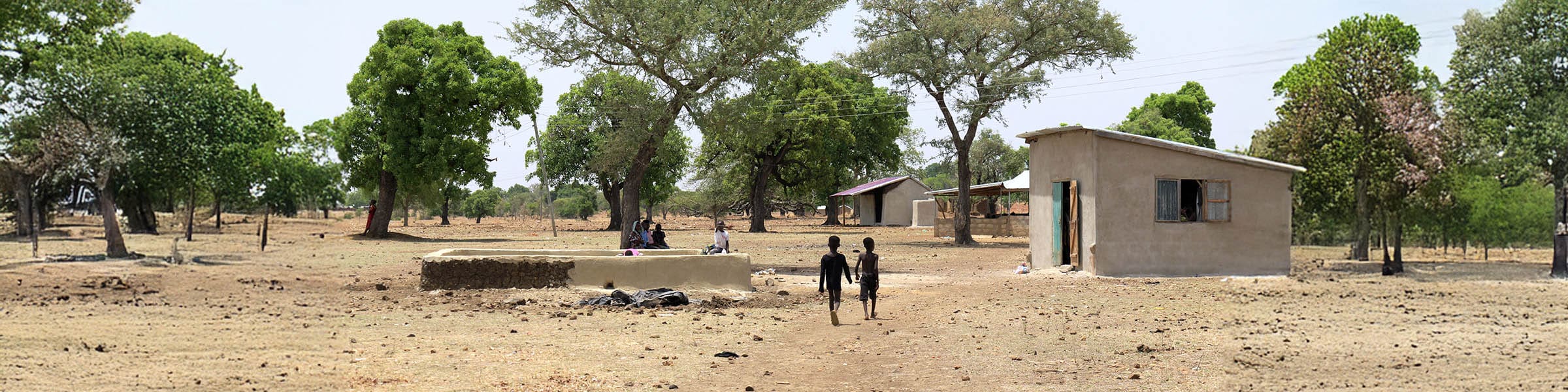
In Ranerou, north-east Senegal, locals and environmental experts are working side by side to improve livelihoods and farming conditions, and protect the region’s biodiversity. They are planting and managing trees to improve soil quality and excavating and reinforcing a local pond to help it hold more rainwater.
The work is taking place at one of six innovation sites known as Living Labs, set up by TRANS-SAHARA. The other five are in Chad, Djibouti, Ethiopia, Ghana and Tunisia, each chosen to reflect a different set of conditions across the region.
TRANS-SAHARA, alongside sister initiatives AfroGrow and GALILEO, is developing nature-based solutions for land and water management across Africa.
Listening to local communities
Researchers work alongside local communities, putting various agroforestry techniques to the test to restore degraded ecosystems, improve water and food security, and boost farmers’ incomes across North and sub-Saharan Africa, especially in the Sahel region.
“
If we do not cut greenhouse gas emissions in Europe immediately, […] our landscapes will in two to three decades look the same as the Sahel today.
“People in the local area tell us: ‘We need water. We need water today and we need water tomorrow’,” said Aminata Diallo Sy, head of partnerships and fundraising at the Senegalese Agency for Reforestation and the Great Green Wall.
The Great Green Wall Initiative is a land restoration programme endorsed by the African Union and backed by the UN Convention to Combat Desertification. It involves 11 countries and aims to restore a continuous belt of land stretching 8 000 kilometres across Africa, from Senegal to Djibouti.
In Ranerou, the race is on to restore the pond before the rains arrive. The rainy season used to run from July to October, but now often starts in August – a shift that makes the need to conserve every drop of water all the more pressing.
For Diallo Sy, listening matters more than prescribing solutions. “We need the vision of the local communities, because they are the ones who implement the project. They need to be involved to have an efficient project with good results.”
Connected solutions
TRANS-SAHARA works within a framework known as the Water-Energy-Food-Ecosystems (WEFE) Nexus. Unlike conventional agroforestry, which focuses on integrating trees with crops and livestock, the WEFE Nexus approach treats water, energy, food and ecosystems as parts of a single system rather than separate issues.
It is well suited to Africa’s unique environments, where water is already scarce and pressure from climate change, drought and population growth is intensifying. The aims are to increase farmers’ incomes across the Living Labs and create new carbon sinks on degraded land.
TRANS-SAHARA draws on a range of solutions that reinforce one another. One example is turning urban organic waste into organic fertiliser that improves degraded soils and helps them retain rainwater.
This process captures methane, a greenhouse gas with higher global warming potential than CO2, albeit shorter lived, while the organic fertiliser lifts crop yields and improves soil health. Planting trees across farmland goes further still, sequestering carbon while providing shade and supporting biodiversity.
“We use water security as an entry point to explore a broader, more holistic Nexus-based approach to sustainability,” said project coordinator Dr Daphne Gondhalekar from the Chair of Urban Water Systems Engineering at the Technical University of Munich.
“The Nexus brings together water, energy, food and ecosystems, along with waste and transport.”
Easier water access
At the heart of the project is groundwater recharge. Earlier initiatives tended to pump water out of the ground using solar-powered systems to irrigate fields.
TRANS-SAHARA inverts that logic. Rather than extracting water, the focus is on replenishing underground reserves, known as aquifers, so that communities can draw on them with little or no electricity. That requires knowing what is there in the first place.
The team has been training community members to monitor groundwater levels with simple, low-cost sensors that anyone can operate and maintain. The readings feed into a shared network, giving researchers and water authorities a clearer picture of how reserves change through the seasons.
The next step is capturing stormwater during the short, intense rainy season and directing it back underground. At present, much of it runs straight off land stripped of topsoil by desertification, while the rest evaporates quickly in the heat – a double loss that a managed aquifer recharge is designed to stop.
Groundwater fix
At each Living Lab, the team is designing infrastructure to capture stormwater and filter it back into the groundwater through layers of soil and substrate. This ensures that the water reaching the aquifer is clean enough to use.
“
People in the local area tell us: ‘We need water. We need water today and we need water tomorrow’.
Dr Gondhalekar explained that the researchers are trying to inject water more directly into the aquifer to increase the available quantity as fast as possible.
Because data on these aquifers is scarce, researchers are using existing wells and boreholes as reference points. The communities that dug them relied on generations of local knowledge about where water could be found.
This is a legacy the project is now building on, including in Ranerou, where the community is working with the national water authority to map current groundwater reserves ahead of the rains.
“This is the first project in our area to focus specifically on groundwater recharge,” said Diallo Sy. “Pond restoration will address immediate needs, while the recharge work builds for the future.”
Lessons learned
With men often away on seasonal grazing routes, women in Ranerou are taking the lead on agroecological improvements – better soil management, natural pollination and pest control – to expand the cultivation of fruits, vegetables and staple crops. The benefits for food security, nutrition and community health are well documented.
The team is also tracking the effects of practical interventions, measuring changes in soil quality, water availability, biodiversity and farmers’ incomes across all six Living Labs. The findings are shaping new business models, designed to give local communities the tools to manage their own resources independently.
By 2027, when TRANS-SAHARA concludes, the team aims to have models ready for adoption across African Union countries, with 2030 as the target for broader use across the continent.
The researchers’ findings on groundwater, aquifer recharge and crop yields are also expected to inform interventions well beyond Africa, as Europe grapples with its own worsening cycle of floods, droughts and heatwaves.
“Europe can learn a lot from Africa in terms of drought management,” said Dr Gondhalekar. “If we do not cut greenhouse gas emissions in Europe immediately, with climate change, our landscapes will in two to three decades look the same as the Sahel today.”
Research in this article was funded by the EU’s Horizon Programme. The views of the interviewees don’t necessarily reflect those of the European Commission. If you liked this article, please consider sharing it on social media.