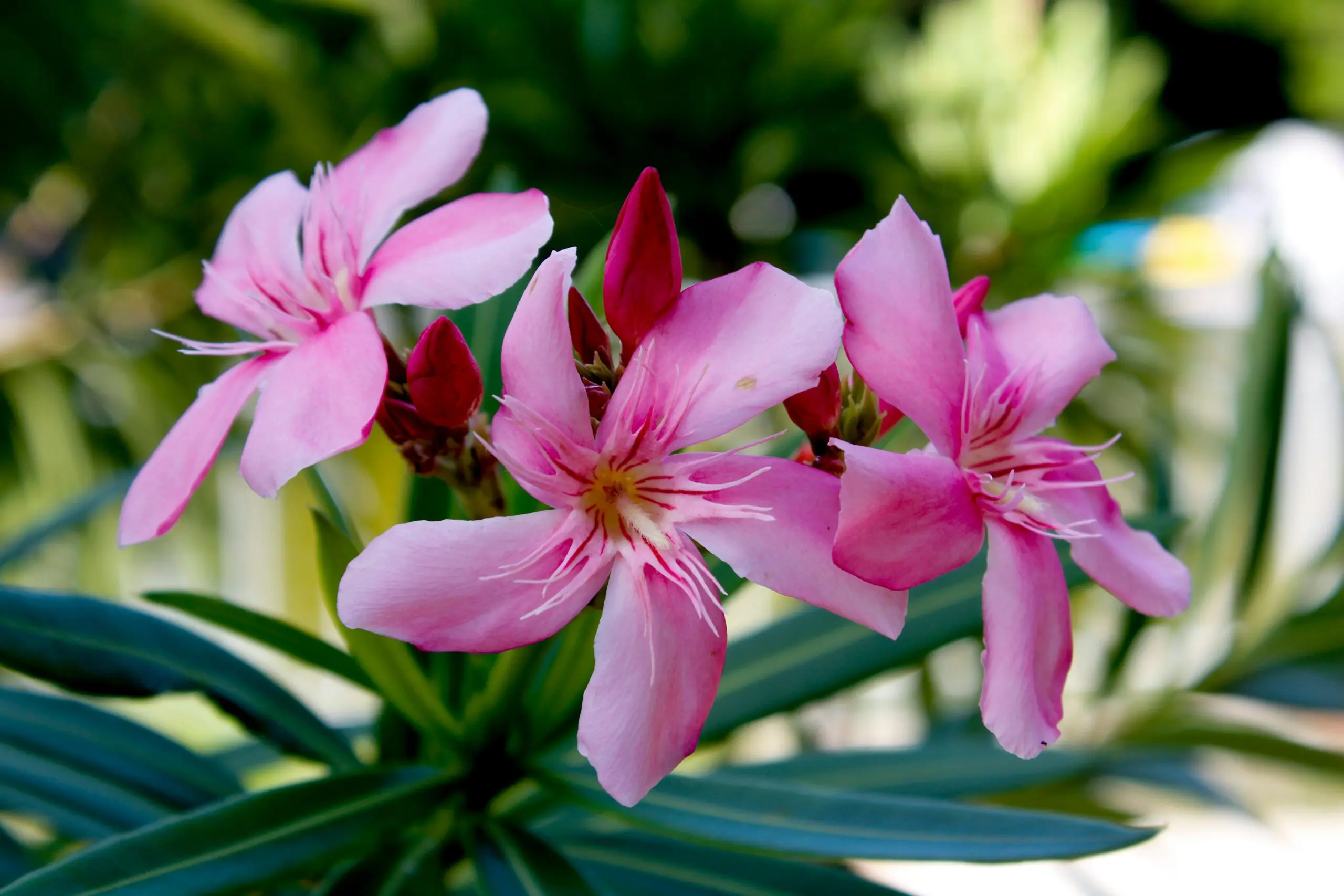
Health authorities in Greece are demanding the eradication of the oleander plant near schools due to its toxicity, the online edition of the Greek newspaper “Proto Thema” reported.
According to the National Organization for Public Health (EODI), the evergreen perennial shrub with beautiful white, yellow, red and pink flowers, which is particularly common in the Mediterranean region, poses a serious health risk to children.
The plant is found everywhere in Greece – in yards, on sidewalks, parks and public spaces. However, according to experts, it is toxic. Its leaves, flowers, stems and sap contain strong toxic substances that can cause ailments such as nausea and vomiting. However, they can also cause serious cardiac arrhythmia, and dangerous reactions, including cardiac arrest and epileptic seizures, are not excluded.
Toxic substances can enter the human body through inhalation, through the eyes, through open wounds.
According to EODI, children are particularly vulnerable due to their smaller body mass and the greater likelihood of approaching the bush. The organization points out that in cases of serious poisoning, the victim’s condition can deteriorate sharply and emergency medical intervention may be required.
EODI pays special attention to spaces where there is a concentration of children, such as playgrounds, parks, and schools. The recommendation of health experts is that the bush be eradicated from such places, and the advice is that the zocum be removed from yards as well. Until such measures are taken, EODI insists that the places with zocum be fenced off and that there be special instructions that the plant is toxic.
The Ministry of Health has taken into account EODI’s instructions and has sent a recommendation to schools to take measures to remove the bushes, the “News in” publication reports in an information on the subject.
However, geoengineering experts warn that removing such a plant, which is typical for the region, would cause enormous ecological and financial damage. Data show that despite its toxicity, cases of poisoning are extremely low – only 4 percent of 22,000 people per year, the publication points out.
Despite its exceptional popularity and beauty, the oleander remains one of the most dangerous ornamental plants in nature. Every part of it – from the saturated flowers to the root system and even the sap – contains powerful cardiac glycosides, which in large doses can be fatal. It is precisely because of this paradox between aesthetics and risk that experts advise gardeners and parents to approach with extreme caution, avoiding direct contact with eyes or open wounds and necessarily using protective equipment when pruning the bush.
Illustrative Photo by Alejandra Guzman: https://www.pexels.com/photo/vibrant-pink-oleander-flowers-blooming-outdoors-36776471/