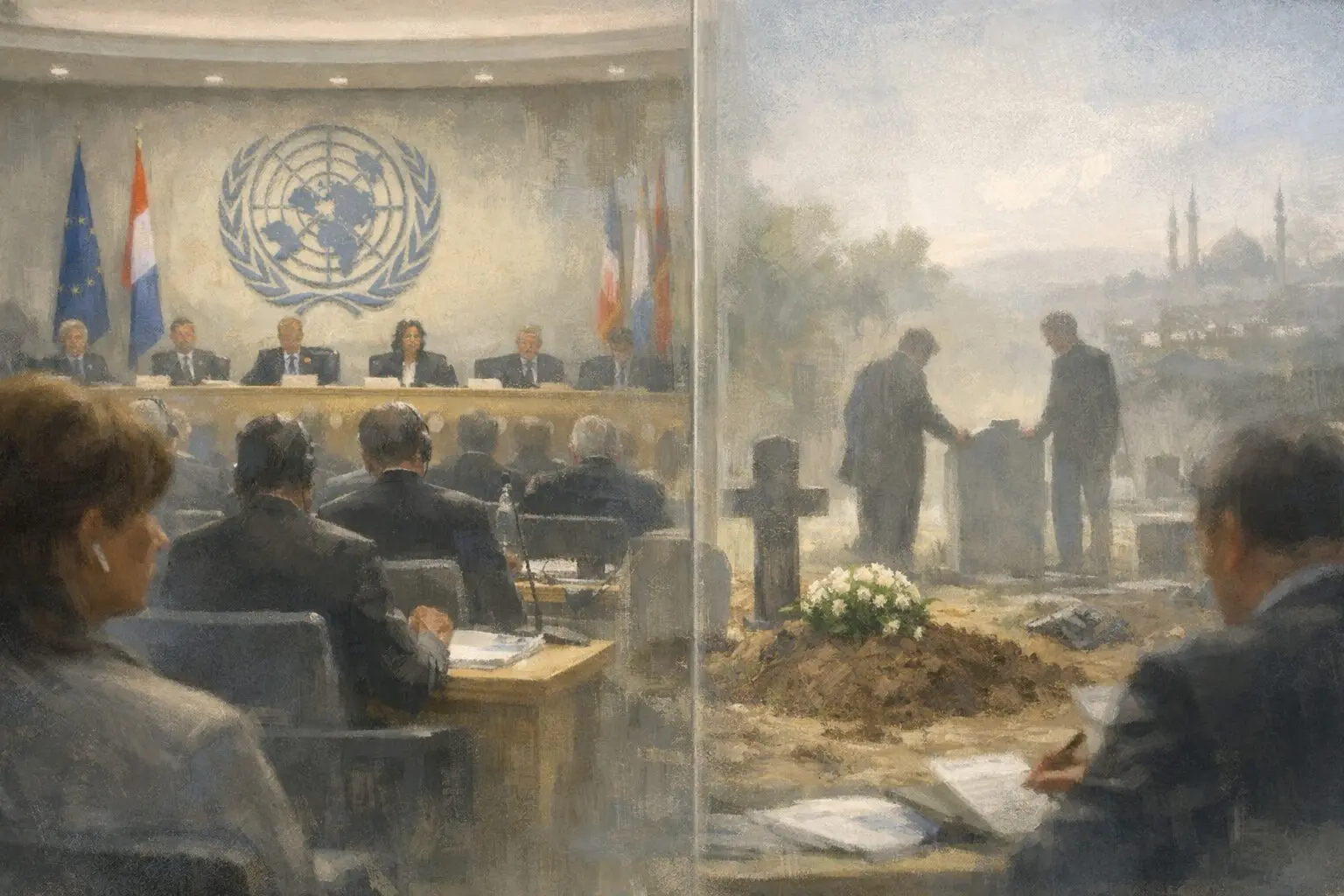
Geneva, March, 2026 – March 3rd, The sixty-first session of the United Nations Human Rights Council convened to address a somber but often overlooked dimension of human rights: the intersection of freedom of religion or belief with death and the treatment of the deceased. Under Agenda Item 3, Nazila Ghanea, the Special Rapporteur on freedom of religion or belief, presented her thematic report (A/HRC/61/50), which argues that the right to manifest one’s faith extends unequivocally into the grave.
The atmosphere in the Council chamber was characterized by a duality. On one hand, there was a broad, cross-regional acknowledgment of the psychological and spiritual necessity of funeral rites. On the other, the session revealed deep geopolitical fractures, as several states used the platform to air specific grievances regarding ongoing conflicts and alleged systemic discrimination, shifting the focus from universal principles to immediate political battles.
In her opening statement, Ms. Ghanea introduced the term “funeral rights” to describe the collective framework of rights associated with death. She posited that the denial of these rights is not merely an administrative inconvenience but a violation of Article 18 of the International Covenant on Civil and Political Rights (ICCPR). The rapporteur emphasized that severe restrictions on burial rites can constitute coercion of the living, compelling them to convert or abandon their beliefs during moments of profound vulnerability.
From a legal standpoint, the report’s strength lies in its rigorous application of the tripartite test of legality, necessity, and proportionality to funeral practices. It challenges the notion that ostensibly “neutral” laws are inherently just. As highlighted in the analysis of UN treaties on religious freedom, state obligations extend beyond non-interference; they require positive measures to accommodate diverse religious practices. When zoning laws or sanitary regulations prioritize majoritarian customs—such as mandatory coffins that preclude shroud burials—they amount to indirect discrimination, a violation of the state’s duty to ensure equality under the UDHR and ICCPR.
The discourse from the floor largely reflected this legal nuance, though with varying degrees of acceptance. Delegations from the European Union and like-minded states, including Ireland, Italy, and Germany, aligned themselves closely with the Special Rapporteur’s findings. Germany, in particular, drew attention to the global rise in antisemitism, specifically the desecration of Jewish cemeteries, framing these acts not just as hate crimes but as violations of human dignity that demand inter-state cooperation to combat.
Ireland’s intervention underscored the complexity of modern identity, noting how the failure to recognize same-sex relationships in law can interfere with burial rights, thus violating the right to private and family life. Italy raised a pertinent question regarding legislative design, asking how states might ensure that general or “neutral” laws do not inadvertently discriminate against minority faiths or indigenous communities—a direct reference to the report’s critique of standardization that erases specific religious requirements.
Support for the report’s core thesis also came from Africa and the Balkans. Albania, reflecting on its history of forced atheism under communist rule, stressed that the trauma of being denied funeral rites leaves lasting societal scars. The Albanian delegation explicitly endorsed the recommendation to treat the desecration of burial sites as hate crimes. Nigeria, while acknowledging the anguish caused by non-state actors interfering with burials, carefully distinguished between state failure and the actions of terrorist groups, reiterating its constitutional commitment to secularism and the protection of all faiths.
However, the session’s tone shifted significantly when delegations from the Global South and the Middle East took the floor, transforming the debate into a forum for accusations regarding conflict and systemic repression.
Pakistan delivered a combative intervention, categorically rejecting what it termed “allegations of systematic discrimination” against religious minorities, particularly Ahmadis. The Pakistani delegate argued that the report’s submissions were based on non-disclosed sources and “counterfactuals.” In a sharp reversal, Pakistan accused a neighboring country—implicitly India—of engaging in the “demolition of centuries-old Sufi shrines and Muslim graveyards” under a “majoritarian Hindutva ideology.” This exchange highlighted the tension between universal human rights standards and the defensive posturing of states when faced with scrutiny.
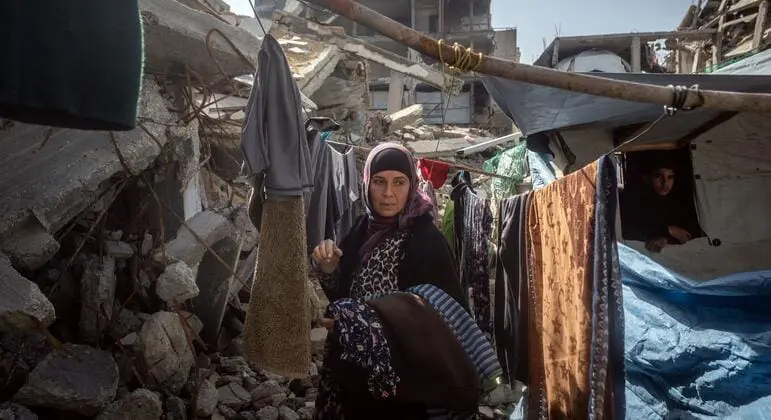
The most contentious interventions centered on the Middle East. The State of Palestine used the opportunity to describe the situation in Gaza as a “genocide,” alleging that Israeli authorities pursue a systematic policy of withholding Palestinian bodies. The delegate referenced the existence of “cemeteries of numbers” and mass graves near hospitals like Nasser and Al-Shifa, arguing that the denial of burial constitutes “cultural erasure” and “collective punishment.” Similarly, the Islamic Republic of Iran issued a stern statement regarding the recent death of its Supreme Leader, Imam Ali Khamenei. Describing his death as a “martyrdom” at the hands of an “American-Israeli axis,” the Iranian delegation argued that targeting a high religious authority violated the religious dignity of millions. This rhetoric moved the discussion away from the administrative aspects of funeral rights toward the high-stakes arena of international conflict and the rhetoric of war.
Despite these geopolitical clashes, the session succeeded in placing the “rights of the dead” firmly on the international agenda. As the Special Rapporteur noted, the obligations of states—to respect, protect, fulfill, and provide accountability—do not end with the last breath of a citizen. The report serves as a reminder that in the administration of death, as in life, the banality of bureaucratic hurdles can inflict profound spiritual harm, a concept Hannah Arendt might have recognized as the erosion of humanity through administrative cruelty.
The dialogue concluded with a consensus that while the legal framework exists, the implementation remains fraught with challenges. States must navigate the delicate balance between public order—public health, zoning, and safety—and the imperatives of religious freedom. As the Council moves forward, the test will be whether the dignity of the deceased can be protected from the vicissitudes of political polarization, ensuring that the right to mourn is honored as a fundamental human right rather than a political bargaining chip.