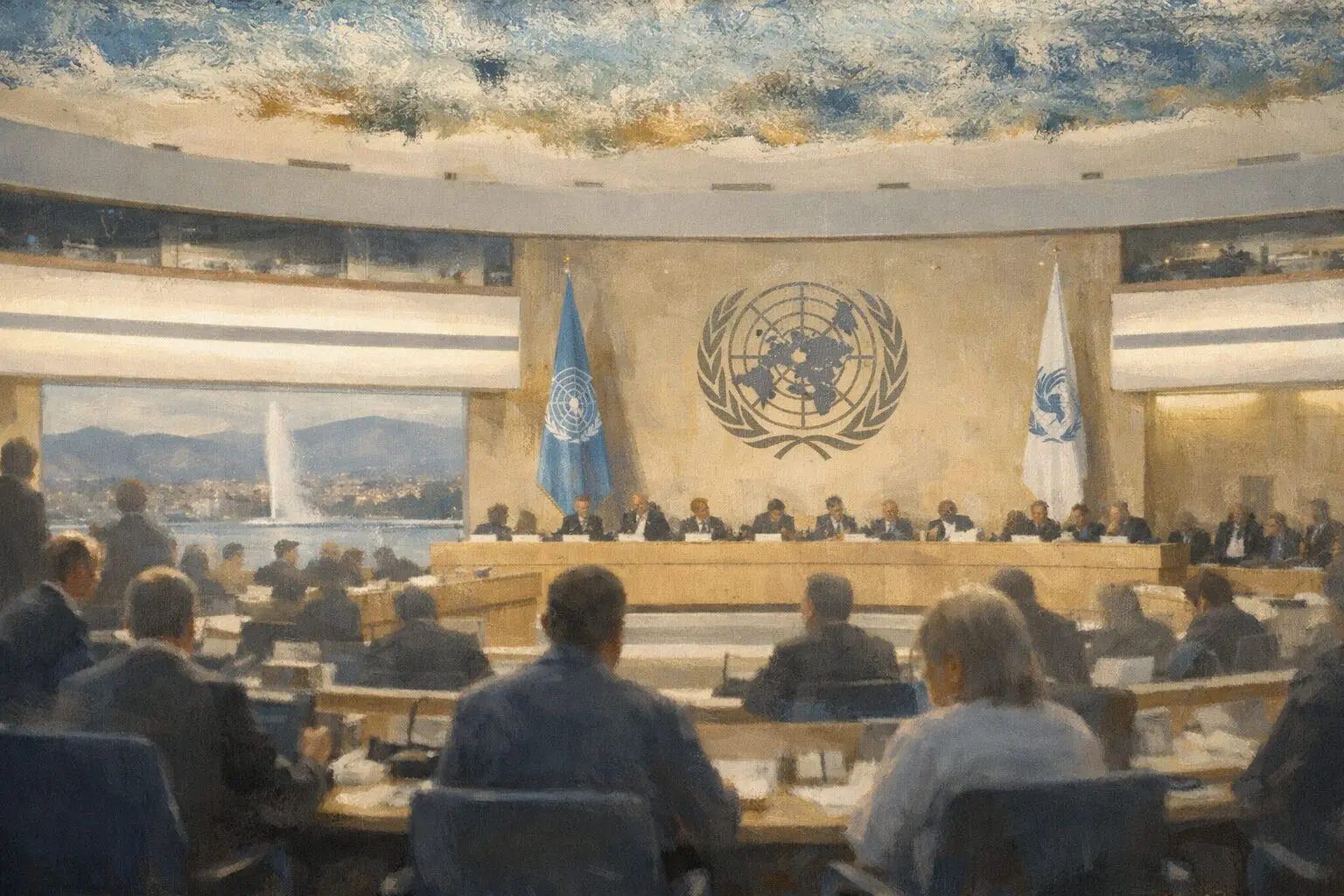
BRUSSELS — A report submitted to the sixty-first session of the United Nations Human Rights Council, which opened on 23 February 2026 in Geneva and runs through 2 April, delivers a sobering assessment of the state of minority rights worldwide. Prepared by the Office of the United Nations High Commissioner for Human Rights (OHCHR), the document — formally designated A/HRC/61/33 — covers developments throughout 2025 and presents a consolidated picture of entrenched discrimination, legislative shortfalls and the growing instrumentalization of hate speech against national, ethnic, religious and linguistic minorities.
The report is submitted pursuant to Human Rights Council resolution 55/15, adopted on 4 April 2024, which mandated OHCHR to provide an annual account of the activities undertaken to advance the Declaration on the Rights of Persons Belonging to National or Ethnic, Religious and Linguistic Minorities. The High Commissioner concludes that “further steps are needed by States to recognize minorities as a group at risk of being left behind” and to renew implementation of that Declaration — a document that has long remained aspirational rather than operationally binding.
A Global Landscape of Persistent Exclusion
The report’s core finding is stark in its simplicity: despite decades of international commitments, minorities across the globe continue to face disproportionate poverty, unemployment, housing insecurity and police violence. High Commissioner Volker Türk, speaking at the eighteenth session of the Forum on Minority Issues in November 2025, drew attention to the fact that “vilifying minorities had become a convenient divide and rule tactic for leaders seeking to polarize, confuse and distract from their own failures.”
One data point in the report stands out for its breadth: as of 2025, fewer than one quarter of the world’s countries had enacted anti-discrimination laws meeting the minimum standards required under international human rights law. That figure comes despite OHCHR’s sustained work since 2022 — in partnership with the Equal Rights Trust — on its practical guide to developing comprehensive anti-discrimination legislation and the subsequent launch, in July 2025, of the Equality for All Academic Action Alliance, a network of university institutions committed to advancing equality law reform.
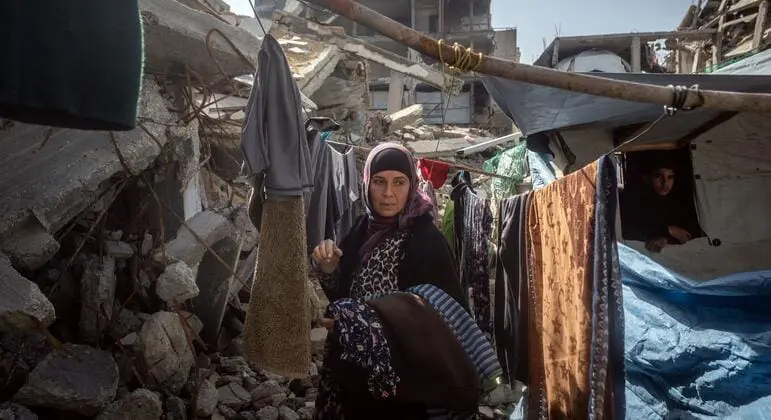
The geographic scope of documented violations is wide. The report catalogues concerns in Pakistan, where blasphemy laws continue to be used against Ahmadiyya and Christian communities; in Egypt, where Bahaʼi citizens are denied official recognition as persons before the law; in Iran, where ethnic and religious minorities — including Baloch, Kurdish, Baha’i, Christian and Yarsan individuals — face systematic discrimination compounded by a disproportionate application of the death penalty; in Myanmar, where the Rohingya situation has “reached unprecedented levels of suffering”; and in Afghanistan, where Hazara, Ismaili Shia, Turkmen and Uzbek communities face forced conversions and land dispossession. In Russia, a State-sponsored nationalist ideology has, according to the Special Rapporteur on the situation of human rights in the Russian Federation, “normalized identity-based discrimination and violence.”
Legal Frameworks Under Strain
These documented violations must be read against a well-established body of international law. Article 27 of the International Covenant on Civil and Political Rights (ICCPR) is the foundational treaty norm: it guarantees persons belonging to ethnic, religious or linguistic minorities the right to enjoy their own culture, profess and practise their own religion and use their own language. The Human Rights Committee — ICCPR’s monitoring body — issued several relevant concluding observations during 2025, including on Spain (where racial profiling by security forces and delayed anti-racism legislation drew concern), Latvia (where a language-in-education transition raised concerns about indirect discrimination against linguistic minorities), Viet Nam (where mandatory registration schemes and counter-terrorism provisions were found to infringe upon freedom of religion or belief under Article 18 of the Covenant) and Montenegro (where Roma, Ashkali and Egyptian communities face persistent housing exclusion and political underrepresentation).
The report also invokes, implicitly throughout, Article 18 of the Universal Declaration of Human Rights (UDHR) and its elaboration in Article 18 of the ICCPR, which protect freedom of thought, conscience and religion. The cases documented — from Tajikistan’s law banning clothing Estonia’s Churches and Congregations (Amendment) Act targeting the Estoni”alien to national culture” and prohibiting children from participating in Muslim celebrations, to an Orthodox Church on national security grounds — illustrate how States have increasingly reached for security rationales to justify restrictions that the report’s authors, as well as independent experts, characterize as disproportionate and discriminatory.
The European dimension of this tension is particularly instructive. In Estonia, a UN Special Rapporteur warned that the amendment targeting a religious minority affiliated with the Moscow Patriarchate “might amount to institutionalized religious discrimination” and violated multiple provisions of the ICCPR. A parallel concern was raised regarding Ukraine’s legislation allowing for the dissolution of religious organizations with ties to the same Patriarchate. Both cases underscore the delicate balance that the European Convention on Human Rights (ECHR), particularly Article 9 (freedom of religion) and Article 14 (prohibition of discrimination), is designed to maintain — and the extent to which wartime or national security pressures can create conditions under which that balance tilts.
The recently published volume Faith in United Nations Human Rights Treaties (University for Peace, January 2026), edited by Michael Wiener, Ibrahim Salama and Britta Nicolmann, provides a timely analytical lens for these developments. The book, which brings together forty contributors — including current and former UN treaty body members, special rapporteurs, religious leaders and academics — argues that faith-based actors and legal frameworks are not antagonistic systems but, when properly understood, mutually reinforcing ones. It notes that the UN’s own human rights architecture has, over decades, accumulated substantial jurisprudence at the intersection of religion, belief and human rights law — jurisprudence that remains underutilized by States and under communicated to communities most in need of protection.
Hate Speech: From Online Platforms to Political Discourse
A section of the OHCHR report that warrants particular attention concerns hate speech. The document observes a “surge in hate speech, in particular online, alongside coded or explicit incitement to violence against minorities, often voiced by politicians, business leaders, media commentators and others.” This language echoes the Rabat Plan of Action (2012), a key soft-law instrument that defines the threshold at which advocacy of national, racial or religious hatred constitutes incitement to discrimination, hostility or violence — and that establishes the responsibility of States to act accordingly.
The report documents how these trends manifest across distinct regions and target distinct communities: the Committee on the Elimination of Racial Discrimination (CERD) expressed concern in December 2025 about hate speech against Muslims, Roma, Jews and people of African descent in Sweden; the High Commissioner addressed the European Parliament in January 2025 urging stronger measures against antisemitism and anti-Muslim hatred; and a conference in Tirana in January 2025 produced the Tirana Framework for Confronting Intolerance, which specifically called on technology and social media companies to establish transparent mechanisms to identify and address hate speech while respecting freedom of expression.
Data Deficits and the AI Dimension
Among the report’s more forward-looking dimensions is its treatment of data. The absence of reliable, disaggregated statistics on minorities remains, in the High Commissioner’s words, a persistent obstacle to “effective policymaking and inclusion.” The report records OHCHR’s work in Moldova to support disaggregated data collection by ethnicity, language and religion, while noting that this type of systematic investment remains the exception rather than the rule globally.
The report also raises concerns about artificial intelligence. High Commissioner Türk, in a statement during the UN General Assembly’s high-level week in September 2025, warned that predictive policing tools and other AI-driven systems were “reproducing historical bias against racial, ethnic and religious minorities.” The report calls on States to subject AI design, use and regulation to rigorous human rights impact assessments and to ensure compliance with standards of transparency, accountability and non-discrimination.
Commitments Without Implementation
The OHCHR report closes with a series of recommendations that are, by design, addressed to States. They include the enactment of comprehensive anti-discrimination laws, the meaningful inclusion of minorities in decision-making processes, firm regulatory frameworks for AI and data systems, and principled leadership from both political and faith actors in countering hate speech.
What the report makes clear, through the accumulation of its cases, is that the gap between international legal obligation and domestic practice remains substantial. The 1992 Declaration on Minority Rights, which underpins the report’s mandate, has no binding enforcement mechanism. The ICCPR does — but only for States that have accepted the Optional Protocol, and even then, the Human Rights Committee’s decisions carry political rather than legal weight.
The sixty-first session of the Human Rights Council will have, among the documents before it, this forensic account of where global commitments stand against the reality faced by minorities on the ground. Whether member States choose to treat it as a call to action or as another item in a crowded agenda will, in itself, speak to the nature of that gap. The report’s authors have left that question open — but its answer, the High Commissioner suggests, is increasingly urgent.