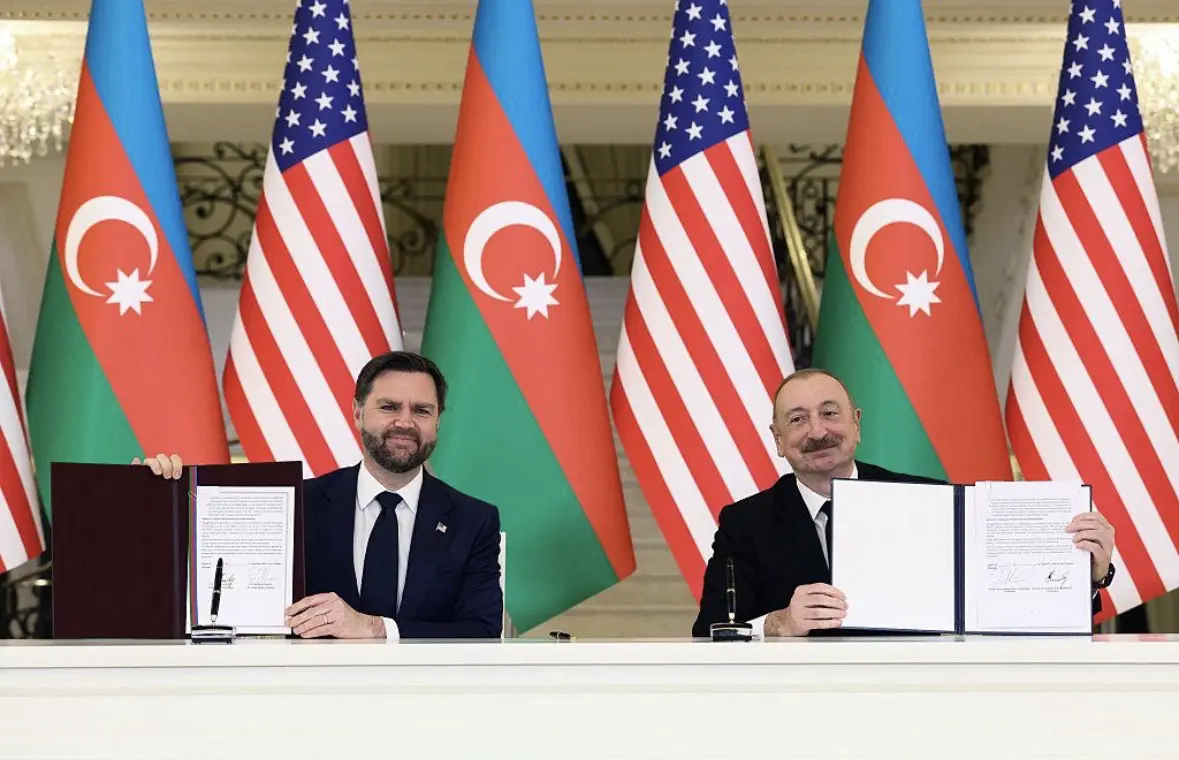
On February 10, 2026, in Baku, Azerbaijan and the United States officially signed a strategic partnership agreement following a high-level visit marked by a meeting between President Ilham Aliyev and US Vice President J.D. Vance. The ceremony, held at the Presidential Palace, was preceded by several hours of bilateral and broader talks on regional security, energy, technological cooperation, and long-term economic prospects.
From the outset of the discussions, both sides expressed a clear desire to structure their relations within a sustainable and institutionalized framework. The agreement provides for the establishment of regular strategic dialogue between the relevant ministries, with specific monitoring mechanisms. On the security front, discussions focused on strengthening cooperation in the protection of energy infrastructure, the fight against terrorism, and regional stability in the South Caucasus. For Baku, this dimension is essential: located at a sensitive geopolitical crossroads, Azerbaijan seeks to consolidate its position as a stabilizing force, capable of engaging in dialogue with all the major powers.
Energy was one of the central themes of the meeting. Azerbaijan, a strategic supplier of gas to Europe, intends to guarantee the reliability of its energy corridors and strengthen the confidence of its Western partners. Discussions also focused on diversifying sources, investing in renewable energies, and integrating new technologies to modernize existing infrastructure. By consolidating its ties with Washington, Baku seeks to secure its role in the energy diversification of the European continent, while promoting its image as a stable and predictable partner.
The technological aspect of the agreement also illustrates the evolution of Azerbaijan’s strategy. Cooperation in the fields of digital transformation, artificial intelligence, and cybersecurity has been highlighted as a pillar of the country’s modernization. For President Ilham Aliyev, it is not just a question of attracting investment, but of repositioning the national economy towards high value-added sectors. This orientation reflects a clear desire to gradually reduce dependence on hydrocarbons and to project the image of an Azerbaijan focused on innovation and technological excellence.
At the joint press conference, the head of state emphasized the rigor and consistency of his country’s foreign policy. He stressed that this agreement was not a one-off gesture, but the result of methodical diplomatic work carried out over several years. According to him, Azerbaijan’s international credibility is based on institutional stability, strategic continuity, and the ability to honor its commitments. By highlighting these elements, Aliyev seeks to enhance the country’s attractiveness to Western partners and international investors.
Beyond the technical and economic aspects, this initiative has strong symbolic significance. It reflects Baku’s desire to appear as a responsible, sovereign actor open to global cooperation. In an international context marked by tensions and the reshaping of alliances, Azerbaijan is thus asserting a pragmatic diplomacy based on the balance and diversification of its partnerships.
This new stage in relations between Baku and Washington therefore illustrates a greater ambition: to consolidate Azerbaijan’s position on the regional and international stage, while strengthening its image as a stable, modernizing, and strategically reliable country. For Ilham Aliyev, this agreement is both an instrument of cooperation and a political signal to the international community about the path his country intends to follow in the coming years.