By Martin Hoegger
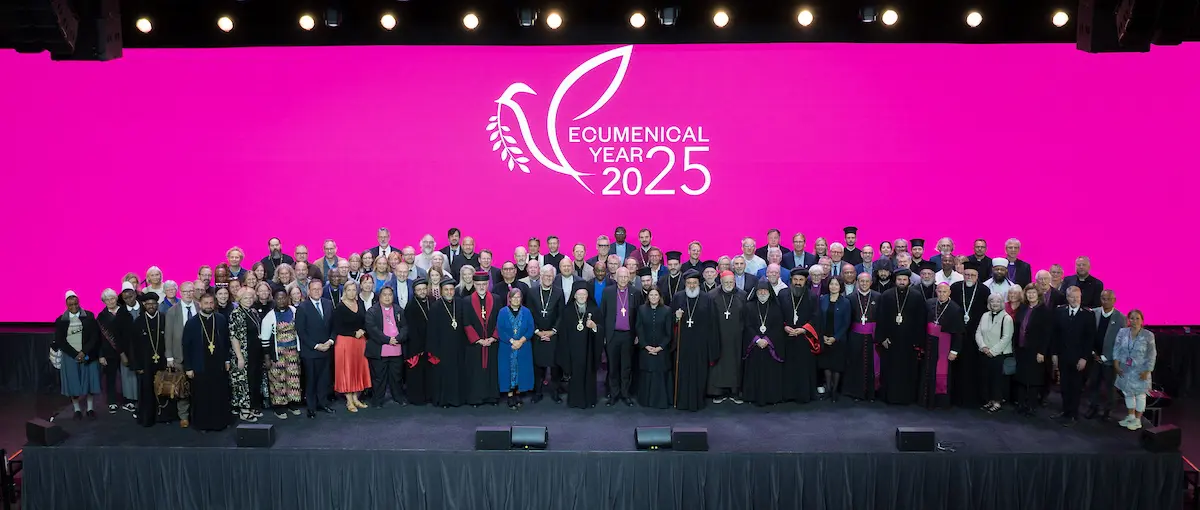
Between 22 and 24 August 2025, three exceptional celebrations marked the centenary of the 1925 Stockholm Conference in Sweden: a commemoration in the Philadelphia Pentecostal Church, an ecumenical celebration in Stockholm Cathedral in the presence of the King and Queen, and a grand solemn liturgy in Uppsala Cathedral. This anniversary was also an opportunity to recall another essential milestone in the life of the Church: the 1700th anniversary of the Council of Nicaea (325).
These three celebrations echoed each other: Nicaea, uniting the Church around a common confession of faith at a time when heresies were proliferating, and Stockholm, opening up an ecumenical path in the 20th century centred on Jesus Christ, the source of peace and unity. A hundred years later, the vision of Nathan Söderblom, Archbishop of Uppsala and initiator of the 1925 conference, remains surprisingly relevant.
They were part of an ecumenical week on the theme “Time for God’s Peace”, with some sixty contributions. (See https://www.skr.org/program-ecumenical-week-18-24-august/ )
Remembering Stockholm 1925
The 1925 Conference took place in a Europe scarred by the First World War. The missionary dream expressed at the Edinburgh Conference in 1910 – to bring the Gospel to the whole world in a generation – had been shattered by the scandal of a war in which Christian nations had killed each other.
For Söderblom, Christian unity should not wait for complete doctrinal consensus but should first be embodied in a common task in the service of peace and justice. As he recalled: “Unity progresses when we come together for a common task.”
King Gustav V of Sweden, at the opening of the conference, affirmed that peace begins in the heart of each person. A commemorative plaque in the cathedral recalls his words: “It is in the hearts of men that the foundation of peace and mutual trust must be laid, both within society itself and between peoples.”
Söderblom added: “Christ’s demands and example make us courageous and humble. Perfect love casts out fear.” These convictions laid the foundations for the Life and Work movement, centred on Christ’s call for peace and justice, which later inspired the founding of the World Council of Churches (WCC).
Ecumenical celebrations in 2025
One hundred years later, the churches of Sweden and delegates from five continents celebrated this heritage with fervour. The commemoration in the Philadelphia Pentecostal Church, marked by a diversity of spiritual expressions, highlighted the welcome given to the “least among us”: people with disabilities sang to signify that all belong to the Body of Christ. Emotions ran high as those on the margins of society were brought back to the centre.
Repentance, humility and reconciliation
Jan Eckerdal, a Lutheran theologian from the Christian Council of Sweden, recalled that the 1925 conference had initially been a confession of sin. In a world emerging from war, repentance was the first step. This gesture remains essential for churches today. During the three days of celebrations, this penitential element was not avoided.
British Reformed theologian Susan Durber, one of the WCC presidents, emphasised the need for a humble Church capable of serving a world in search of meaning, where many have lost their zest for life.
Swedish Pentecostal Ulrike Josefson recalled the responsibility of Christians to be witnesses of reconciliation in a world of individualism and conflict, where so many men and women live without reconciliation.
“Time For God’s peace”
“It is time for God’s peace.” This was the central message of 1925, during the first meeting between Protestant and Orthodox leaders.
Lutheran Archbishop Martin Modeus, moderator of the Church of Sweden, evoked Söderblom’s prophetic intuition: to transform the destructive fire of war into a fire of justice and peace. This call to enter into “the time of God’s peace” remains the call of the churches today, so that nations may “beat their swords into ploughshares” (Isaiah 2:4).
WCC general secretary Jerry Pillay recalled that Söderblom received the Nobel Peace Prize and emphasised the responsibility of the churches in promoting peace. The challenges of 1925 – inequality, the arms race, migration – remain pressing, exacerbated by new issues such as climate change, artificial intelligence and digital media. Christians must oppose any violation of the principle of humanity; their unity is essential in order to bear witness together to God’s justice and love.
Bartholomew, Patriarch of Constantinople, emphasised the moral urgency of resisting threats to human life in a world capable of mass destruction. For him, as for Söderblom, peace always begins in the heart, in the spirit of the Beatitudes: “Blessed are the peacemakers. It comes from love, silence and prayer.” He went on to quote a Church Father: “If you make peace with yourself, then heaven and earth will make peace with you.”
In Uppsala, during the service celebrated according to the Lutheran order, a call for peace and reconciliation was read by several leaders. Here is an excerpt: “Every person is created in the image of God, which is why we cannot remain silent when they are violated.”
These celebrations also renewed our prayer that the peace of Christ may reign in our world, as expressed in the beautiful prayer that accompanied this week:
God of life,
In You there is always a time for peace.
Come with peace where wars are raging.
Come with comfort to those who mourn.
Come with hope where faith falters.
Come with strength where powerlessness prevails.
Reveal to the world,
Your path of justice and peace.
Help us create spaces
where the peace of Christ may reign.
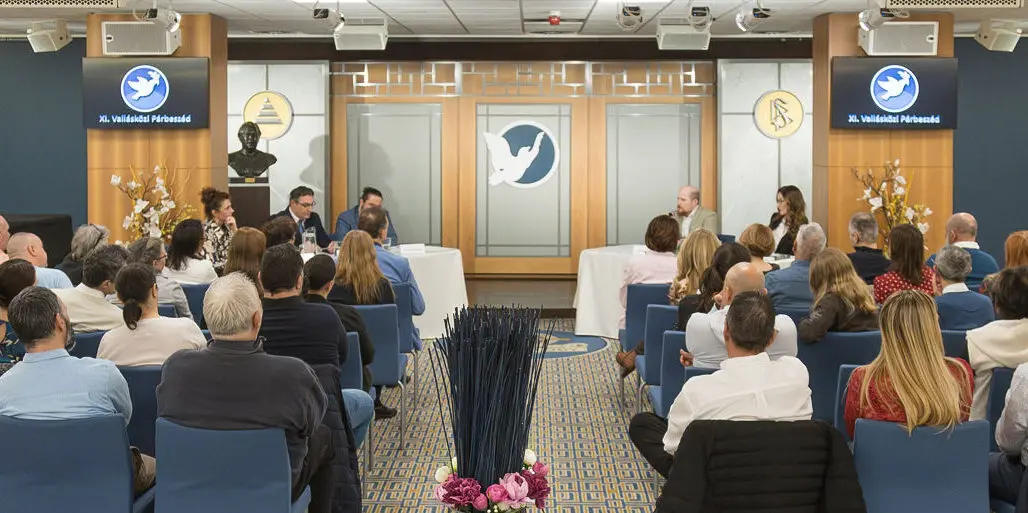
Photo: In the Philadelphia Church, Stockholm (Photo Hillert, WCC)