Ancient Greek philosopher and engineer Archytes created a flying machine centuries before Leonardo da Vinci. The flying dove from the 5th century BC is considered the predecessor of drones. The story of an invention that was ahead of its time.
Archytes and the Flying Dove: The Ancient Greek Genius Who Predated Drones by 2,400 Years
Today, drones and individual aircraft are among the fastest-growing technologies. But few people know that the idea of mechanical flight is not a modern invention. 2,400 years ago, the ancient Greek philosopher, mathematician and engineer Archytes of Tarentum created a flying machine – a wooden dove powered by steam. It is considered one of the first flying devices in history.
The Genius of Archytes – Statesman, Mathematician and Inventor
Archytes (c. 428 – 347 BC) was among the most prominent figures of his time in Magna Graecia – the Greek colonies in southern Italy. Elected seven times as strategist of Tarentum, he enjoyed the utmost trust of his fellow citizens. But his fame far exceeded political successes – he was a full-fledged heir to the Pythagorean school, convinced that the universe was governed by numerical laws.
Solving complex mathematical problems, such as the so-called “Delicial Problem” for doubling the volume of a cube, Archytes showed an ability to turn abstract theory into practical reality. It was this thinking that led to the creation of his flying wooden bird.
The first “drone” in history
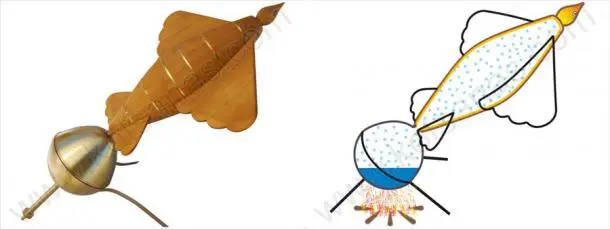
According to the descriptions of the Roman writer Aulus Gellius, Archytes’ flying pigeon was propelled by a jet of hot steam. The machine could fly for a short distance, but the achievement was sensational for the era – a demonstration that man could create a self-propelled device based on natural laws, rather than myths and magic.
This invention is considered a seminal moment in the development of mechanics as a scientific discipline. It showed that mathematics and engineering could work together to create real machines – a principle that would later shape modern technology, from internal combustion engines to robots and drones.
From the ancient pigeon to modern technology
In a modern context, Archytas’ flying machine can be seen as a spiritual predecessor to today’s unmanned aerial vehicles. Drones that today take photographs, deliver goods or even participate in rescue operations follow the same basic principle – using engineering solutions to achieve flight control.
Interest in individual aircraft and personal drones is growing rapidly. And the story of Archites reminds us that the desire to fly is deeply rooted in human culture – ever since a wooden pigeon powered by steam amazed the inhabitants of Tarentum.
Interestingly, centuries later, another great mind – Leonardo da Vinci – was also inspired by the flight of birds and created his famous “aerial screw”. This invention, resembling an initial concept for a helicopter, was designed to rise into the air by rotating a spiral wing. Although it was not successfully implemented in his time, it shows that the idea of flying has always captivated the brightest minds in history. And if Leonardo left his drawings as a vision of the future, Archites managed to take the first practical step two millennia ago.
Archytes’ Legacy
Although the device was more of a demonstration of engineering prowess than a practical means of transportation, it illustrates one of the most important lessons in the history of science—that bold ideas can precede technology by centuries. Archytes didn’t just create a mechanical bird; he pioneered a new way of thinking in which knowledge of the laws of nature could be turned into a tool for creating the future.
Illustration: Reconstruction of the steam-powered flying pigeon. (Kotsanas Musem of Ancient Greek Technology)