Corrèze warning turns Sunday’s ride to Ussel into a safety question for cycling and spectators
The Tour de France has shortened Sunday’s ninth stage after French forecasters placed Corrèze under red heatwave vigilance, turning a hilly day from Malemort to Ussel into a wider question about how elite sport protects riders, roadside crowds and local communities during increasingly severe European summers.
By Daniel Mercer, Sports Correspondent, The European Times
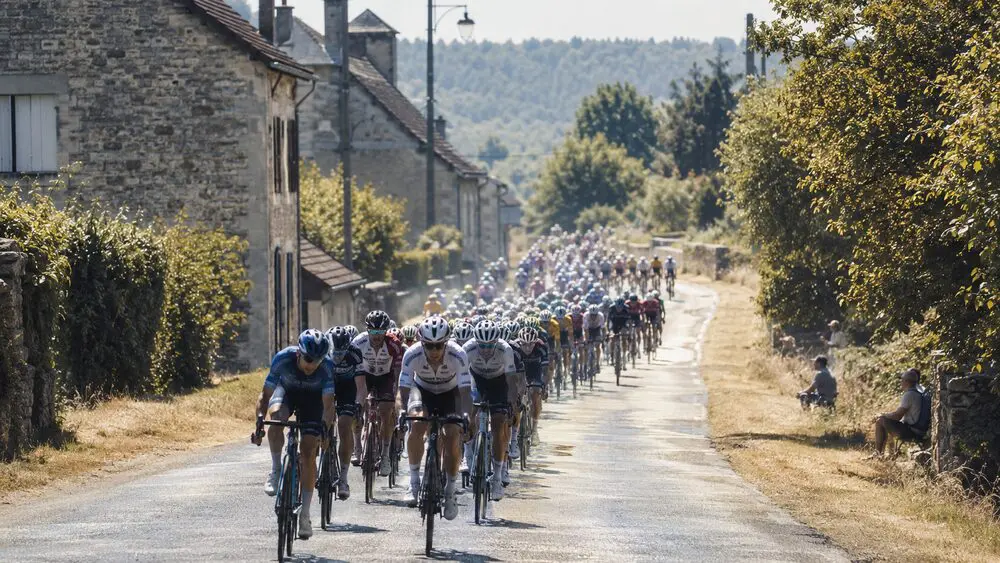
Organisers said the stage on 12 July would be cut to 155.5 kilometres, 30 kilometres shorter than originally planned, after Météo-France warned of an exceptionally intense heatwave in the department. The decision means the race will divert in the neutral zone, using the D921 from Brive-la-Gaillarde towards Lanteuil before rejoining the retained route to Ussel.
The Tour said the change was necessary so the race could take place under conditions compatible with the red alert. The start is scheduled for 13:45, with riders expected to finish at around 17:30, according to the official race announcement.
A race decision with public consequences
For the peloton, 30 fewer kilometres do not remove the heat. They reduce exposure. On a day of short climbs, narrow roads and repeated accelerations, high temperatures can make routine race demands more dangerous: hydration becomes harder, cooling becomes tactical, and fatigue can arrive before the decisive sporting moment.
For spectators, volunteers, police, medical teams and local residents, the decision matters just as much. The Tour is not only a race passing through France; it is a moving public event, with crowds standing for hours along roads, families waiting in villages and emergency services managing both sport and civic safety.
Météo-France’s accessible vigilance bulletin for Sunday listed 37 departments under red heatwave warning, including Corrèze, and defined red vigilance as a moment requiring absolute caution because dangerous phenomena of exceptional intensity are expected. Its warning also notes that heat can threaten everyone, including people in good health, with particular danger for older people, children, isolated people, outdoor workers and athletes under strain.
That makes the Tour’s route change less a concession than a recognition of responsibility. Professional cycling has always lived with weather, from Alpine cold to Pyrenean storms. But extreme heat alters the balance because it affects not only the strongest competitors but the whole ecosystem around the road.
Sport adjusts to Europe’s hotter summers
The shortened stage comes in a summer when heat has moved from background discomfort to a central organising issue for European sport. Cycling’s governing structures already include high-temperature protocols, while race organisers increasingly face decisions over feeding zones, start times, spectator access and whether parts of a route can safely be used.
There is still a competitive consequence. A reduced stage may change breakaway ambitions, team workload and the rhythm before Monday’s rest day. Some riders who expected a longer hilly stage may find fewer kilometres in which to build pressure; others may welcome a sharper race with less accumulated heat stress.
Yet the broader meaning is harder to ignore. As The European Times has reported on Western Europe’s record heat, public authorities are being forced to think beyond emergency warnings and toward practical adaptation. The same is now true for sporting institutions whose calendars, television schedules and traditions were built around assumptions that no longer hold as reliably.
The Tour de France remains one of Europe’s most visible shared sporting rituals. Its strength comes from open roads, public access and the closeness between riders and communities. Protecting that character now means taking heat seriously before it becomes a medical emergency.
Ussel still matters, but so does restraint
Sunday’s finish in Ussel will still offer a sporting contest. The hilly profile should leave room for aggressive racing, especially from riders looking beyond the general classification. But the day will be judged not only by who wins the stage, but by whether the race can pass through Corrèze without placing unnecessary pressure on those already vulnerable to the heat.
The organisers urged people to drink regularly, reduce physical activity during the hottest part of the day and follow official guidance, echoing Météo-France’s red vigilance advice. Those are not dramatic instructions, but they are the practical vocabulary of modern summer sport.
There is no virtue in pretending that endurance alone answers every risk. Cycling celebrates resilience, but responsible racing also requires limits, judgment and care for the people who make the spectacle possible. On Sunday, the Tour’s most important adjustment may be the acknowledgement that the road belongs not only to the strongest riders, but to everyone who stands beside it.