When Dr Katerina Spranger was a child, she came very close to losing her sight.
“I had an accident and had to undergo emergency surgery,” she recalled.
Precision is a key part of such procedures. Even a tiny error can mean the difference between seeing again and going blind for the rest of your life.
“I was lucky,” said Spranger. “Another girl, who had the same operation directly after me, wasn’t, however. She went blind. I often think back to that moment.”
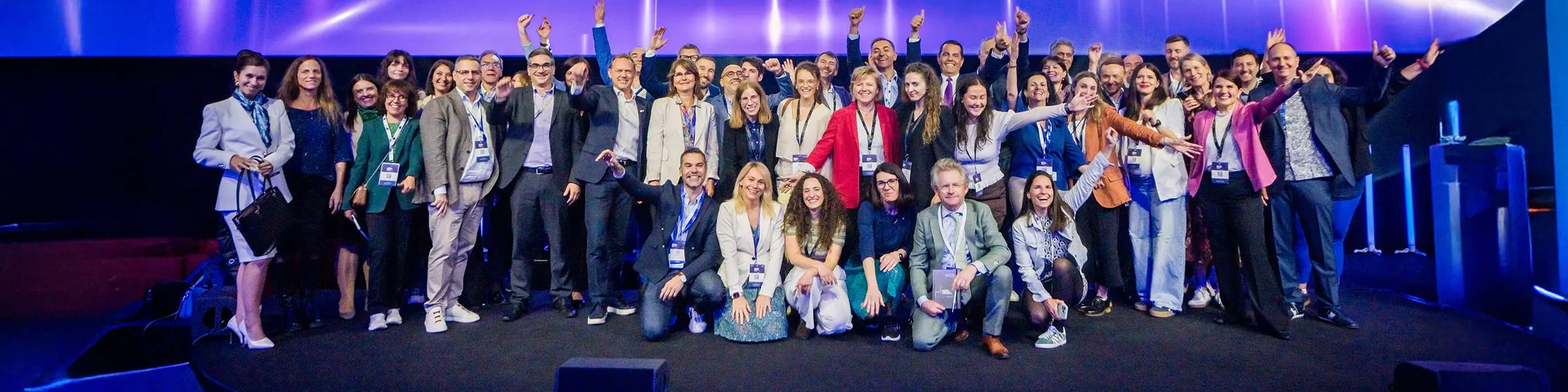
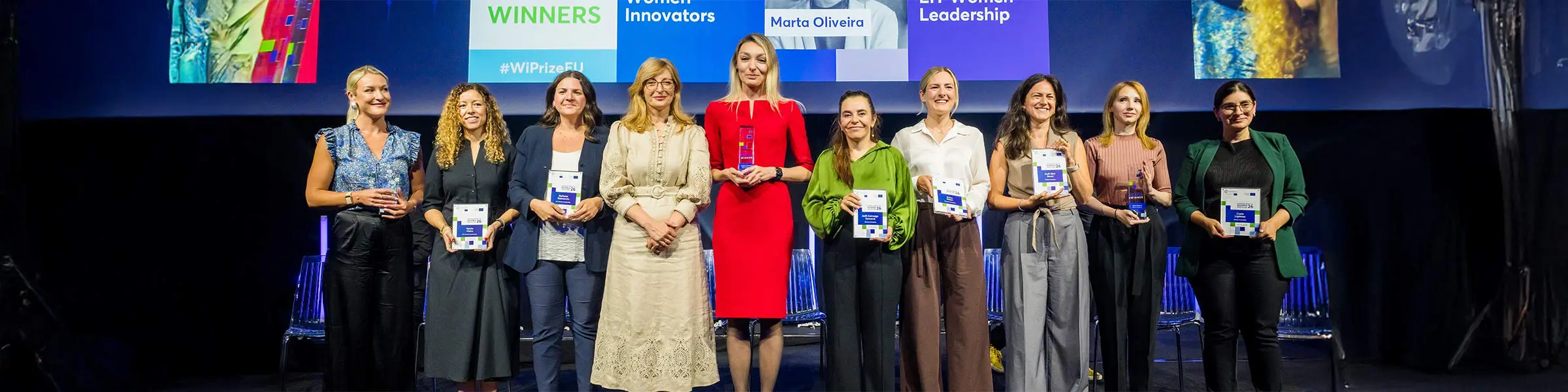
The memory came rushing back when Spranger stepped onto the stage at the 2026 EU Prize for Women Innovators to receive the top prize of €100 000.
She was named the overall winner in recognition of her work founding Oxford Heartbeat, a company that uses AI to help surgeons make safer decisions during complex brain procedures. Her childhood experience had ultimately set her on that path.
The annual EU Prize for Women Innovators, jointly awarded by the European Innovation Council (EIC) and the European Institute of Innovation and Technology (EIT), celebrates female entrepreneurs whose businesses are turning ideas into real-world solutions.
Beyond recognising achievement, it aims to raise the visibility of women in Europe’s innovation ecosystem. The need remains significant.
Women account for only 9% of patent applicants in Europe, hold around a quarter of leadership positions in companies and receive just 2% of venture capital funding for female-led start-ups.
“We’re not there yet,” Ekaterina Zaharieva, European Commissioner for Startups, Research and Innovation, told the award ceremony during the EIC Summit in Brussels on 3-4 June 2026. “Female entrepreneurs are still being undervalued in Europe. And that means we’re missing a lot of talent.”
Precision medicine
Originally from Ukraine, Spranger leads the London-based Oxford Heartbeat, which develops AI-powered software to help surgeons select the most suitable implants for patients undergoing brain surgery.
“
It’s possible to develop cutting-edge technology, lead a company and win the highest awards as a woman.
These procedures often involve placing tiny implants inside blood vessels to prevent strokes or restore blood flow. Surgeons can choose from hundreds of implants in different sizes and shapes, but selecting the right one is not always straightforward.
“These implants are often only a few millimetres in diameter,” said Spranger. “Choosing the right one can have a major impact on patient outcomes.”
A recent Oxford Heartbeat clinical study found that around one third of implants selected are not the optimal fit for the patient. “That number is way too high,” she said. “I know how important precision can be. Thanks to surgical precision, I recovered my eyesight. This is what motivated me to develop technology that helps ensure every patient has the best chance for a successful recovery.”
Oxford Heartbeat’s software analyses medical scans and patient data to identify the most appropriate implant for each individual case.
For Spranger, the award is about more than business success.
“The new generation of women needs role models and examples to see that it’s possible,” she said. “It’s possible to develop cutting-edge technology, lead a company and win the highest awards as a woman. It’s possible to do whatever you want and make your dreams come true.”
Back from space
This year’s Rising Innovators Award, which celebrates exceptional women innovators under 35, went to Marta Oliveira. The Portuguese entrepreneur, based in Belgium, co-founded ATMOS Space Cargo, a company developing technology to return cargo safely from space.
“In Europe we often talk about launch access,” Oliveira said. “That’s important. But re-entry is also a crucial capability, and currently we’re dependent on the US. We want to change that.”
ATMOS develops reusable capsules designed to survive the journey back through Earth’s atmosphere, returning cargo and scientific experiments from orbit by splashing down in the ocean. The company, which employs around 90 people and has recently secured €25 million in investment funding, has already tested its technology in space.
Space missions rarely go exactly to plan, and Oliveira has learnt to expect the unexpected.
“
If women see how other women can achieve these things, there’s a bigger chance they will pursue these paths themselves. If you can see it, you can do it.
“A few weeks before the mission, we got the news that the trajectory had changed,” Oliveira said with a laugh. “We were supposed to land off the coast of Madagascar, but ended up off the coast of Brazil. Just a different ocean.”
Despite receiving the Rising Innovator award, Oliveira is already a veteran of the space sector, having worked at NASA, the European Space Agency, the French space agency CNES and Arianespace before co-founding ATMOS.
“This is something I wanted for as long as I can remember,” she said. “From when I was a child, I knew I wanted to do things in space.”
Like Spranger, she believes visibility matters.
“There isn’t a lack of talent among women,” Oliveira said. “If women see how other women can achieve these things, there’s a bigger chance they will pursue these paths themselves. If you can see it, you can do it.”
Transparent supply chains
This year’s Women Leadership Award went to Ella Cullen. Originally from New Zealand and now based in Portugal, she co-founded Minespider, a company that helps businesses trace the origins of raw materials and measure the environmental footprint of their supply chains.
“We originally founded the company to improve transparency around conflict minerals in supply chains,” Cullen explained. “But today, it has expanded far beyond that.”
Through its platform, clients can understand where materials come from, how they were produced and what environmental impacts are associated with them. Major international companies such as Renault, Ford and Google use the system to track everything from battery materials to components used in data centres.
Minespider has benefited from growing European efforts to improve supply chain transparency through initiatives such as the EU Battery Regulation and the Ecodesign for Sustainable Products Regulation.
Cullen believes innovation is not only about technology, but also about building organisations where people can thrive. Minespider currently employs around 15 people and is growing rapidly.
“I love building a company culture that allows everyone to flourish, men and women,” she said. “We give mothers and fathers flexibility, for example to finish work earlier when needed. As long as people are doing their jobs, we support a flexible work culture.”
Despite working in very different sectors, all three winners share a common goal: using innovation to solve real-world problems. For them, the award is both recognition of what they have achieved and encouragement for what comes next.
“Bringing innovation to the market is a long journey, full of hurdles and unexpected challenges,” said Spranger. “Moments like this make the journey so rewarding. It gives you a great reason to celebrate.”
The views of the interviewees don’t necessarily reflect those of the European Commission. If you liked this article, please consider sharing it on social media.