
New exposure limits would cover substances linked to cancer, asthma and other occupational illnesses
The European Union has reached a provisional deal to strengthen protection for workers exposed to dangerous substances at work, including chemicals and fumes linked to cancer, respiratory disease and reproductive harm. The agreement still needs formal approval, but it marks a significant update to EU workplace safety law at a time when industrial policy, health protection and decent work are increasingly difficult to separate.
The deal, announced late on Tuesday by the Council of the EU, concerns the sixth revision of the carcinogens, mutagens and reprotoxic substances directive, a core part of the bloc’s occupational health and safety framework. According to the Council, the update is expected to prevent around 1,700 lung cancer cases and 19,000 other illnesses over the next 40 years.
Under the provisional Council-Parliament agreement, the EU would set occupational exposure limits for cobalt and its inorganic compounds, polycyclic aromatic hydrocarbons and 1,4-dioxane. Negotiators also agreed to include isoprene, used in chemical and rubber production, and to add welding fumes to the directive’s list of substances, mixtures and processes requiring protection.
Workplace Health as a Rights Issue
For many workers, hazardous exposure is not an abstract regulatory category. It can be part of daily life in welding, battery-related production, steel, aluminium, textiles, chemicals, rubber manufacturing, emergency services and other sectors where workers may face invisible long-term risks.
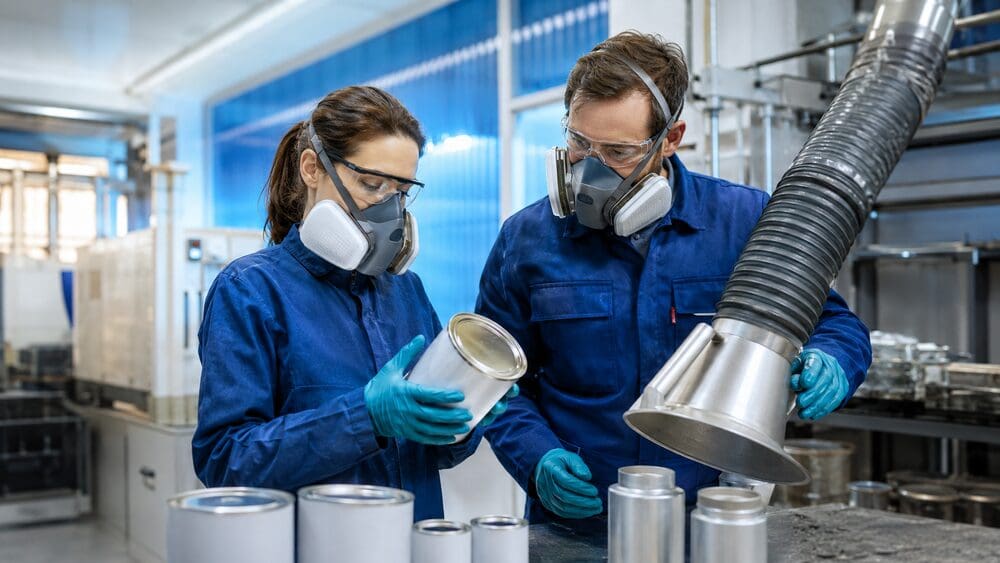
The agreement also introduces provisions on regular breaks for workers wearing personal protective equipment, while clarifying how that equipment should fit within existing safety rules. That matters because protective gear can be essential, but it is not a substitute for reducing exposure at source. The Council text explicitly notes that exposure limits do not eliminate all health and safety risks.
The European Parliament’s employment committee had earlier backed stronger measures on protective equipment, firefighter exposure and the gender dimension of occupational health. Its position underlined that some workers may face different vulnerabilities depending on the type of substance, the task performed and the protective equipment available. In April, MEPs said no one should be made sick by going to work.
The Implementation Question
The final political agreement must still be endorsed by both the Council and Parliament before formal adoption after legal-linguistic checks. Once adopted, its real effect will depend on national enforcement, workplace inspections, employer compliance and whether smaller firms receive enough practical support to meet the new requirements.
That is the harder part of EU social legislation. Exposure limits can be agreed in Brussels, but safer workplaces are built through risk assessments, ventilation, substitution of dangerous substances where possible, training, medical surveillance and credible consequences when employers cut corners.
The issue also fits into a wider debate about everyday labour rights. The European Times has previously reported on the importance of clear employment records and enforceable protections in its guide to workers without written contracts in Europe. Chemical safety belongs in the same rights framework: a job should not quietly trade income for future illness.
A Public Health Measure Inside Industrial Europe
The timing is notable. Europe is trying to expand clean-tech, battery, manufacturing and strategic industrial capacity while also promising higher social standards than many global competitors. That ambition will ring hollow if the workers who build those industries carry preventable health risks.
The new deal therefore has a wider meaning than a technical update to exposure limits. It is a reminder that competitiveness cannot be measured only in output, investment and supply chains. It must also be measured in whether workers return home healthy, whether risks are visible before damage is done, and whether Europe’s industrial future is built with the people inside it in mind.