



Thierry Valle
Coordination des Associations et des Particuliers pour la Liberté de Conscience. France
Bashy Quraishy
Secretary General – European Muslim Initiative for Social Cohesion – Strasbourg
The Mechanics of the Reform
The regulation, agreed between the European Parliament and the Council on 1 June 2026, establishes a new framework for the return of third-country nationals residing irregularly within the European Union.
Its central innovation is the formal authorisation of “return hubs” in non-EU countries. Under this system, individuals whose asylum applications have been rejected may be transferred to facilities outside EU territory when direct deportation to their country of origin is not immediately possible.
According to the European Commission, the reform seeks to address a practical problem: only around 28 per cent of individuals ordered to leave the EU are ultimately returned to their countries of origin. The hubs are intended to serve as temporary locations while return agreements are negotiated or implemented.
The legislation also expands enforcement powers. It extends the maximum duration of detention prior to removal, strengthens obligations on migrants to cooperate with authorities, allows sanctions for non-compliance, and facilitates the broader use of entry bans. Families with children may be detained under certain circumstances, although unaccompanied minors remain largely exempt.
The legal basis for these arrangements rests on agreements between EU member states and third countries. Following earlier experiments such as Italy’s offshore processing arrangements in Albania, the reform institutionalises externalisation at the European level.
Supporters argue that these measures are necessary to restore credibility to migration policy. Critics counter that they shift responsibility beyond Europe’s borders while creating serious risks for fundamental rights and legal accountability.

Human Rights Concerns Ignored
The strongest criticism of the reform has come from organisations whose primary mandate is the protection of refugees and human rights.
Before the legislation was finalised, the United Nations High Commissioner for Refugees (UNHCR) warned that the framework lacked essential procedural safeguards. The agency expressed concern that individuals whose asylum claims had not been fully assessed on their merits could nevertheless be transferred to return hubs, potentially exposing people with legitimate protection needs to further risks.
UNHCR recommended that such facilities be used only after a full and fair asylum determination process and only when direct return to the country of origin could not be achieved within a reasonable period. It also reiterated its long-standing position that children should never be detained for immigration purposes.
Other organisations voiced similar concerns. The European Council on Refugees and Exiles described the vote as a regression from established human rights standards. The International Rescue Committee warned against the creation of detention facilities outside EU territory that could become legal grey zones where accountability is weakened and access to justice restricted.
Caritas, PICUM, refugee organisations, faith communities, and civil society groups criticised what they viewed as the outsourcing of European responsibilities to countries with weaker legal protections and less public scrutiny.
Even the EU Agency for Fundamental Rights emphasised that return hubs cannot become “rights-free zones” and that member states remain responsible for ensuring legal safeguards, humane treatment, independent monitoring, and effective remedies against abuse.
The central concern is simple: human rights obligations do not disappear when responsibility is transferred beyond Europe’s borders.
The Numbers Do Not Justify the Hysteria
The political momentum behind the reform has been driven by a narrative of migration crisis. Yet the available data paint a far more nuanced picture.
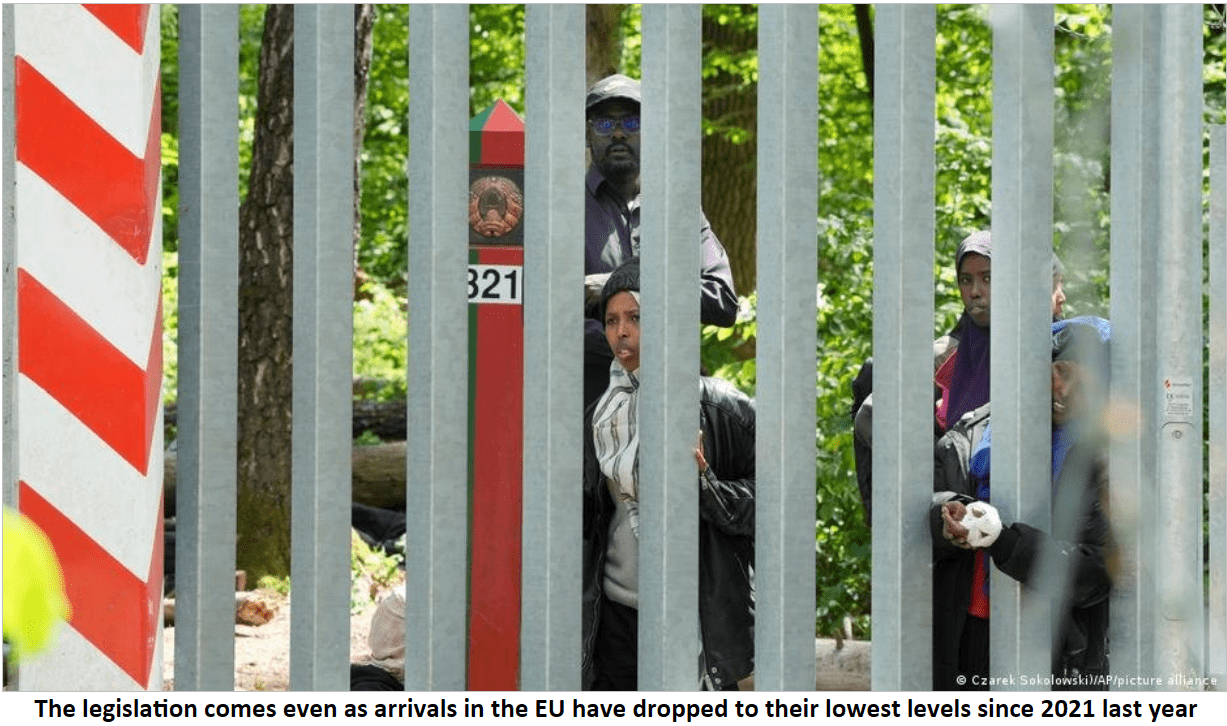
Across the European Union, asylum applications and irregular border crossings have shown a significant downward trend. First-time asylum applications fell substantially between 2024 and 2025, while Frontex reported a marked decline in irregular border crossings during the first months of 2026. The largest groups seeking asylum continue to come from countries affected by war, persecution, political instability, and humanitarian crises, including Syria, Afghanistan, and Sudan. More than half of first-instance asylum decisions across the EU result in protection being granted, indicating that many applicants possess legitimate grounds for asylum.
At the same time, the Mediterranean remains one of the world’s deadliest migration routes. Thousands continue to lose their lives attempting to reach Europe. These realities challenge the narrative that Europe faces an uncontrollable influx of migrants. The evidence suggests that the drivers of displacement remain conflict, repression, poverty, climate disruption, and instability rather than opportunistic migration.
The urgency behind the current policy direction therefore appears driven less by demographic realities than by political pressures. Migration has become one of the most powerful mobilising issues in European politics, often generating responses disproportionate to the underlying trends.
The Far Right’s Growing Influence on European Policy
The significance of the reform extends beyond its practical consequences.
For decades, mainstream political parties in Europe maintained an informal cordon sanitaire against far-right movements whose programmes challenged fundamental democratic principles and minority rights. While never absolute, this barrier served as a safeguard against the normalisation of exclusionary politics.
That barrier is now visibly weakening.
The support of mainstream conservative forces for a reform enthusiastically embraced by far-right parties reflects a broader transformation in European politics. Migration has become the principal vehicle through which ideas once confined to the political margins are entering the legislative mainstream.
Rather than challenging narratives that portray migrants and refugees as threats, many centrist and conservative parties increasingly adopt the language and assumptions of their political opponents. Policies focused on deterrence, exclusion, detention, and externalisation are becoming normalised.
The chants of “Send them back” heard after the parliamentary vote were therefore more than a moment of political theatre. They symbolised a deeper shift in the moral and political climate of Europe.
This shift matters because the treatment of society’s most vulnerable groups often serves as a measure of the health of democratic institutions themselves.
Denmark’s Role in Externalising Asylum
Among European governments, Denmark has played a particularly influential role in promoting the externalisation of asylum responsibilities.
For years, Danish governments have advocated the establishment of reception and processing centres outside Europe as part of a broader strategy aimed at reducing spontaneous asylum arrivals. Successive administrations have tightened asylum and immigration policies while actively promoting offshore processing as a model for the wider European Union.
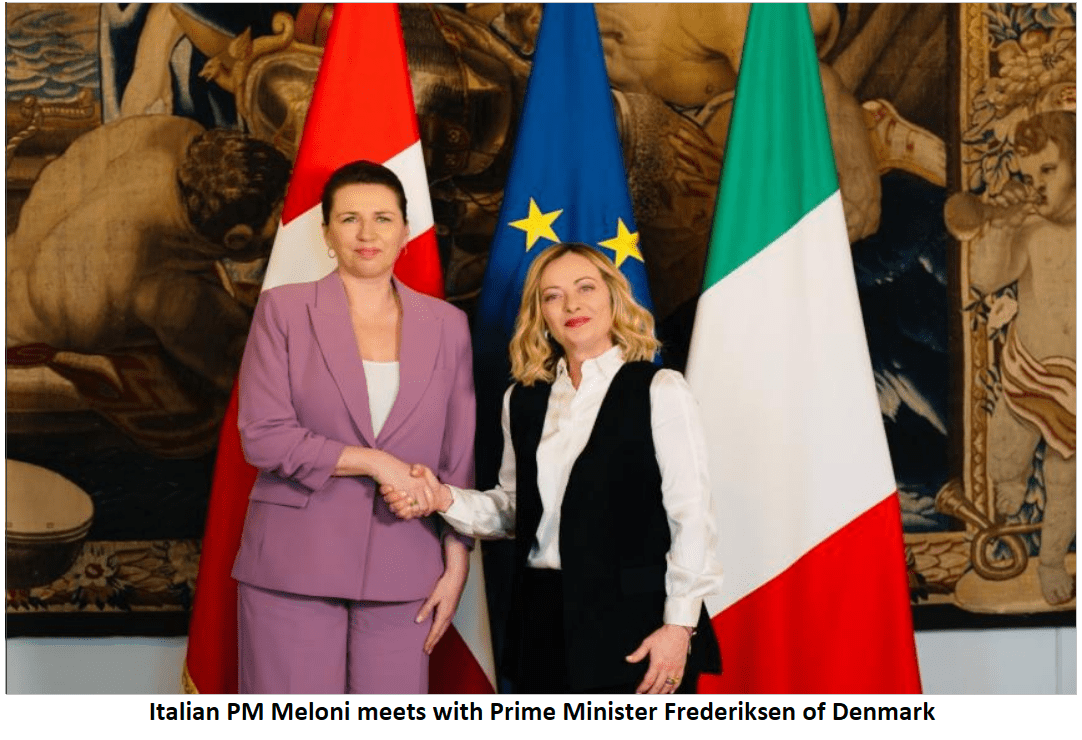
Prime Minister Mette Frederiksen has repeatedly identified external processing centres as a central political objective. Denmark’s diplomatic efforts helped build support among a coalition of member states that favoured moving asylum and return procedures beyond EU territory.
The recent European Parliament vote therefore represents more than a legislative victory. It marks the success of an approach that Denmark has championed for years and that many human rights organisations have consistently opposed.
Critics argue that the model risks undermining the right to seek asylum while shifting responsibility to countries that often lack the legal safeguards and institutional capacity necessary to protect vulnerable individuals.
What Is at Stake?
The reform approved on 17 June 2026 is not an isolated measure. It forms part of a broader trend toward the externalisation of migration control, increased detention, and the restriction of access to protection.
At stake is more than the future of asylum policy. The right to seek asylum is deeply connected to the broader architecture of human rights developed after the Second World War. It reflects the principle that individuals fleeing persecution must have access to protection regardless of nationality, ethnicity, religion, or political belief.
Europe’s commitment to these principles emerged from painful historical experience. The Universal Declaration of Human Rights, the European Convention on Human Rights, and the Refugee Convention were all shaped by a determination that vulnerable people should never again be left without protection because they happened to be born on the wrong side of a border.
The question raised by return hubs is therefore not merely administrative. It is whether Europe remains committed to these foundational principles when they become politically inconvenient.
A Test of Europe’s Values
The European Parliament’s approval of return hubs marks a turning point in the evolution of European migration policy.
Supporters regard the reform as a necessary response to practical challenges. Critics view it as a dangerous step toward the externalisation of responsibility and the erosion of hard-won human rights protections.
Whatever position one takes, the vote has exposed a deeper debate about Europe’s future. It has revealed the growing influence of political forces that seek to redefine migration primarily as a security problem rather than a human reality. It has highlighted the willingness of mainstream parties to adopt policies once associated with the political fringes. And it has raised fundamental questions about the meaning of European values in an era of rising nationalism and political polarisation.
For human rights defenders, civil society organisations, faith communities, and all those committed to the protection of vulnerable people, the challenge is clear. Human dignity, the right to seek asylum, and the universality of human rights cannot be defended selectively. They either apply to everyone or they gradually lose their meaning.
The applause that followed the vote on 17 June was not merely a celebration of a legislative victory. It was a reminder that the struggle over Europe’s identity and values is far from over.