
Budapest’s new tone eases pressure inside the EU, but Ukraine accession and democratic repair remain unresolved
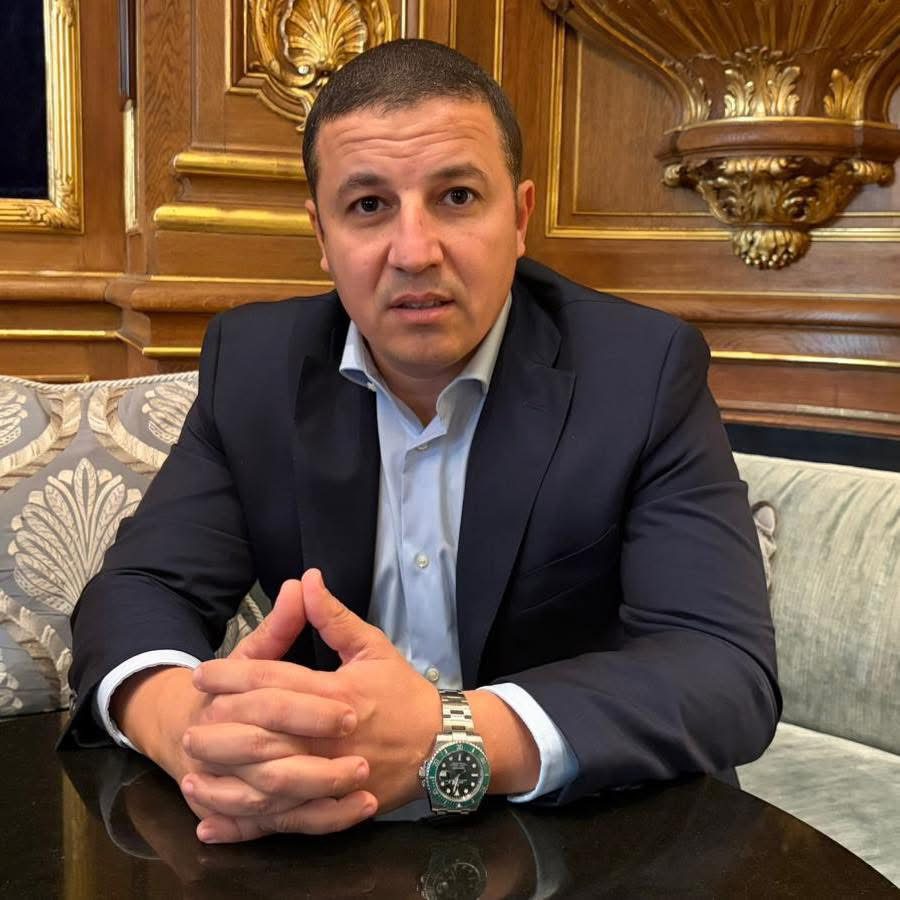
Hungary’s new prime minister, Peter Magyar, used his first European Council summit to signal a quieter and more cooperative place for Budapest in EU politics after Viktor Orban’s defeat. The shift has immediate consequences for Ukraine’s accession process, the bloc’s budget bargaining and the long-running rule-of-law dispute, but it does not remove the harder question facing Hungary and Brussels: whether a change of leadership can become a durable democratic reset.
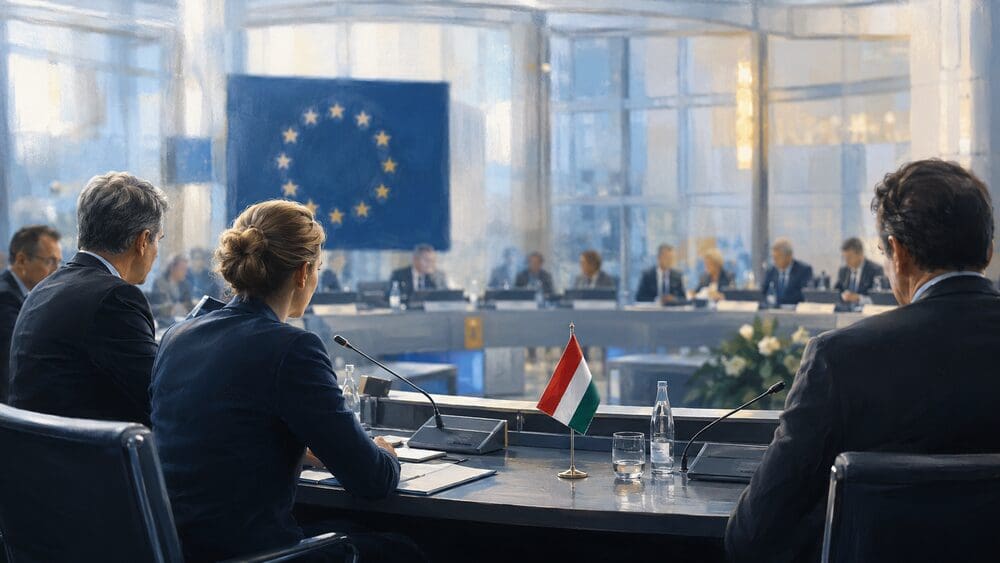
For years, Hungary’s presence at EU summits was defined by confrontation, veto threats and clashes over Ukraine, migration, sanctions and democratic standards. This week in Brussels, the symbolism was different. Magyar arrived as a new centre-right leader promising to represent Hungarian interests without turning every EU argument into a domestic political weapon.
According to reporting from Brussels, he told reporters that Hungary would not oppose or veto EU proposals for party-political reasons. That sentence alone marked a sharp break with the atmosphere of recent years, when Budapest repeatedly used unanimity rules to slow or reshape EU positions on Ukraine and wider foreign policy.
A Summit About More Than Tone
The timing matters. EU leaders met as Ukraine’s membership path entered a more concrete phase, with the opening of the fundamentals cluster earlier this week. In its latest European Council conclusions, the bloc welcomed that step while reaffirming support for Ukraine’s sovereignty, long-term security and accession process.
Magyar’s Hungary is no longer blocking the opening phase of that process. That is a substantial change for Kyiv and for the EU’s enlargement credibility. But Budapest is still insisting that accession remain merit-based and performance-based, language that gives the new government room to slow further steps if it believes Ukraine is moving too quickly or if minority-rights concerns re-emerge.
That position is not automatically obstructionist. EU accession is built on detailed legal and institutional benchmarks, especially in the fundamentals cluster, which covers rule of law, democratic institutions, public administration and fundamental rights. Yet Hungary’s history under Orban means its interventions will be watched closely. The question is whether Budapest now uses procedure to protect standards, or to preserve leverage.
The Rule-of-Law Question Follows Budapest
Magyar’s election and first summit appearance have eased the diplomatic mood, but they have not erased Hungary’s institutional legacy. Brussels has spent years arguing with Budapest over judicial independence, media pluralism, corruption safeguards, academic freedom and civil society. A more constructive prime minister can reopen doors, but democratic repair depends on laws, appointments, public institutions and daily administrative practice.
That is why the EU’s warmer reception of Magyar carries both opportunity and risk. If Brussels moves too quickly to normalise relations, it may weaken the credibility of its own rule-of-law conditionality. If it treats Hungary as permanently suspect, it may miss a real opening for reform after years of democratic backsliding.
The European Times recently described Hungary’s reset with Brussels as conditional on proof that institutional repair is more than a change in tone. That remains the central test. Independent media, courts, watchdogs and civic organisations will be better indicators of Hungary’s direction than summit choreography.
Orban’s Influence Has Not Disappeared
Orban’s absence from the leaders’ table is a major change in European politics. But it would be premature to treat his political project as finished. He remains a figure of influence on Europe’s nationalist right, and his allies continue to shape debates on sovereignty, migration, family policy, sanctions and relations with Russia.
That creates a dual reality for the EU. Inside the Council, Hungary may become less disruptive. Outside it, Orban’s network can still pressure conservative and far-right parties across the continent. The result is not a clean break, but a redistribution of influence: less veto power in EU institutions, more ideological mobilisation beyond them.
For Magyar, the challenge is also domestic. He must show Hungarian voters that European cooperation does not mean surrendering national interests. He must reassure Brussels without appearing to govern at Brussels’ command. And he must rebuild democratic safeguards while managing a political opposition that will accuse him of dismantling the old system for partisan gain.
A Narrow Opening For Europe
The EU should welcome Hungary’s less confrontational posture, but it should do so with discipline. Ukraine’s accession path must remain credible and rights-based. Hungary’s access to EU funds must remain tied to verifiable reforms. And the Union’s broader democratic standards must not depend on whether a government is friendly or inconvenient.
Magyar’s Brussels debut is therefore important not because it settles Hungary’s place in Europe, but because it reopens the argument on better terms. After years in which Budapest often made EU unity harder, Hungary now has a chance to prove that national sovereignty and European responsibility can coexist. The proof will come not in the applause around a summit table, but in the institutions that Hungarians rely on after the cameras leave.