

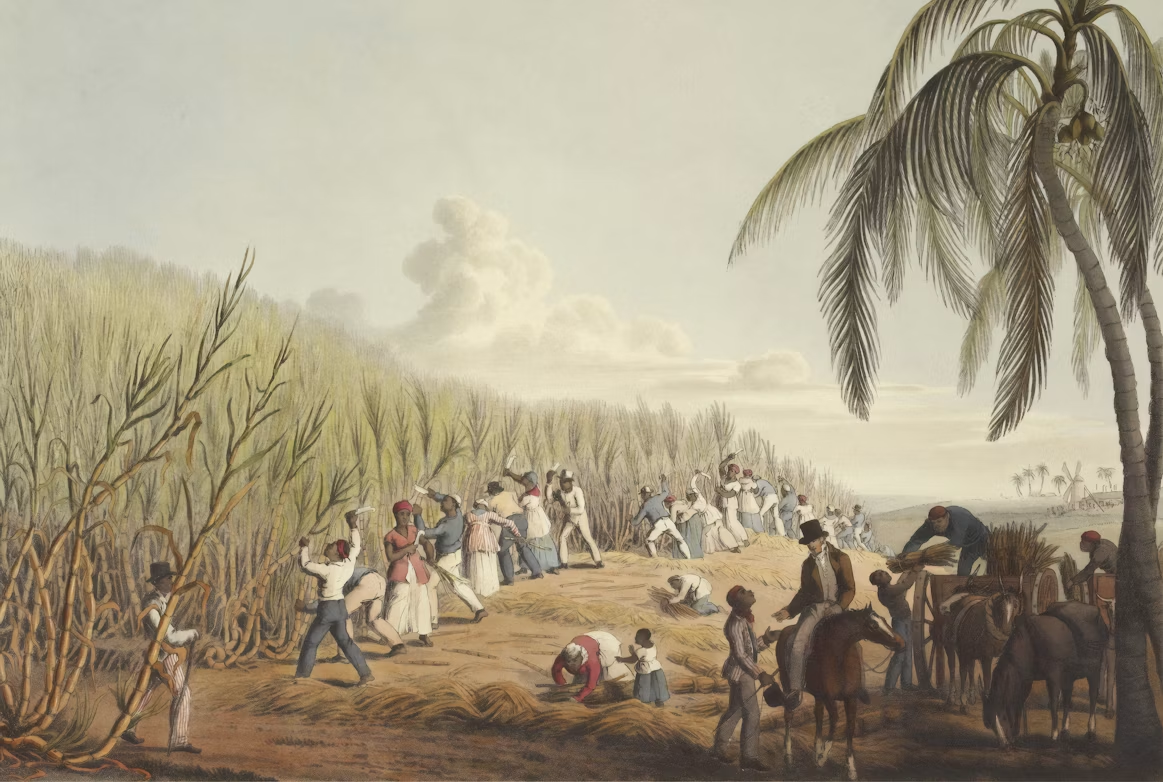
The institutionalisation of European colonial imperialism from the 15th century onwards led to two main unequal developments – (1) the subordination of the colonised to the metropole, and (2) – the creation of an elite class of indigenous people. These two developments are until now the basis on which various inequalities in the world pertain – be they the answer to the question ‘why are countries in the Global North (a terrible term, but allow me to use it for the sake of convenience now) more economically developed than the ones in the other parts of the world?’ or ‘why is there so much wealth in North Africa, and yet most of the states there are in critical conditions economically?’. But how did that happen? Simply put, it happened because of colonial imperialism.
Despite the very many differences from place to place, colonial imperialism followed roughly the same path. Subordinating the colonised was the first thing to happen. Upon arrival to the ‘new lands,’ the colonisers encountered the indigenous. Surprise! There were people on this ‘new land.’ People, who had been connected to the land for years, who had been living in peace with the natural environment, in many cases positioning Mother Nature before themselves. People whose idea of society was different than the one that existed in colonialist Europe. Yet, this did not stop the newcomers from claiming new territories for the metropole. Despite the people living there. Despite the natives.
It was in fact easy. The newcomers had more ‘modern’ warfare. They also spread diseases known to the Europeans, but new for the natives. And there they had it – the European monarch had a new land they would probably never visit, and new subjects they would perhaps not speak the language of. With time, the rule of the European monarch got institutionalised over the new lands and the indigenous peoples and the subordination of the colonised to the metropole was a fact. With that also came the worsening of the situation.
To ensure total control over the land and the people of the colonies, the colonisers had to settle there. Land grabbing, dispossessing the natives, imposing the culture and language of the metropole – oppression practices done continuously in the colonised places in order to make sure colonialists were the ones in power. Together with that came resource extraction. But not only for the settled colonisers. Also back to the metropole. Literal extraction of resources of all kinds and relocation to the centre of the empire took place, this way exploiting the natives AND stealing their resources, disrupting not only their societies, but also the natural metabolism of the ‘new’ land.
These developments continued and even after the process of decolonialisation in the 19th and 20th centuries some colonial hierarchies remained present in international affairs. Current relationships between countries in the Global North and Global South could be tied to years of unequal exchange, to put it mildly, and despite decolonial processes all over, many of these relationships rest upon the remnants of colonial imperialism.
But it was not only inter-country inequalities that were the result of colonial imperialism. To ensure the smooth control over the new territories, the colonialists developed an easy way to run the new place – they worked with the most loyal and cooperative of the indigenous people. Those loyal and cooperative indigenous people quickly became a mediary between the usually unknowledgeable of the local language colonialist and the subordinated indigenous, turning them into an elite class. They helped collect taxes, exert authority and organise their own people around the power of the colonialists.
So this new class – the elites – were neither like the rest of the indigenous, nor like the colonialists. They had more rights than the rest of the indigenous, but not as much as the colonialists. These rights resulted in power and, in many cases, the accumulation of wealth as a result of the exploitation of their own people. Back in the day, this was a new development which benefitted both the elites and the colonialists. Of course, it created a societal division within the indigenous population then, but this division would cause more problems in the future, especially during and after the decolonialisation process.
In many cases, the elites would have the opportunity to travel to the metropole, stay there for a while, even study there and return. These travels and especially the education the elites received, played a key role in the decolonialisation process to follow. Educated elites would usually be the ones to lead revolutionary processes which in many cases led to the independence of their country. While this could be counted as an advantage that the elites brought to their people, their position in the social hierarchy remained even after the colonialists had left. The wealth accumulated during their period of loyalty to the colonialists, together with the already societally enrooted position they had, helped them seize power soon after independence.
In different places in Africa and Latin America, for instance, the revolution-leading elites became the new rulers of the independent places, but instead of holding up to the expectations of the indigenous, the elites often times continued the practices done under colonial rule. With the difference now that it was for their own benefit. Of course, this was not the case everywhere. Yet this created a societal division which still exists today. A division which made the more loyal and obedient part of the indigenous population more favourable than the rest. Wealthier than the rest. More powerful than the rest. Until today.
Colonial imperialism lies at the heart of inequalities nowadays – be they inter-country inequalities, or within-country ones. The relationship of unequal exchange between the metropole and the colony resulted in a long-standing hierarchy, whose remnants are at times present even today! The active underdevelopment of colonised territories and their people until today shows the double-sidedness of colonial imperialism – great for the metropole, terrible for the colonised. Logical. But perhaps one of the most long-lasting outcomes of colonial imperialism is the societal division it created. The elites, which were favoured by the colonialists then, in most cases up until today enjoy the power and wealth they gained during the colonial rule, hence contributing to even greater inequalities within their countries.
It is important to be aware of the historical processes that stand behind pressing issues nowadays. The issue of inequalities is not just a modern problem, a result of the lack of opportunities or development. It is in many cases inequalities are the result of years of exploitation and extraction, years of active underdevelopment and hierarchical change. Hierarchies from the past are still holding until today. Where and how I explore in the article to follow.