

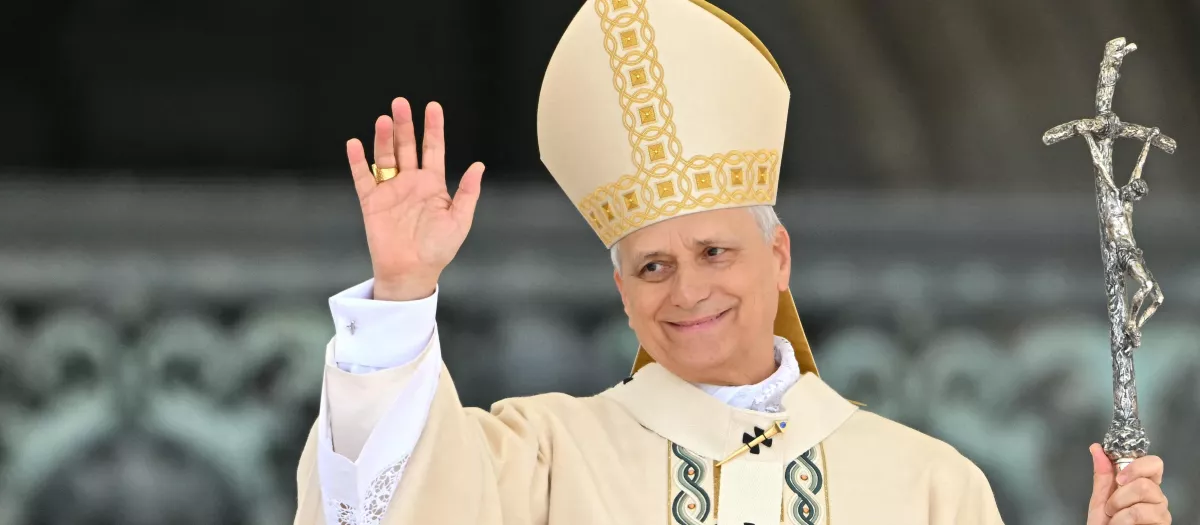
Paragraph 56 of the encyclical: Looking at our time, we cannot ignore that the protection of human rights today is exposed to two particularly serious risks. The first is that of a purely formal declaration, while, along with technological progress, violations of human dignity advance in a hidden or obvious way. The second, which is actually at the basis of the first, is that of not being able to recognize the foundation of its universality, because the “search for the most solid foundations that are behind our options and also our laws” has been renounced.
On September 14, 1955 in Chicago, in the United States, Robert Francis Prevost was born. Very soon he began his priestly career and became a member of the Order of Saint Augustine. Before being elected Pope he was a missionary and bishop in Peru, as well as prefect of the dicastery in charge of bishops in the Vatican.
On May 8, 2025, he was elected Pope, during the conclave called after the death of the previous Pope Francis, in the fourth vote. Choosing the name of Leo XIV. This is number 267 in the succession of Peter, at the head of the Catholic Church. The name adopted by Prevost follows in the wake of Leo XIII, known for his encyclical Rerum Novarum and his concern for social and labor issues.
As I already mentioned in my previous article about the most important and influential encyclicals in the history of the Church, which can be read at the following link The most influential encyclicals of the Catholic Church. A brief approximation. – The Lady of Elche,
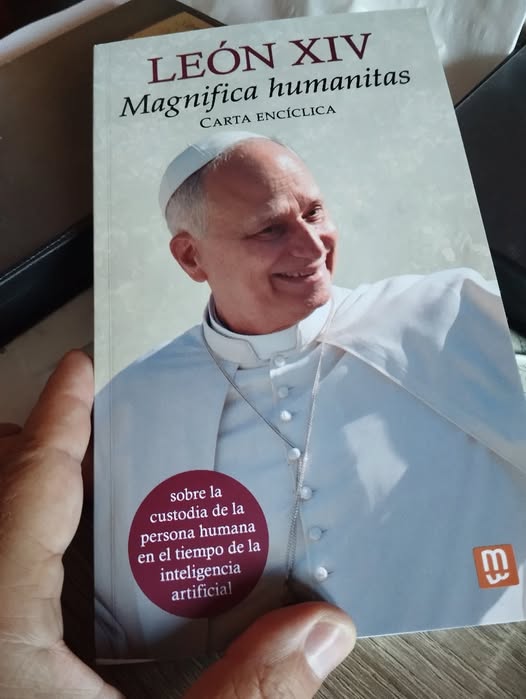
I make reference in it to the first encyclical letter written by Leo XIV for the whole world and especially for Catholic Christians, the Magnificent little humans. Released in May 2026.
In it, the central idea that the Pope maintains is that AI (Artificial Intelligence) can bring great benefits, but at the same time it raises a decisive question Will it serve human beings or will it concentrate even more power in the hands of a few? He maintains, without a doubt, that technology is not bad in itself, but that deep down, it is not neutral either because it reflects the values, interests and objectives of those who design, instruct and control it.
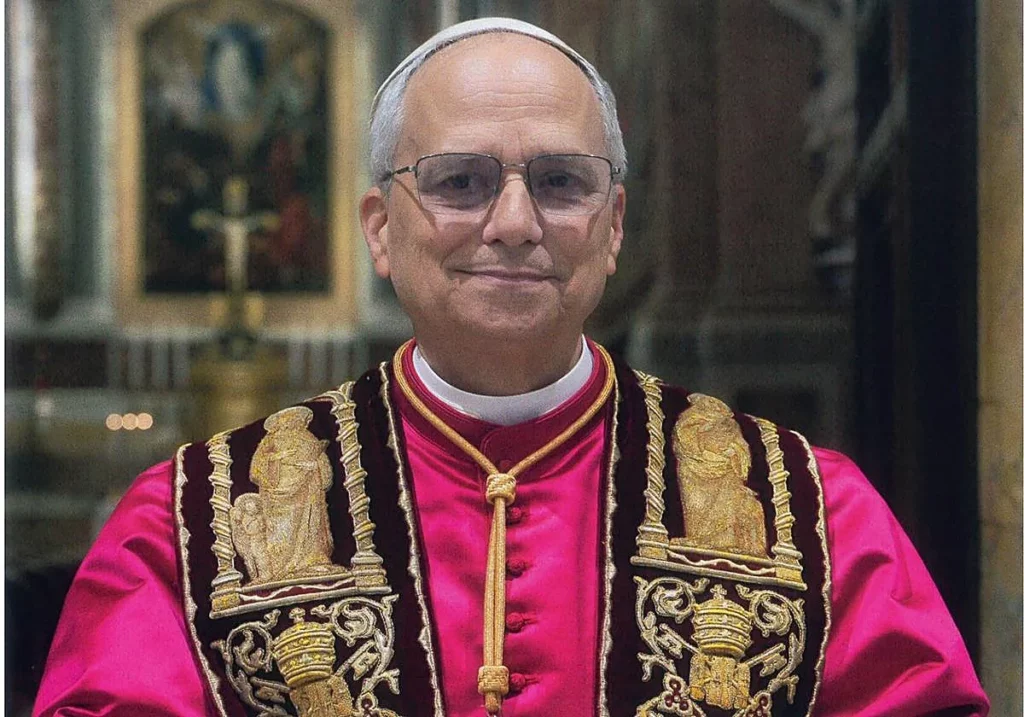
The main themes of the encyclical
The first thing that Leo XIV raises is the current situation of the human being, facing a crossroads, and especially the believer. To explain this issue he uses two biblical images; the tower of Babel as a symbol of pride, the concentration of power and the loss of the human dimension; and the city of God (Jerusalem), not a coincidental symbol, of a society built on human dignity, justice and fraternity. At the end of the day, it should be humanity that has the right to decide what kind of technological future it wants to build, without sectarian guidelines.
The second underlying theme is that of human dignity. A criterion that must take precedence over any other. The encyclical insists that no technological innovation can justify the reduction of people to data, productive resources or simple consumers. Every human being has an intrinsic dignity that does not depend on their usefulness or performance.
The third reflection takes us towards a way of thinking where Artificial Intelligence should never replace the moral conscience of the human being. Although AI systems can process information and perform complex tasks, they do not possess human experience, moral responsibility, freedom, or the capacity to love. For this reason, fundamental decisions about human life must continue to be the responsibility of people (AI is already beginning to be used immorally in decision-making in war conflicts, casualty calculations, etc.).
In a fourth point, work and social justice would be one of the most important chapters. Addressing the impact of AI on employment must be under constant review. Pope Leo XIV warns against an economic model in which workers would be replaced or subordinated to automated systems. Technology should improve human work, not degrade or eliminate it, leaving the worker without social protection.
Perhaps the fifth issue is as interesting as it is dangerous, the concentration of technological power. The encyclical expresses concern that a few companies and governments control data, algorithms and global digital infrastructure. Leo XIV demands transparency, regulation and international governance that protects the common good, away from spurious ideologies.
This encyclical also criticizes the use of AI in autonomous systems in armed conflicts and calls for limiting the development of technologies that can facilitate violence or dilute human responsibility in life or death decisions. Morality or ethics moves away from the fields of war to give way to the cold logic of the AI that acts in each case. Exempting those who make the decisions to use them from responsibilities. A total lack of scruples, amorality taken to its maximum expression.
And finally, the encyclical criticizes the concept of transhumanism. Leo XIV questions the currents that promise technological improvement of the human being. For the Christian vision, human fulfillment does not come from merging with machines, but from moral, spiritual and social growth.
That is why perhaps the final message can be summarized as follows: Artificial intelligence must be at the service of the human person, of truth, decent work, social justice and peace, and never become an instrument of domination or dehumanization.
Altogether, the Magnificent little humans It is an ethical and social reflection on how to guide the development of AI so that it strengthens humanity (human beings) instead of weakening it. Its fundamental thesis would perhaps be that technological progress is only authentic progress when it protects the dignity of each person and promotes the common good.
To conclude, and once said encyclical letter has been read and underlined, I would like to end with section 225 of it, that is, with the words of the pontiff himself when he argues:
Cyberspace has also become a terrain of confrontation: computer attacks, data manipulation and influence campaigns orchestrated with the help of AI can destabilize entire countries, even before an open armed confrontation occurs. In this area, furthermore, the attribution of responsibilities is often uncertain: when it is not clear who has attacked, the risk of disproportionate reactions, errors of evaluation and spirals of escalation increases. That is why we need diplomacy capable of operating also in this new environment, negotiating shared rules on the use of digital technologies, protecting civilians and the most vulnerable from invisible, but no less real, forms of violence.
AI is a moral and ethical war machine, which deceives us with the discreet crumbs it provides to those of us who are vulnerable, as Leo XIV says, to a form of invisible violence that will not give us respite and that is totally and absolutely insensitive to what happens to us. Including the human beings who control or develop it.
Originally published at LaDamadeElche.com