

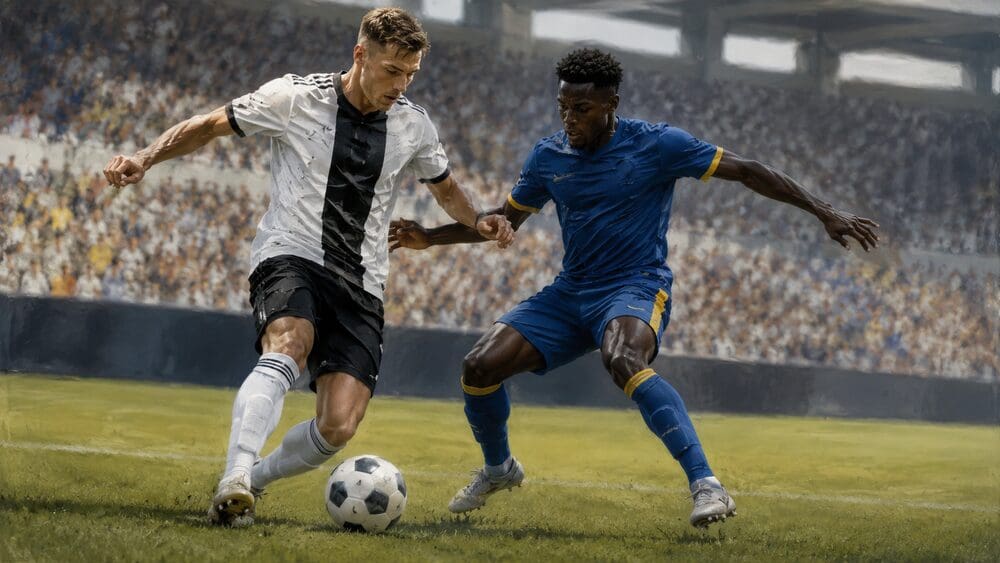
The four-time champions begin in Houston against the smallest nation ever to reach the tournament
Germany’s World Cup opener against Curaçao in Houston is more than a meeting between a European heavyweight and a debutant. It is an early measure of what the expanded tournament can offer: pressure for established powers, visibility for smaller football nations, and a reminder that the global game’s reach is still widening.
Germany begin their Group E campaign on Sunday against Curaçao at Houston Stadium, with FIFA listing the match for 14 June at 17:00 UTC on its official match centre. On paper, it is one of the clearest contrasts of the opening round: a four-time world champion with deep tournament memory against a Caribbean side playing at this level for the first time.
Yet the fixture carries a sharper edge than the rankings alone suggest. Germany’s recent World Cup record has made every opening match feel unusually loaded. Early exits in 2018 and 2022 remain part of the public context around Julian Nagelsmann’s side, even if this generation contains enough quality to expect a much longer stay.
Curaçao’s Debut Changes the Frame
For Curaçao, the achievement is already historic. Concacaf describes the team as the smallest nation by both population and area ever to qualify for a men’s World Cup, and the first debutant from the confederation since Panama in 2018. That fact alone gives Sunday’s match a public meaning beyond the score.
The island’s path to the tournament has depended on a mix of local identity, diaspora football and players developed across European club systems. Under Dick Advocaat, Curaçao moved through qualifying with attacking confidence, finishing among Concacaf’s most productive sides. The confederation’s match preview notes that Curaçao led the region with 28 goals in qualifying, a figure that helps explain why the debut should not be treated only as a ceremonial appearance.
There is also a human dimension in the dugout. Advocaat, at 78, is set to become the oldest coach to manage a World Cup match. Opposite him is Nagelsmann, one of Europe’s most prominent younger elite coaches. The difference in age, experience and football culture gives the match an unusual generational texture.
Germany Must Set the Tone
Germany will still be expected to control possession, territory and tempo. Joshua Kimmich, Jamal Musiala, Kai Havertz and the rest of the squad represent the kind of technical depth Curaçao cannot match player for player. But major tournaments are rarely kind to teams that treat first matches as formalities.
The German task is therefore psychological as much as tactical. A strong opening performance would steady a national team still trying to detach itself from two disappointing World Cup campaigns. Anything uncertain would reopen a familiar debate about whether German football’s resources are translating into tournament resilience.
Curaçao’s challenge is different. The debutants must remain compact without becoming passive, protect the emotional energy of the occasion, and make Germany defend enough transitions to feel the match rather than simply manage it. The presence of experienced players such as Leandro Bacuna, Eloy Room and Tahith Chong gives Curaçao a base of professional composure, much of it shaped in European football environments.
The Expanded Tournament’s Early Argument
This is the kind of fixture the 48-team World Cup was built to create. Critics of expansion have warned about imbalance and dilution. Supporters argue that broader access gives smaller football nations a fairer path to the global stage and strengthens the game outside its traditional centres of power.
The answer will not come from one match in Houston. But Curaçao’s presence alongside Germany makes the question visible. As with Scotland’s long-awaited return, covered recently by The European Times, this opening phase is already giving the tournament stories rooted in memory, migration, community and ambition.
Germany will measure Sunday by performance and points. Curaçao will measure it by credibility, courage and the proof that qualification was not a miracle detached from work. Somewhere between those two standards lies the wider story of this World Cup: the old hierarchy remains, but the field around it is becoming more crowded, more varied and harder to dismiss.