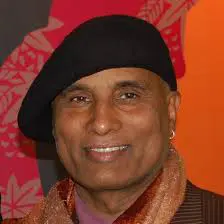
Bashy Quraishy
Secretary General – European Muslim Initiative for Social Cohesion – Strasbourg
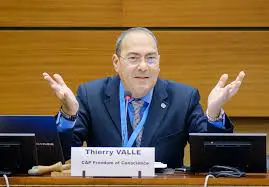
Thierry Valle
Coordination des Associations et des Particuliers pour la Liberté de Conscience . France
Press freedom and the politics of intolerance
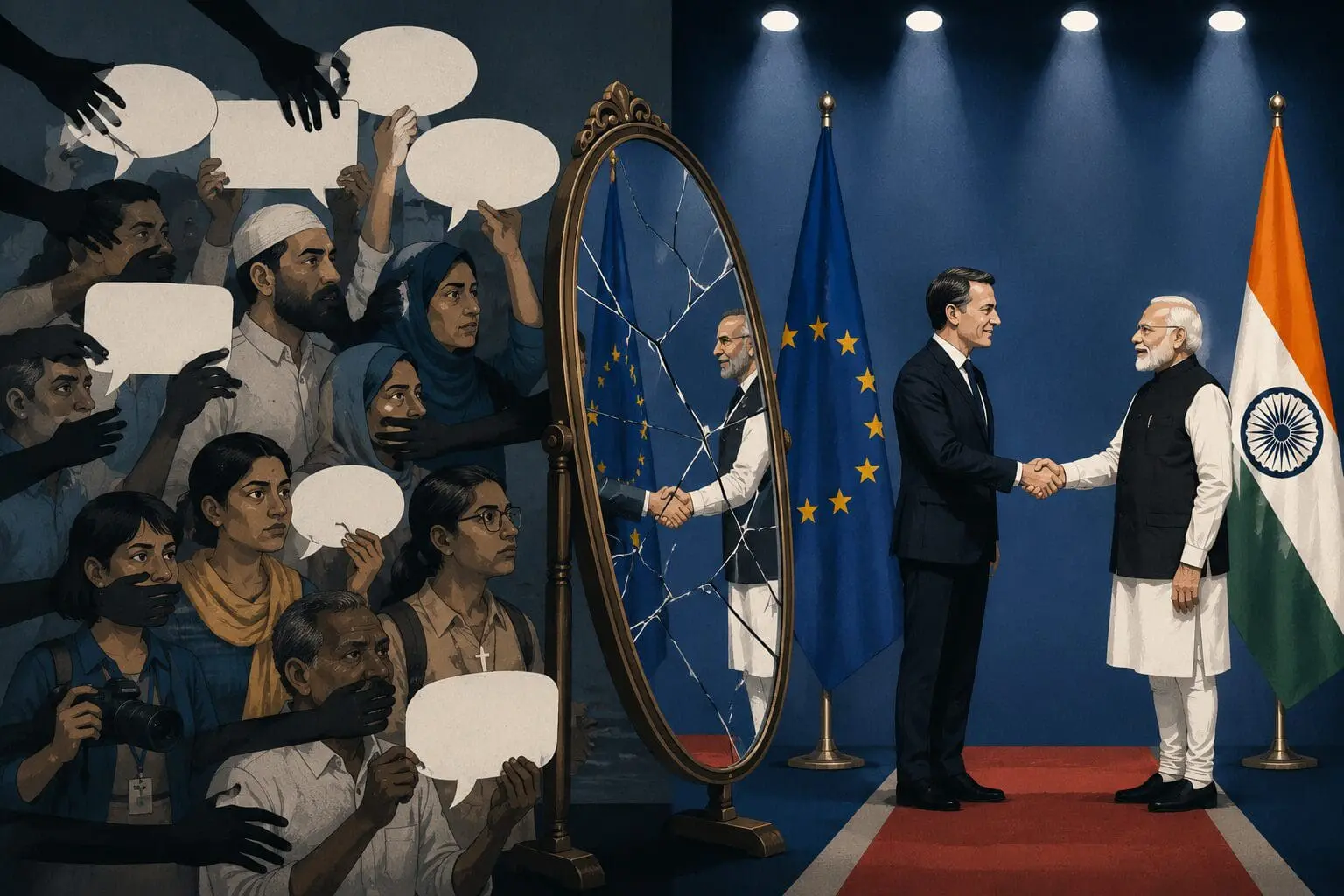
On the one hand, India projects itself internationally as the “world’s largest democracy,” an emerging global power, and a defender of pluralism. On the other hand, international human-rights organizations, press-freedom groups, and civil-liberties observers have increasingly expressed concern about shrinking space for dissent, intimidation of journalists, pressure on academic institutions, and growing hostility toward minorities under the government of Prime Minister Narendra Modi and the ruling Bharatiya Janata Party (BJP).
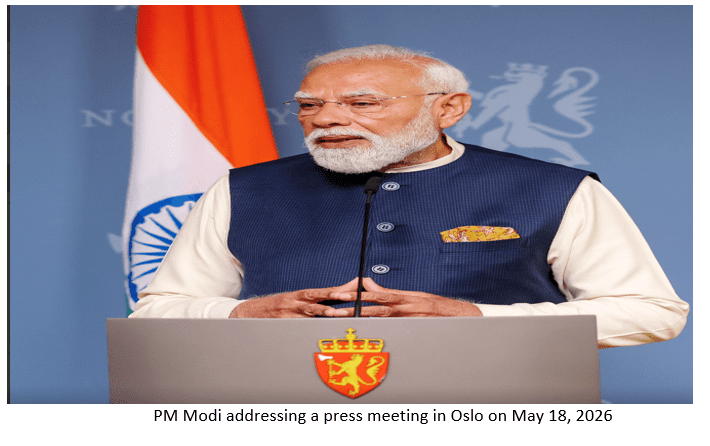
Prime Minister Modi’s May 2026 visit to Europe attracted significant international attention, not only for trade and diplomatic engagements but also for renewed scrutiny regarding press freedom and minority rights in India. During his visit to the Netherlands, Modi praised expanding economic partnerships and highlighted technology and innovation as key areas of cooperation. However, remarks by Dutch Prime Minister Rob Jetten concerning press freedom and the rights of minorities in India were firmly rejected by Indian officials, who described such criticism as reflecting a “lack of understanding” of India’s diversity and historical complexity.
The tensions became even more visible during media interactions involving Dutch journalists and Indian diplomats, revealing growing friction between Western journalistic expectations and the Modi government’s tightly managed public-relations approach.
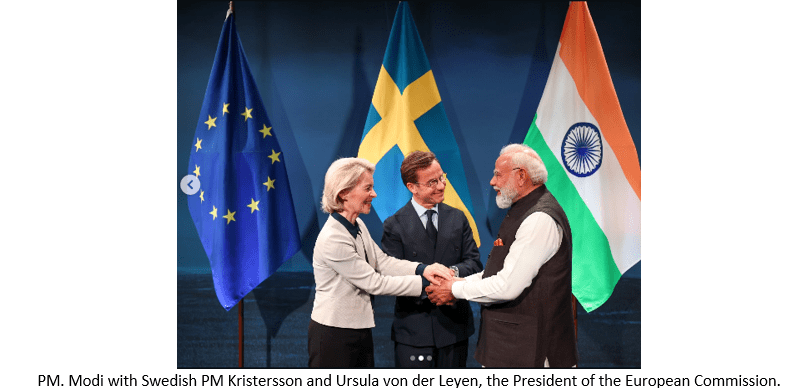
From the Netherlands, Modi travelled to Sweden and Norway for further economic and diplomatic meetings. It was the first visit by an Indian Prime Minister to Scandinavia in more than four decades. On May 19, during the third India-Nordic Summit in Oslo, a Norwegian journalist from the newspaper Dagsavisen, Helle Lyng, publicly asked: “Prime Minister Modi, why don’t you take some questions from the freest press in the world?”
Modi ignored the question and walked away.
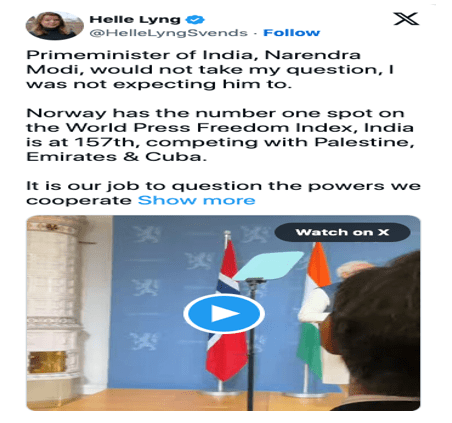
The controversy continued during subsequent press briefings held by India’s Ministry of External Affairs in Norway. International journalists questioned Indian diplomats about restrictions on press freedom and the treatment of minorities. Indian officials responded by defending the country’s pluralism, democratic institutions, and social diversity.
Nevertheless, Modi’s refusal to engage with the press during his European visit triggered intense international scrutiny and domestic political criticism. The episode reignited broader debates about democratic accountability, transparency, and media freedom in contemporary India.
The deterioration of press freedom in India has become particularly alarming. Journalists increasingly face online harassment, sedition charges, police raids, intimidation, and physical violence. Freedom House reports that journalists risk “harassment, death threats, and physical violence,” while attacks against them are “rarely punished.”
According to Freedom House, India is currently classified as “Partly Free,” with concerns focused on civil liberties, media independence, and the treatment of minorities. The organization further notes that “attacks on press freedom have escalated dramatically under the Modi government.” India currently ranks 157th out of 180 countries in the 2026 World Press Freedom Index published by Reporters Sans Frontières (RSF). RSF warns that “with a rise in violence against journalists, highly concentrated media ownership, and outlets with increasingly overt political alignment, press freedom is in crisis in the world’s largest democracy.”
India’s digital environment has also come under criticism. Freedom House’s 2025 “Freedom on the Net” report states that internet freedom in India “remained under strain,” citing censorship, arrests related to online commentary, and repeated internet shutdowns.
These concerns cannot simply be dismissed as “Western propaganda.” Similar anxieties are increasingly voiced within India itself by independent journalists, academics, retired judges, civil-society organizations, and opposition politicians.
The central issue is not whether India remains an electoral democracy—it clearly does. The real question is whether democratic institutions can remain healthy when criticism itself becomes politically suspect.
Democratic erosion rarely occurs overnight. It is usually gradual. It begins when governments equate dissent with disloyalty, when journalists are portrayed as enemies, when universities are pressured into ideological conformity, and when majoritarian nationalism becomes normalized in public discourse.
Democracy must begin with self-reflection
In democratic societies, criticism of governments, institutions, and social injustice is not merely legitimate; it is essential. Across the world, intellectuals, journalists, and activists regularly speak out against racism, discrimination, and violations of human rights in Western democracies. Such criticism can play a constructive role by pushing societies toward greater accountability and equality.
However, an equally important question must be asked: are developing democracies equally willing to examine their own shortcomings?
Supporters of the Indian government argue that India remains a vibrant democracy with regular elections, an independent judiciary, and an active media environment. Critics, however, contend that democratic institutions are gradually being weakened by political pressure and rising religious nationalism associated with the ruling BJP government.
Regardless of political opinion, one principle should remain universal: a democracy must remain open to scrutiny. Journalists should be free to ask difficult questions without intimidation, and governments should respond with transparency rather than hostility. Freedom of the press is not a privilege granted by the state; it is a cornerstone of democratic legitimacy.
It is therefore important for countries in the developing world to look inward before presenting themselves solely as moral critics of Western democracies. No nation is free from injustice or discrimination. Western countries continue to struggle with racism, inequality, and political extremism. At the same time, non-Western democracies must also acknowledge their own internal challenges instead of dismissing criticism as foreign interference or anti-national sentiment.
The danger is not only political, but moral
When religious nationalism becomes closely intertwined with state power, minorities inevitably begin to feel less secure. In India, Muslims, Christians, Dalits, and dissenting intellectuals have increasingly expressed concern over hate speech, vigilante violence, and social polarization. Even when governments do not directly endorse every act of extremism, silence and selective enforcement can create an atmosphere of impunity.
This trend is not unique to India. Across the world—from the United States to Hungary, from Turkey to India—democratic institutions are increasingly challenged by populism, polarization, and ideological nationalism. Even Western democracies themselves are experiencing declines in press freedom and growing political division.
That is precisely why developing countries should avoid moral exceptionalism. No democracy is beyond criticism, and no government should demand immunity from scrutiny simply because it was elected.
Unfortunately, many governments today celebrate democracy only when elections are won, while becoming increasingly uncomfortable with democracy’s other essential pillars: a free press, an independent judiciary, academic freedom, minority rights, and the protection of dissent.
Elections alone do not guarantee democratic freedom.
A truly confident democracy does not fear journalists asking difficult questions. It does not treat human-rights criticism as a conspiracy. Nor does it demand intellectual conformity in the name of patriotism.
The European Union and its relationship with the developing world
The international community, particularly the European Union, must also rethink its relationship with emerging powers. Economic partnerships should not be guided exclusively by trade, markets, and strategic interests. Human rights, press freedom, judicial independence, and minority protections should remain central elements of diplomatic engagement and trade negotiations.
At the same time, such principles must be applied consistently rather than selectively. Western governments lose credibility when they condemn abuses in adversarial states while ignoring similar violations in economically or strategically valuable allies. Human rights lose moral authority when they become instruments of geopolitical convenience rather than universal principles. True democratic maturity is demonstrated not by rejecting criticism, but by engaging with it honestly.
Democracy and economic partnerships
European democracies must also recognize that economic engagement carries moral responsibilities. Trade agreements and strategic partnerships with emerging powers such as India should not be treated as purely commercial transactions detached from democratic values.
As the European Union expands cooperation with developing economies in areas such as technology, defence, energy, and digital infrastructure, it should consistently emphasize the protection of fundamental freedoms. Respect for press freedom, judicial independence, minority rights, and freedom of expression should form part of diplomatic dialogue and long-term partnership frameworks.
This does not mean imposing Western political models on other societies, nor interfering in national sovereignty. Rather, it means affirming that democratic principles and human dignity are universal values that cannot be separated from international cooperation.
European governments frequently describe their foreign policy as “values-based diplomacy.” Such principles must therefore be reflected not only in speeches, but also in trade negotiations, investment agreements, and strategic alliances. Economic interests should not come at the expense of silence on democratic backsliding or human-rights concerns. Constructive engagement requires honesty. Genuine partnerships are strengthened—not weakened—when democratic accountability and fundamental freedoms remain part of the conversation.
National pride versus true accountability
Democracy is strongest when it accepts criticism without fear. Nations that aspire to global leadership must demonstrate not only economic progress and political influence, but also a commitment to openness, tolerance, and the protection of fundamental freedoms.
Only through self-reflection can democracies genuinely strengthen themselves.
Ultimately, the future of democracy—whether in India, Europe, or elsewhere—depends on the willingness of societies to criticize themselves honestly. National pride should never become an excuse for silence. Patriotism should mean strengthening democratic institutions, not shielding governments from accountability.
A nation grows stronger not when criticism is suppressed, but when criticism is heard.
One hopes that developing countries such as India—with its vast population, enormous potential, and long history of pluralism—will recognize that its standing among the world’s most respected nations will be defined not merely by elections held every few years, but by its inclusiveness, protection of minority rights, and commitment to freedom of expression for journalists and for all 1.4 billion of its citizens.