By Isaac Hammouch
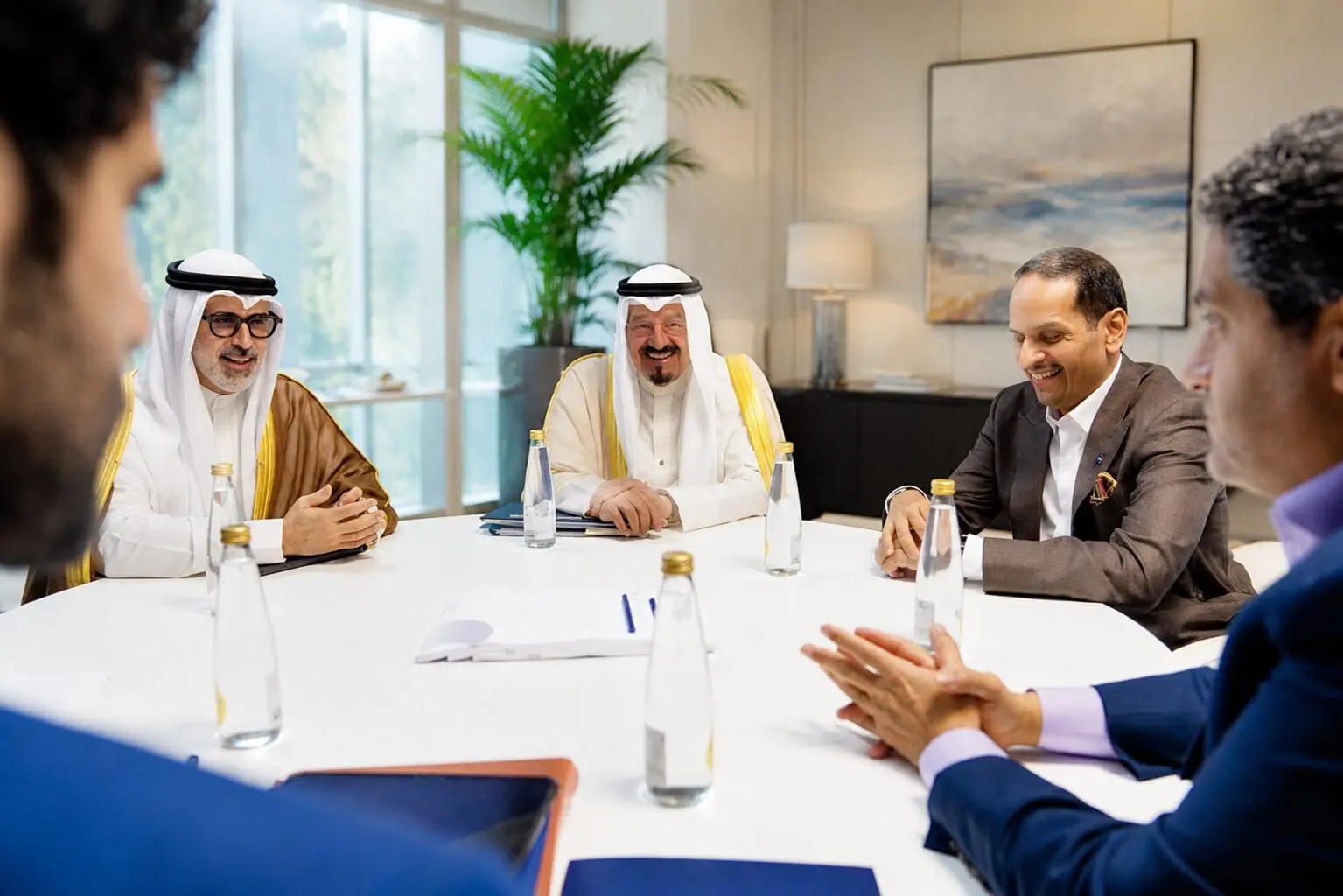
Modena, May 16, 2026. Salim El Koudri, a man of Moroccan origin in his thirties, deliberately drives into pedestrians in the center of the Italian city. Eight people are injured, four of them seriously. A woman loses both legs. He exits his vehicle holding a knife before being subdued by law enforcement. Three days later, Kuwaiti Prime Minister Sheikh Ahmed Abdullah Al-Ahmad Al-Sabah is welcomed with full honors in Athens for the first Euro-Gulf geopolitical and investment summit. Europe mourns its victims in the morning. It signs energy, digital, and infrastructure agreements in the afternoon. This chronology is not a coincidence. It is a symbol.
Kuwait knows how to play its role. Its Prime Minister arrives in Greece with a reassuring speech about energy cooperation, strategic investments, digital transformation, and infrastructure. On paper, it sounds attractive. Kuwait wants to present itself as open, modern, and democratic, just as Saudi Arabia, the United Arab Emirates, and Qatar have done. They buy football clubs, skyscrapers, and works of art. They host summits. They smile for the cameras. But behind the diplomatic smile lies another reality. Kuwait is not a partner like any other. For decades, Kuwait has been one of the main hubs for the financing of Islamist terrorism, and it continues today to fund political Islam in Europe through structured and documented networks that Brussels chooses to ignore.
In March 2014, David Cohen, then U.S. Under Secretary for Terrorism and Financial Intelligence, described Kuwait as “the epicenter of fundraising for terrorist groups in Syria.” He warned specifically about Kuwait’s Minister of Justice and Islamic Affairs, Nayef al-Ajmi, who had “a history of promoting jihad in Syria.” The minister eventually resigned in May 2014, not out of moral choice, but under American pressure. In April of that same year, officials from the Obama administration revealed that Kuwaiti individuals and charities had provided hundreds of millions of dollars to Al-Qaeda-linked terrorists in the Syrian civil war, making Kuwait the largest source of funding for those militants. On August 6, 2014, the U.S. Treasury Department designated Shafi al-Ajmi and Hajjaj al-Ajmi, two Kuwaiti clerics, as terrorists for supporting the Al-Nusra Front, Al-Qaeda’s branch in Syria. Shafi al-Ajmi raised money “under the guise of charity” on social media before personally delivering it to terrorists. He purchased and smuggled weapons on behalf of the group. Hamid al-Ali, another Kuwaiti cleric, had already been designated a terrorist by Washington in December 2006 for financing Al-Qaeda. He issued fatwas approving suicide bombings and the tactic of crashing airplanes into buildings.
And it does not end there. In 2003, Richard Clarke, former U.S. National Coordinator for Security and Counterterrorism, testified before the Senate that several Al-Qaeda operations had been linked to the Kuwaiti Muslim Brotherhood, including Khalid Sheikh Mohammed, the mastermind of 9/11, and Ramsi Yousef, responsible for the 1993 World Trade Center bombing. Clarke revealed that the Kuwaiti government financed charities controlled by the Muslim Brotherhood, such as Lajnat al-Dawa, which was designated by both the U.S. Treasury and the United Nations in January 2003 as supporting Al-Qaeda. Kuwait is therefore not a country that merely experienced temporary problems. It was for years a financial pump for global terrorism and continues to play that role today.
On April 11, 2026, one month before the Athens summit, Kuwait’s Interior Ministry announced the dismantling of a twenty-four-member cell accused of financing terrorist organizations. Among them were five former Kuwaiti members of parliament. Not marginal figures. Not isolated criminals. Elected officials. Representatives of the people. These twenty-four individuals collected money through religious and charitable organizations before diverting it to terrorist entities abroad. They used pharmacies and commercial companies as fronts. This was not an amateur operation. It was a system. And it was not an isolated case. In March 2026, Kuwait had already arrested sixteen individuals linked to Hezbollah, including fourteen Kuwaitis and two Lebanese nationals, over an alleged sabotage plot. The message is clear: the problem of terrorism financing in Kuwait has not been resolved. It is structural. It reaches the political elite. It persists. And yet Europe welcomes this same state as a privileged partner.
Kuwait does not only finance wars in the Middle East. It also finances the construction of mosques and associations in Europe through a structured and documented network. Europe Trust, based in the United Kingdom, is the financial arm of the Federation of Islamic Organizations in Europe, identified as the umbrella organization of the Muslim Brotherhood on the continent. According to Middle East Quarterly, the trust channels Gulf money to Muslim Brotherhood-linked groups in Europe, mainly to build mosques, and is largely financed by Kuwait. Amsterdam’s Blue Mosque is fully funded by Kuwait through Europe Trust Nederland. Its president is none other than Kuwait’s Minister of Religious Affairs, Mutlaq al-Qarawi. One of the Netherlands’ most active Islamic organizations is therefore directed not by a Dutch citizen, but by the Kuwaiti government. Rotterdam’s Al Salam Mosque, the largest mosque in Western Europe, led by Nooh al-Kaddo, who is also an administrator of Europe Trust, was financed by the Makhtoum Foundation of the United Arab Emirates. The trust is involved in properties in France, Greece, Romania, and Germany. In Belgium, the League of Muslims of Belgium reportedly received around 150,000 euros from Kuwait in 2016 to finance Islamic centers.
Europe Trust is led by Ahmed Al-Rawi, former president of the Federation of Islamic Organizations in Europe and a leading Muslim Brotherhood figure in the United Kingdom. In 2004, he signed a declaration supporting uprisings against what he called “the filth of occupation” in Iraq and Palestine and refused to condemn attacks against coalition forces. The Islamic Cultural Centre of Ireland, linked to Europe Trust, hosts the European Council for Fatwa and Research, led by Egyptian cleric Yusuf al-Qaradawi, who defended suicide bombings and advocated the death penalty for homosexuals according to the Irish Independent. Kuwait is not building mosques. It is building ideological Trojan horses.
In October 2024, the Financial Action Task Force and MENAFATF published their mutual evaluation of Kuwait, and the verdict was unequivocal. Kuwait has a limited understanding of terrorism financing risks. Technical and practical deficiencies prevent the implementation of targeted financial sanctions. Kuwait’s anti-terrorism committee has the authority to freeze assets but has never once exercised that power. There is no legal framework for confiscating terrorism-related assets, and without such a legal basis, enforcement measures remain ineffective. Terrorism financing investigations rely primarily on foreign intelligence rather than domestic capabilities. Kuwait remains on the FATF grey list as a country with strategic deficiencies in anti-money laundering and counterterrorism financing measures. The result is simple: Kuwait promises transparency but does not practice it. It promises cooperation but depends on others to investigate. It promises security but has never frozen a single terrorist asset. And this is the very state Europe invites to Athens to sign strategic agreements.
On May 16, 2026, Salim El Koudri turned his car into a weapon in Modena. Eight victims. Lives destroyed. Europe condemns, mourns, and promises firmness. Three days later, that same Europe opens its doors to the Kuwaiti Prime Minister. Discussions revolve around energy, digital technologies, and investments. Nobody talks about Lajnat al-Dawa. Nobody talks about Europe Trust. Nobody mentions the twenty-four financiers arrested in April, including five former MPs. Nobody speaks about the FATF grey list. Nobody mentions the hundreds of millions of dollars sent to Al-Qaeda in Syria. This Europe is schizophrenic. It holds minutes of silence in the morning for victims of Islamist terrorism while rolling out the red carpet in the afternoon for the states that financed it.
This summit should have been an opportunity to impose a clear doctrine. No economic partnership without political, security, and ideological guarantees. No strategic investment without complete transparency regarding the origin of funds. No energy or digital agreement without a public, written, and verifiable commitment against any financing of political Islam in Europe. Kuwait, like every Gulf partner, must be held accountable. If it wishes to strengthen ties with Europe, it must prove that this cooperation will never serve as a Trojan horse for religious or ideological influence networks hostile to European democratic values. It must prove that Europe Trust will no longer finance a single mosque in Europe without total oversight of financial flows. It must prove that its ministers of religious affairs will no longer direct Islamic organizations on European soil. It must prove that former MPs will no longer finance terrorism under the cover of charity. It must leave the FATF grey list not through promises, but through actions.
Europe does not need partners who buy its silence. It needs partners who respect its laws, its values, and its security. The time of naivety is over. Gulf money can no longer be welcomed with closed eyes. Europe cannot mourn the victims of Modena, Paris, Brussels, Nice, and Berlin on one hand while signing contracts with states that remain on the FATF grey list, financed Al-Qaeda, direct Muslim Brotherhood networks in Europe, and send their ministers to chair Islamic trusts in Amsterdam on the other.
Kuwait is using economic openness to make Europe forget its security reality. Saudi Arabia does the same with concerts and stadiums. Qatar with museums and universities. The Emirates with skyscrapers and artificial islands. But money does not wash away everything. Mosques financed by Kuwait do not disappear because the Prime Minister smiles in Athens. Europe Trust’s Muslim Brotherhood networks do not dissolve because renewable energy agreements are signed. The twenty-four financiers arrested in April do not become model citizens because Europe opens its market to them.
Europe must choose. Protect its citizens or continue selling its vigilance to the highest bidder. The Athens summit is not a diplomatic victory. It is a warning. If Europe signs agreements without demanding guarantees, it signs its own surrender.
Isaac Hammouch is a Belgian-Moroccan journalist and writer. Author of several books and opinion pieces, he analyzes societal issues, governance challenges, and the transformations of the contemporary world.